Dr. Ann-Louise Lockhart on Transforming Conflict Into Connection with our Teens
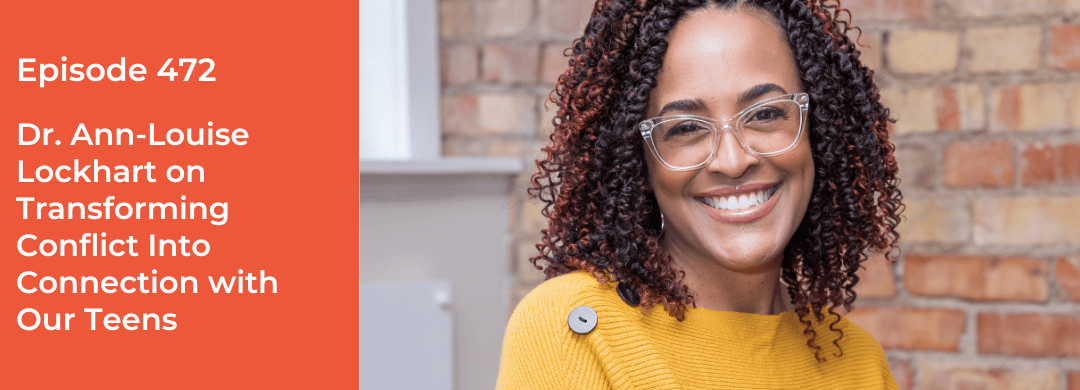
Today we’re talking about one of my favorite topics — what it really means to connect, collaborate, and let go of control as our kids grow into themselves as they enter the transformative teen years. My guest is Dr. Ann-Louise Lockhart, a pediatric psychologist and parent coach who helps overwhelmed parents raise confident, emotionally healthy kids and teens, and the author of the brand new book, Love the Teen You Have: A Practical Guide to Transforming Conflict Into Connection. In our conversation, Ann-Louise shares insights from her book and offers a powerful reframing of what it means to parent through the teen years. We talk about shifting from control to curiosity—especially when raising neurodivergent kids—along with individuation, cognitive dissonance, and why living a fulfilling life as a parent is one of the best ways to model healthy behaviors for our teens. She also reminds us that it’s never too late to repair, reconnect, and love the teen we have right now.
About Dr. Ann-Louise Lockhart
 Dr. Ann-Louise Lockhart is a pediatric psychologist, parent coach, speaker, and author who helps overwhelmed parents raise confident, emotionally healthy kids and teens. As the founder of A New Day Pediatric Psychology, she empowers families to move from chaos to connection using practical tools rooted in clinical expertise and real-life parenting. She is the author of an upcoming book launching October 28, 2025 titled, Love the Teen You Have: A Practical Guide to Transforming Conflict Into Connection. She has been featured in The New York Times, Parents, HuffPost, and on The Today Show. Her dynamic, relatable style has made her a trusted voice for parents nationwide.
Things you’ll learn from this episode
- Why it’s never too late to repair and rebuild connection with your teen
- How curiosity helps parents better understand what’s really driving their teen’s behavior
- Why focusing on connection over control leads to stronger, more trusting relationships
- How individuation is a healthy and necessary part of adolescence for both teens and parents
- Why modeling a fulfilling, authentic life can positively influence your child’s growth
- How resetting expectations and embracing collaboration can transform communication and repair past ruptures
Resources mentioned
- Love the Teen You Have: A Practical Guide to Transforming Conflict Into Connection by Dr. Ann-Louise Lockhart
- A New Day Pediatric Psychology (Dr. Ann-Louise Lockhart’s practice)
- Chris Voss & The Art of Negotiation (Masterclass)
- Lighthouse Parenting: Raising your Child with Loving Guidance for an Enduring Bond by Dr. Ken Ginsburg
- Maggie Dent on How to Parent, Love & Support Today’s Teens (Full-Tilt Parenting)
- Education Leader Chris Balme on Navigating the Tricky Middle School Years (Full-Tilt Parenting)
Want to go deeper?

The Differently Wired Club is not your typical membership community.
There’s something here for everyone, whether you’re a sit back and absorb learner, a hands-on, connect and engage learner, and everything in between. Join the Differently Wired Club and get unstuck, ditch the overwhelm, and find confidence, connection, and JOY in parenting your differently wired child.
Learn more about the Differently Wired Club
Episode Transcript
Debbie:
Hey, Dr. Lockhart, welcome back to the podcast.
Dr. Ann-Louise Lockhart:
Thanks Debbie.
Debbie:
Happy to talk about your new book, which I just had a chance to read. I’m very excited about it. Before we talk about that, you have been on the show before, so we’re not going to get too far into your kind of bigger work. And I’m going to have a link in the show notes. Listeners, please go back and listen to that conversation. It was a fascinating conversation on breaking generational cycles. But would you kind of give us an overview in the context of this book, the work that you do in the world, and then why you kind of wanted to focus on teens?
Dr. Ann-Louise Lockhart:
Yeah, absolutely. So a lot of the inspiration behind this comes from my teenage years experiences with my mom because we had a really great relationship early on and then there was a rupture and there was a disconnect between my mom and I that led to a lot of teenage rebellion in my part. And a lot of that inspiration behind Love the Teen You Have is my experiences personally and then also in my 20 years experience as a psychologist and a parent coach, seeing teens and parents experience these ruptures that sometimes they feel it’s too late to repair. And I want parents and teens to know that it’s never too late and they can have that relationship, it really is never too late. So that’s where a lot of that came from. And really, I poured everything that I’ve learned over the years, I’ve experienced my clients that I’ve seen, and put them all in one in a sort of a manual for parents, so that it can be this evergreen, always-going-to resource content that they can use for a quick reminder or a guide or anything like that to help with the disconnect that occurs and really transforming all that conflict into more of that connection. So really it’s a combination of my pediatric psychology work as well as parent coaching work and all of the years of the research that I’ve done.
Debbie:
With your personal experience in there too. It’s great. Yeah.
Dr. Ann-Louise Lockhart:
Yes, exactly, exactly.
Debbie:
Well, I love this age. I have a soft spot in my heart for teens. I wrote books for teens many years ago. I considered myself a recovering teen. I’ve had folks on the show recently, actually, in the past six months about teenhood. Maggie Dent is one, and Chris Balme recently to talk about the middle school years. And I’m always so curious to hear what different folks have to say about this time of life because it gets a bad rap. I think teens, there’s kind of like an inherent eye roll when we talk about the teen years. So I’m kind of wondering, what is your big picture view or lens of the teen and tween years? Like, how do you think about this age group?
Dr. Ann-Louise Lockhart:
Yeah, I agree with you. I believe they’re truly misunderstood because we look at the terrible twos and the three-nagers and then we see, my gosh, teenagers. You know, you hear middle school teachers: my gosh, how do you handle it? Or you have a teenager—what are you doing with the hormones? Like it’s all this bad rap. And I get it. I understand. But to me, I love working with teenagers. I love having them. I have a 13 and 15 year old. And I just think it’s a different, really cool phase because now they can have conversations with you. I believe that’s when parenting starts to shift from being this top-down view that I’m teaching you and I’m molding you and I’m punishing you and I’m having all these consequences and it’s this power differential. And I believe it shifts or it should shift when they become teenagers because now it should be more collaborative and it should be more of talking about what’s going on in their mind, what their goals are because you’re raising them to be functional adults—functional, healthy, well-balanced adults. So it should be less about you rescuing and fixing and thinking for them and more collaboration. And so when we can stop seeing it as this conflictual, top-down relationship, I think it does become more enjoyable. It becomes more equal in a sense of this is a collaborative thing that if there’s something going on with my teenager, I can get curious rather than moving into punishment mode. And I believe that many times parents don’t find it enjoyable because they haven’t shifted their parenting style. And that’s what makes it miserable.
Debbie:
Yeah. Yes. I want to talk about that a little more. So again, I want to just rename the book for listeners. It’s called Love the Teen You Have. And that is one of the things I loved about the tone of the book is it’s aspirational and intentional. And you’re posing this question, like, what do you want this to look like? And then be intentional about creating it. And I’m wondering about that shift because, and I’m thinking particularly for the audience of this show, with neurodivergent kids, often we are kind of maybe micromanaging things more than parents of a neurotypical child might be. We might not know exactly when to kind of step back. And so can you talk more about that shift to pivoting to a more collaborative approach? Like how does that happen and how can parents kind of start to realize, it’s time to start making some changes here?
Dr. Ann-Louise Lockhart:
Well, and the point that you bring up with a neurodivergent child is very important because you cannot parent all your kids the same and you should not expect the same things or that they will be able to meet certain milestones at the same rate. So you have a kid who’s autistic or ADHD or anxious or OCD or depressed or has epilepsy, scoliosis—like whatever it is that they’re just, they’re not following the neurotypical or even physiological, medical typical path, and there’s adjustments that you need to make in that. And as I’m a pediatric psychologist by training—which means that my training and a lot of my early experiences was in a hospital setting—I worked in a military hospital. I worked with children and service members who were medically ill in some way—just some chronic diagnosis or whatever it is—and it was so interesting to be able to, especially if it was a new diagnosis that occurred (you have a kid with cancer, a kid with epilepsy, a kid with a new diagnosis of ADHD or head trauma or trauma itself), and parents had to pivot. They had to—like, I can’t think of it the same way. I can’t speak to them the same way. I can’t have certain consequences the same. Their brain is wired differently now or thinks differently. And I think that transition is so important that it has to occur, where it starts really with the parent understanding: okay, what is this diagnosis? What does it mean for my teen? And then how do I parent differently based on this understanding? So it might start out with first the parent understanding what the diagnosis actually means and then doing their own research or getting their support—whether it’s through a parent coach or through a therapist, a psychologist, through support groups, a book, a podcast. And then the next step I really believe is to talk with your teen about it—that we have been doing things this certain way. And then we found out this is the diagnosis or this is a diagnosis that we know, but we haven’t really allowed it to inform how we’re parenting you. And we need to reset and we need to shift. I know, for example, with ADHD, which I work a lot with parents and teens with this—so I know that we’ve been expecting you to keep your room clean all the time and that it takes you forever to do your homework. And we’re yelling at you and punishing you and taking away your phone. And it’s not because you don’t want to do those things. It’s because it’s harder for you to do those things because your brain is wired differently. Did you know that with executive functioning skills, with ADHD, that many times things like time management and processing speed and emotional regulation and organization—those are all part of the diagnosis. And I know it’s not an excuse, but it is an explanation. And so we want to do better. We apologize for punishing you for things that in many ways you don’t have control over and you need more support. So let’s reset and do things differently. So it can sound however works with your style—with the way you approach your child, with how old they are—but then it’s important to then shift, to acknowledge that you’ve been messing up, to acknowledge that they haven’t been meeting expectations, but this is why. And it’s again, it’s not an excuse, but it’s an explanation. Then that way you can pivot and say, I’m learning a lot about this as are you. And I’d like to do things differently. I want to do things more collaboratively. You let me know why these things are hard. And I tell parents all the time that if you can really operate off of a place of curiosity versus, this behavior is unacceptable—punish—then that curiosity will help you better understand and connect with your teen so that you can see what’s driving the behavior versus just looking at the behavior. It’s very different perspectives.
Debbie:
Yeah, absolutely. And you said some of my favorite words—curiosity is my most favorite word. And also I had just written down the word reset right when you said that. So it really seems like that it’s worth it to take that time to just kind of sit down and kind of assess what’s going on, to push the reset button with our kids and then, moving forward, do so more from a place of collaboration and curiosity.
Dr. Ann-Louise Lockhart:
Absolutely, because what happens is teens often feel misunderstood from the grownups in their lives. And so when they feel misunderstood, what they do is they turn the dial up. Because you didn’t hear me. You didn’t see me. You didn’t get me. You didn’t wait long enough to even let me explain what’s happening. So then I’m just going to turn—I’m going to turn the dial up. So that may mean more defiant behaviors, that might be shutting down, that might be exploding, becoming more dysregulated, checking out. So all of those things might happen because you need to hear what I’m trying to explain. That’s what I did as a teenager and it wasn’t a conscious thing. I came to my mom for something that really hurt me and she—that it was something not related to her—but she didn’t hear me and she dismissed it. And so then I was like, well, screw you then, you know, and I turned the dial up in terms of my behavior. I made it like, well, I’m gonna just do things for me then because you obviously don’t have my back. But that wasn’t the truth. That was my perception of what was happening. For her, what I told her was too much for her to handle and she didn’t know how to handle it. But for me, I’m like, well, but you need to know how to handle it because I’m suffering right now. And so those messages—it’s amazing how ingrained it can get so quickly because then now a teen can get the message, my parent doesn’t love me. They don’t care about me. They don’t see me suffering. Or, I don’t matter to them. And it’s all these narratives that it’s very quick for the teenager to hear, even if that’s not what’s being said. And so those things have to be revisited where the parent seeks to repair because sometimes a teenager is not going to take that step to do it. They need to know the parent has their back because if they felt shut down in one way, they’re not going to do it again. It’s too painful.
Debbie:
So you said in the very beginning that it’s really about connection and that that’s really everything. I love that so much. And I pulled out a quote from your book. You said, “You cannot change your teen’s behavior. Sadly, there’s no secret code to get the behavior you want from your teen. The actual change starts with you. Ultimately, you don’t have control over your teen’s behavior. You have control over yours. You can be the presence that changes the atmosphere in your home. You can choose to fight every battle, or you can choose to connect with your tween and teen instead.” So I love that. And also I always like to say I have a lot of evidence that you cannot control your child or anybody else for that matter, because I have tried. If we’re kind of stuck in that conflict cycle, what do you recommend parents do? You talked about pushing the reset button. Are there any other things that we need to do to kind of shift in this way?
Dr. Ann-Louise Lockhart:
Yeah, one of my most favorite psychological interventions—and I talk about this in the book—is through Acceptance and Commitment Therapy, ACT. And ACT talks about basically leaving the battlefield because that’s what I hear from parents of teens all the time: I’m walking on eggshells. I’m on the battlefield. I feel like a hostage in my own home. Those are all very combative words, right? And scenarios. And it’s because the teen digs their heels in, the parent digs their heels in and then it becomes this big explosion. And it’s not about somebody winning—you know, like you’ve nagged them to death. You’ve lectured them. You’ve taken away their lifeline—their phone, their screens, everything—and now they’re grounded and now, yes, I’ve won. But have you really? You know? And so it’s really about the connection. Stop—leave the battlefield. It’s not about fighting and winning a battle against your teen. It’s about the connection. And like you said, when you realize that you have to change—you are the thermostat—you get to be able to change, “This is how I want my home to feel. I want my teen to be able to tell me anything, even when it feels uncomfortable, even if I’m secretly flipping out and freaking out on the inside. I want them to be able to feel comfortable enough to talk to me about anything.” And so a lot of it is really shifting that to know that I’m not in control. And what is more important is to move away from this idea of control and to collaborate.
And one of the people that I really like a lot is Chris Voss. He is a hostage negotiator and he has a lot of material online and a great book. He talks about his time with negotiating with people who held hostages with the police. And I had messaged him and said, you know, a lot of your work reminds me of parenting. And he’s like, yeah, absolutely. Because it’s this idea that you don’t want the criminal to win and kill a bunch of people in the process. As the department, you want to be able to understand what’s happening there. You don’t want to give them everything that they want so then you lose, and then you lose in the process. It’s about finding something that’s collaborative. What does this person need? What is really going on behind the message? Now I know it’s an extreme example, but it’s that same idea because many times that’s what happens in a lot of households. It’s like parents are in this battle with their teenager and it’s this point where they’ve removed the door off the frame, they’ve taken their bed out, they have no more privileges—and that is a real battle. So then what’s gonna happen when they mess up again? What else do you take away from them? And it’s like this game of chicken where you’re like, okay, who’s going to cave and who’s going to come out ahead? And it just doesn’t work out that way.
And so if we can step back and say, you know, things have not been going well between us. Like, I don’t like how I’m yelling and nagging and you’re constantly shutting down. Like this is not the kind of relationship I want. That’s how I had it with my parents and I don’t want that with you. And you reset. You say, what is there? You take responsibility for your role in it. No shame in it. But you say I’ve screwed up and I want to do things differently. I’m parenting the way that I was parented. I don’t want to do that with you. I vowed I wouldn’t do that with you and here we are. So I want to do things differently. And then you just reset. You just say this is what we want to do differently. So that way you move into this place of it’s not this battleground. I’m not at war with my teen, but I want to have a relationship with them that it can be enjoyable. I can enjoy this relationship and it’s not going to be perfect, but it’s also about making sure that it’s not this constant tension all the time.
Debbie:
Well, and also you’re setting that intention to have that relationship and that’s really everything. It’s not going to be perfect. We are going to continue to screw up, but as long as we keep coming back to that and just, you know, as you shared that conversation that we would have with our teen, it also—I just think about that teen and what that must feel like to be on the receiving end of that. Like our teens are very forgiving people if we come to them with vulnerability and authenticity and say those words. So thank you for that.
Dr. Ann-Louise Lockhart:
Well, also—can I just say something real quick? When I think about my relationship I had with my mom as well too, which has since been repaired—a lot of it, I was able to tell her, I wish that I could have shared more things with you. I wish that you had heard me. And when she was able to finally acknowledge that—“You’re right. I should have listened. I was so much in my own pain, I couldn’t hear yours.” And when she was—when I was able to hear that, even as an adult, as a young adult, that—my gosh, that’s all I needed to hear. It was so healing. And I think that we forget that we don’t have to do these big grand gestures to repair. It could just be like, “I hear you. I am so sorry. I want to do better.” And that’s it. It could be just that. And that could be the thing that changes the whole path. But I think we think that it has to be so much like this big gesture and it doesn’t have to be. It can be something super simple and very direct.
Debbie:
In relation to what you were just saying too, I think about this idea of cognitive dissonance, and you write about that in the book. I hadn’t really thought about it this way, but that we’re wanting one thing, or maybe we’re valuing one thing as a parent, but we’re doing another. And I think you probably see this all the time in your work. I know that I see it in myself and definitely the parents that I worked with. You wrote, “This mismatch leads to that uncomfortable feeling known as cognitive dissonance, where your actions (for example, nagging) clash with your beliefs (which might be fostering independence).” And I’m just wondering, what do we do about this when we—I mean, especially in those teen years, right? The stakes feel so high. Homework’s not getting done. What do we do? So how do you recommend that parents kind of reconcile that cognitive dissonance?
Dr. Ann-Louise Lockhart:
Yeah. So it’s sneaky because it shows up as those mixed messages, right? Which is what I highlight in my book and I talk about very often because that sneakiness is that a parent might say, “You can talk to me about anything, sweetheart.” And then they admit to being stressed about a bad grade or not doing well in school. And then you lecture, jump down their throat, and take away all their privileges. So the teen hears, I can’t actually tell you anything. That’s actually not true. It’s confusing. So instead, if we can focus on listening without trying to fix right away—and my teens tell me that they really appreciate this about me—that they’ll bring home a bad grade, for example, and I’ll look at it and I’ll say, “What do you think happened?” And like, “Oh, well, everybody did badly. The teacher said the test was too hard,” or “They gave us the wrong unit to study,” or “I didn’t study as hard as I should,” or “I got too distracted when I was preparing,” whatever it is—you know, a million reasons—and I’ll be like, “Yeah, that makes total sense. So what do you think you can do differently next time?” And they’re like, “Oh, I can do blah blah blah.” “Okay, sounds good.” And then—they’re like kind of waiting—and then they’re like, “That’s it?” I’m like, “Yeah.” And they always tell me—because they hear so much from their friends about how their parents freak out over bad grades—they really say they appreciate how much I don’t freak out over it. And I’m like, I know doing well in school is important. Absolutely.
As someone who hated high school academically—did not do well for the most part—but then I got to college and thrived, realizing that the way that I learned best is kind of the way that college and grad school works. I love the challenge. I love the flexibility. I love the debating and critical thinking. I didn’t like that rote talking-at-you kind of teaching style. And so I really thrived in school—I mean, hence my bachelor’s, two master’s, and a doctorate—like I loved learning. And so it would have been very easy for me to be like, you know, giving up. But I tell them that I want you to do well in school. I want you to want to do well, but I also know that sometimes things don’t work out the way you expect or you don’t get the same result. Ultimately, I don’t expect straight A’s. I want you to do your very best. It’s the process. And I think that’s where that cognitive dissonance and mixed messages can come in because I can say that—I can say, “Well, yeah, I want you to do your best,” and then I punish them when they get a bad grade. And that stuff is confusing. And so we have to make sure that we’re sending clear messages so that your teen knows that I’m safe to share whatever it is that I want to share, that my parent has an open mind, so that something is happening—and it goes back to that curiosity that I mentioned earlier. Be curious about—if it’s a failed grade or a messy room or, you know, sneaking out of the house—ask yourself why are they doing this behavior rather than focusing on the behavior. So that way you can speak to the need or the intent behind the behavior. And when we can do that, we are going to be less likely to send these mixed messages and we’ll be less likely to experience this cognitive dissonance because we’ll be living up to the things that we say we value and believe and our teens won’t be confused anymore.
Debbie:
Yeah. Right. And it’s that easy. No. No, but I hear you. Just something you said reminded me of one of my favorite lines from Ned Johnson and Bill Stixrud. They say our kids want their lives to work out. Right? So if they aren’t working out or they’re doing things, it’s because they don’t know what to do differently. Right? They need our support. But I think always assuming that our kids want to be successful, our kids want to be fulfilled, they want to have purpose, they want all of these things. If they’re not, then getting curious, we can figure out how to support them in working towards that. Yeah.
Dr. Ann-Louise Lockhart:
Right. And what it is—because they might not know either—but that’s why we have to get curious and explore it with them so they can discover it. Yeah.
Debbie:
So one of the themes of my life right now is individuation, which I knew was coming for a long time. I didn’t know what it was going to look like. And it’s not one event as I’m learning. It’s a very long, in my case, very long, drawn out process, which is super uncomfortable for me. And I’m wondering if you could just kind of walk listeners through what individuation is and how you advise parents to kind of best support that—the natural process.
Dr. Ann-Louise Lockhart:
Yeah, so individuation is a developmental stage that should occur when a child is moving into their tween and teen years. And it’s basically saying, I am my own person with my own set of values, beliefs, behaviors, attitudes, feelings that’s separate from my parent or caregiver. And this is a phase and a stage that is very hard for a lot of parents, especially if they had a very close relationship with their little one, because you have this toddler/child who is joined at the hip, who loves you, thinks the world revolves around you, wants to hang out with you and talk to you and cuddle with you and read them stories and go out with you and go to the bank with you—like they want to do all these things. And then now they begin and start to individuate and they’re like, “Whatever, bro.” And they want to hang out with their friends and they don’t like that you’re—you know, you’re a meat-eating family and they’re vegan. Like it is all these things that start to happen. And you’re like, what in the world is happening here? You’re not the same person I remember. And all of a sudden you’re having to learn who they are. And it can be very frightening for a lot of parents because I have parents who brought their teens in for therapy because they think that their child—their teen—now has a mental health disorder or there’s something wrong with them, when really they’re individuating. They’re becoming their own person. And that can come with some stress and some mental health issues, but many times it’s just a normal developmental phase. And what develops is that push-pull conflict that is occurring between the teenager and the parent.
So yeah, that individuation is that I’m this person with my own thoughts, feelings, behaviors, values—and that might be very different from yours because I’m becoming my own person and having more exposure to other things and people. Or sometimes it’s because they are trying to individuate and you’re not letting them. So they double down more just to create this conflict. There are teenagers who connect through conflict and they can kind of rage-bait you into it because they’ll say these way off-the-wall things because you’re not letting them individuate. “You know, I think I’m going to like tattoo my face.” “Well, why would you do that? That’s horrible. Why would you mess up your skin?” Well, are they really? Maybe they are. But it’s about, again, getting curious. “Well, that sounds like an interesting fashion choice. Tell me more about what that would look like.” You know, and that’s hard to do when it feels like this is—why are they doing this? Well, you have to ask yourself, why are they choosing to connect with me in this way? What is going on in their mind that they’re rage-baiting me or saying things that they know is going to get a rise out of me? Why are they choosing to connect with me in this way? What’s missing in this relationship that they feel like they can’t just have a normal conversation with me?
Debbie:
Yeah. What do you then see as our main job? I mentioned Chris Balme before who wrote Finding the Magic in Middle School Years. He uses this language of companioning, which I really like. Like, what do you see our role as parents of tweens and teens as we kind of step back and support the individuation?
Dr. Ann-Louise Lockhart:
Well, it moves really from this top-down control that a lot of parents have when they’re younger—that they have to teach and guide everything. It becomes more of this companion and this confidant with your teen. It becomes somewhat equal in that sense, where they may not have to be taught as much from you, or the way you teach them is more collaborative. It’s different. And it’s done out of curiosity. So you know that your teenager has a project due in two weeks and you haven’t seen any progress towards it—“I know that you have a project due in two weeks. Tell me your plans for getting it done,” rather than “Get your project done now or you’re grounded for two weeks.” You know, it’s a shift. I don’t think we should ever really talk that way, but it’s really a shift in being able to do things more collaboratively, more curious, and using language that communicates, “I believe in you. I trust in your autonomy. I trust in your ability to figure things out,” or that if you are lost, I can come alongside you. That’s the scaffolding. That’s the body doubling. I can come alongside you. So if you need to learn how to do the research or how to write notes or how to develop an outline, then I’m here to help you through it rather than always being the teacher and the top-down kind of thing. So yeah, I think it really does shift more into this confidant role because again, you’re preparing them for adulthood. So when they leave your home at 17, 18, 19, that they want to have a relationship with you—that you’re their friend, actually—and that they seek you out because they have that relationship. You can’t expect to have that confidant, friend-type relationship when they become an adult if they never felt that you saw them as equals, if you saw them as someone who had thoughts and feelings and they understood, and maybe they could teach you something.
Debbie:
Yeah. That’s—Ken Ginsburg, in his book Lighthouse Parenting, said something that has stayed with me. And that is that, as you were saying before, like we’re raising adults here, right? What we’re doing is we’re raising adults who can live lives of purpose. But when we think about our relationship, Ken said, “I’m not raising a kid that I can have the perfect relationship with now. I want to raise the kid that when I’m 80 and my kid’s 60, they still want to hang out with me.” And I love that, right? So we’re playing the longest game here. Yeah.
Dr. Ann-Louise Lockhart:
Yes, yes, it’s not just the zero to 18. It’s the long game.
Debbie:
Yeah. There’s a section in the book that I really loved called “Live Your Life,” where you say, “Start living your own life more fully so that your teen can live theirs. And when parents are unwilling or unable to do this, a teen’s emotional and intellectual growth may be stunted.” I’d love if you could say a little bit more about this, because I think—especially if our kids aren’t thriving—we as parents may feel like we’re not allowed to thrive. And that’s something I’ve had to personally challenge a lot and really start to lean into and give myself permission to live my own life more fully. So could you expand on that a little?
Dr. Ann-Louise Lockhart:
Yeah, I see when parents have maybe deferred their own dreams and they didn’t have the life that they wanted either because, “Well, I got married, and so I gave up my career,” or “I had kids and I just stayed at home with my kids.” They see it as they gave something up or they sacrificed. And it’s something that—no, you didn’t “just” become a mom, you didn’t “just” become a wife. This was your choice. And maybe there were things that were deferred because of this life that you chose, but then it feels like this kind of sacrificial thing. And in moments of that, when I’ve seen that and heard that with parents, then a lot of their identity gets poured into their kids. And so the way their kids behave, perform, and are seen becomes extra important. Because if I’ve given up my career or have given up friends or have given up hobbies, and then you can’t pass a class, or you were suspended from school, or your teachers don’t like you, or now we’re school-hopping, getting into fights—then it feels like a personal thing. “Look at all the things that I gave up for you and this is how you treat me,” and it can feel like a punch in the gut. But I tell parents that it’s so important that we—we are parents, but we also have to live our own lives. We have to have our own identity because then what’s gonna happen is you put all of that energy into your kid: “I’m a parent to this kid. They make these decisions. Now I feel embarrassed, frustrated, disenfranchised, whatever it is that’s going on,” and that feels really terrible because I have nobody and nothing else to pour my life into.
So “live your life” for me really means checking in with what you value, identifying what are those things that you value, and ranking them. And I have that exercise in the book. What are those top things that you value? Is it nature? Is it creativity? Is it popularity? Is it wealth? Travel? Friends? Family? What is it that you value? And then ask yourself, how is it showing up in my life? And if the top three to five things that you value aren’t showing up in your life at all, then ask yourself why. Like, why is that? Why have you given up those things or why aren’t you doing those things? And again, it’s not to guilt or shame yourself, but it’s to really honestly say, these are things that I say that I value, that add to my life, but yet I’m not making the time to do it. Why is that?
And it also serves as a model for your kids. Because if your kids see that you’re this martyr who has given up everything for them or for whoever else—and you don’t prioritize your health, yourself, your friends, going out on a girls’ weekend, whatever it is—you’re not prioritizing the things that you say you value, what is that saying to them about sacrificing their needs all the time for everybody else? And then once they leave the home, many times that’s why people get divorced or they go into depression or they feel bad about themselves or they then cling with their kids because they don’t have a life outside of parenting either. So I really feel strongly about that. I really think that for me personally, I am a better mom when I go on dates with my husband. I’m a wife. I enjoy our relationship. I’m a better person when I go on that work trip and then come back, when I do things that I value, when I’ve written my book, when I go on these interviews, when I edit my videos, when I do things that bring me joy. My kids love that. They just came with me to a presentation I did last weekend and my daughter was the videographer. They were listening to me speak and she was like, “That’s really cool. I think I want to do that when I grow up.” Like I want my kids to see that I’m doing what I love while still being a mom too. Now, is it hard to balance it all? Absolutely. But it’s also important that we live our life—that you are more than just anything. You have your identity in various pots and that’s okay.
Debbie:
Yeah, so good. Such a good reminder. I was going to wrap up, and we are going to wrap up, but I just wanted to mention this one other exercise that I loved so much from your book. You suggest that parents look for an old picture of their tween or teen. You say this will help you look back and get back in touch with the child you remember, will help spark a new connection. Can you say a little bit more about that? It was so sweet to me. It’s something that I did maybe about a year ago. I keep this one particular photo in my drawer over here that I need to look at every now and then. So can you talk about that?
Dr. Ann-Louise Lockhart:
Yeah, it’s something that I accidentally came across in terms of what I saw the effects of. We have a digital picture frame and I have it on our counter where we eat breakfast in the mornings. And it scrolls through all these different things and it has pictures of them when they’re a baby, when they had their first car ride in their little buggy—all these different cute things that they did. And they’re always like, “Oh, who was that? Oh, look at my first teeth.” And it’s just—every time we see it, even if somebody’s in a bad mood, it just instantly changes the atmosphere. It warms our hearts. And then I remember that. I’m like, “Oh yes, I remember that day. We were in this store and then you were doing that. Oh, you threw a tantrum, but then you were like, ‘Sorry, Mommy.’” Like whatever it is—we have these special moments. And when you are going through struggles with your teen in the moment, you forget about those. You just see this teen in front of you and you’re like, why are you so difficult? And you think that you failed. But then when you look back and you can be like, I delight in this kid. I really love this kid—your chubby little cheeks and your first words. It shifts your perspective. And when your teen can hear stories about how they are loved and adored by you, it really shifts that. It shifts their narrative about, “I’m not this annoying teen. My parent really loves me. They really like me. They really enjoy being around me.” And it’s such a simple exercise, but it’s really powerful. And whenever I’ve done it with parents and teens, it really shifts how they view each other. And it just warms you. It kind of reduces the—takes away the defenses a bit. And it just shares—it’s really great. And I remember even from, you know, back in the day when we had photo albums and we would go through the photo albums and listen to the stories. And so many of us have moved away from the physical photos. So even if you can have the physical photo, print it, frame it, but have the digital frames. Being able to have those moments and help you to remember those moments, I think it can be really powerful for your relationship.
Debbie:
Yeah, yes. And I will share—the photo I have in my drawer here is from my kiddo at maybe nine meeting an astronaut. Like we went to an open day here at the European Space Agency. And, you know, my kid’s just looking up with these just, “Oh my God, you’re a real astronaut.” It just—like I’m… obviously, I’m getting animated thinking about it, right? But I can just remember that curious, incredible little human who just—the whole world was in front of them. It was a wonderful moment. Yeah. And I just want to touch upon one other thing you said. And then I really am going to wrap this up. But one of the things you just said is that we want our kids to feel that we enjoy them and that we like them. And I’ll never forget the time I was just having a coffee break with my kid and I just said, “Of course I love you, but I actually really like you. I really like spending time with you.” And those moments—that means so much to our kids. It’s different. Love almost feels obligatory, but like is a choice, right?
Dr. Ann-Louise Lockhart:
Totally, totally. And they question that in their minds, especially when they’re being difficult. They question, “I know they have to love me, but do they actually like me?” And that’s why I emphasize so much about delighting in your kids and making those comments. Like I’ll tell my son, “You are the best conversationalist. I love talking to you.” I’ll tell my daughter, “I love your style. I love that you’re finding who you are—what you want to wear—how kind you are to others. I think that’s so cool about you.” Like for them to hear that—that your parent sees this in you and they actually say something—that makes a big difference. That sticks with them. Yeah.
Debbie:
Yeah, yeah, great. Okay, let me bring us home here. I want to say the name of your book again. It’s called Love the Teen You Have: A Practical Guide to Transforming Conflict into Connection. It’s actually out today as you guys are listening to this episode. It’s available everywhere. You have an incredible presence on Instagram. I’ve been following you for years there. So I’ll share that and your other social media places. Is there anything else that you want to—like a last thought that you want to leave parents with?
Dr. Ann-Louise Lockhart:
Yes, I want parents to feel encouraged that you’re obviously here because you care about your relationship with your child, with your teen, and you are doing the work. You’re showing up. You’re maybe showing up very differently than anybody else in your generations have before you. But don’t get wrapped up in parent blame and shame and guilt if you feel like you have not been doing what you want to do—that you haven’t been authentic in that. You can always reset. You can always start over and you can connect with your teen in new ways. So I don’t want you to feel discouraged and I don’t want you to feel like it’s too late. So I think that’s the most important message I really want to get out there is that it’s never too late and you just show up how you are and take ownership for it and then reset the relationship.
Debbie:
Yeah, that’s great. Great note to end this on. Thank you so much for spending extra time with us today. Congratulations on the book. It’s wonderful. We just scratched the surface, I feel like, but listeners, you’re getting a sense of the compassion and the vibe of the book, and it’s very empowering and, again, aspirational. So thank you again, and congratulations, Ann Louise.
Dr. Ann-Louise Lockhart:
Thank you Debbie, thanks for having me.
Do you have an idea for an upcoming episode? Please share your idea in my Suggestion Box.