Maggie Dent on How to Parent, Love & Support Today’s Teens
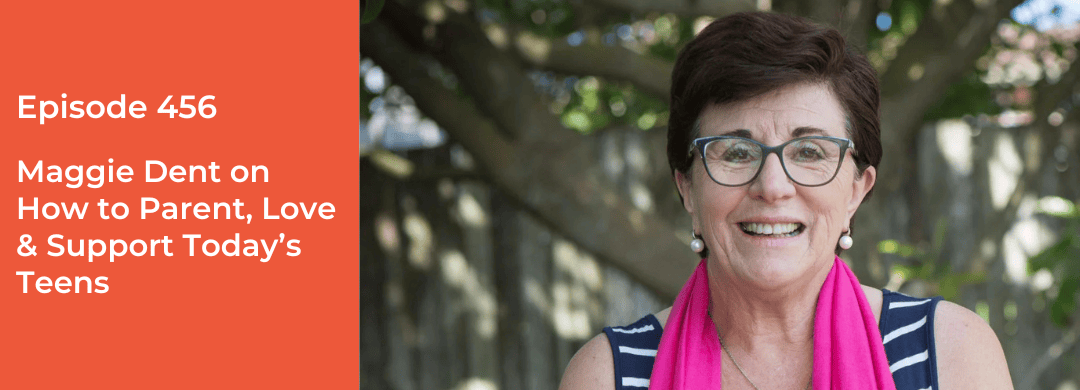
In this powerful conversation, I’m joined by beloved Australian parenting expert and author Maggie Dent to explore what it really takes to raise resilient, emotionally healthy teens in today’s ever-changing world. Drawing on her experiences as a high school teacher, mother of four boys, and trusted voice in the parenting space, Maggie shares practical, compassionate guidance for navigating adolescence with insight, humor, and heart. We dive into the realities of the teenage brain, how the digital age is reshaping childhood, and why curiosity, connection, and unconditional love are more important than ever in building strong, supportive relationships with our kids.
About Maggie Dent
 Commonly known as the ‘queen of common sense’, Maggie Dent has become one of Australia’s favourite parenting authors, educators and podcasters. She has a particular interest in the early years, adolescence and resilience, and is an undisputed ‘boy champion’.
Maggie’s experience includes teaching, counselling, and working in palliative care/funeral services and suicide prevention. Maggie is an advocate for the healthy, common-sense raising of children in order to strengthen families and communities. She is a passionate, positive voice for children of all ages.
Maggie is the host of The Good Enough Dad podcast and hosted six seasons of the award-winning ABC podcast, Parental As Anything. In 2025, she appears in the genre-bending ABC TV series about the challenges of parenting modern tweens/teens, The Role of a Lifetime. She is the author of 10 major books, plus several other e-books and a prolific creator of resources for parents, adolescents, teachers, early childhood educators and others who are interested in quietly improving their lives. Her books include the 2024 release Help Me Help My Teen: supporting our teens through tough times, Girlhood: Raising our little girls to be healthy, happy and heard, Parental As Anything (a book based on her podcast released in 2021), and her bestselling boys’ books From Boys to Men and Mothering Our Boys.
Maggie is the proud mother of four wonderful sons, and an enthusiastic and grateful grandmother. She lives in the South Coast region of NSW with her good bloke Steve Mountain and their dear little dog, Mr Hugo Walter Dent.
Things you’ll learn from this episode
- Why the changing world requires parents to adapt, even though the core needs of children remain the same
- How the teenage brain’s pruning and remodeling process impacts memory, emotional regulation, and impulse control
- Why understanding gender-based differences in brain development can help parents better support behavior and learning
- How compassion, curiosity, and unconditional love create a secure foundation for teens during turbulent developmental stages
- Why being a steady “lighthouse” presence helps teens feel safe while learning to make their own choices
- How approaching tough conversations with calm curiosity opens the door to deeper trust and connection
Resources mentioned
- Mothering Our Boys: A Guide for Mums of Boys by Maggie Dent
Want to go deeper?

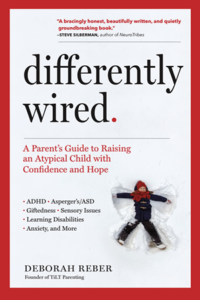
The Differently Wired Club is not your typical membership community.
There’s something here for everyone, whether you’re a sit back and absorb learner, a hands-on, connect and engage learner, and everything in between. Join the Differently Wired Club and get unstuck, ditch the overwhelm, and find confidence, connection, and JOY in parenting your differently wired child.
Learn more about the Differently Wired Club
Episode Transcript
Debbie:
Well, hello, Maggie, welcome to the podcast.
Maggie Dent:
Thank you for having me.
Debbie:
I’m so excited to have this conversation with you and to bring you onto the show. And, you know, I do have a lot of listeners in Australia where you are, you know, when I told my best to hear us from Sydney, she’s like, you’re talking to Maggie Dent. Like you are, you know, so well known in Australia, but I imagine you are also around the world. But for those of my listeners who aren’t familiar with your work, will you just take a couple minutes can’t summarize your work in a couple minutes, but even to kind of address your label of the queen of common sense and kind of who you are in the world in this space.
Maggie Dent:
Yeah, yeah well it’s a journey I didn’t know I was going on when I began it but I began as a high school teacher and then in my intensive breeding program as I call it I had four sons so I kind of got a really buoy lens on on raising them and ended up back in teaching and then I realized that the most troubled kids used to come to me so I did a post-grad diploma in counseling and therapy so I could be available for troubled kids and I left the classroom. And in that time I was doing that every now and then I’d noticed that there was a few of them with similar concerns. And so I got small groups of parents together to kind of give them ideas on how they could navigate what was happening. And they kept telling me that you make so much sense. You should do more of it. And gradually I wrote my first book and thought, golly, that will be it. You know, and you have to chuckle a little because it was called Saving Our Children from Our Chaotic World: teaching children the magic of silence and stillness. Like what a joke, it wasn’t even chaotic in 2002. Anyway, and it was well received. So I guess what I kind of went forward, there were things that were coming up in my counseling and then in my seminars. And then every now and then I just had a really burning desire to explore those things deeply.
And so, yeah, so there were books on, you know, raising emotional kids, resilience. And then of course I had to step into the first five years of life began to fascinate me because I didn’t really know much about it before to realize how incredibly important that is for how we become as teenagers and adults. And then eventually went back to mothering our boys, which is the runaway bestseller because so many moms were confused about boys because
they’d had only sisters or, you know, had a really difficult relationship with their father. And then I wrote From Voice to Men, which of course took them over the adolescent bridge. And then my granddaughters arrived and I went, whoa, they’re a bit different. So I explored that and wrote Girlhood. And then I thought I really was done. I really did. And then I just kept, you know, the statistics were alarming everywhere, how our teens were struggling at higher and higher rates. And I just knew that if I could put in the hands of parents more of the knowledge and also the scripts and the ways of communicating with teens who were struggling, we might be able to make a significant difference because there are not enough counselors, psychologists and therapists in the world who are available. And so I figured that would be my last kind of gift to the world is giving parents more tools so they could be there on those bumpy moments. And that’s where I am, other than a few podcasts. Yes.
Debbie:
Yes, a few podcasts and the speaking and the advocacy work and yeah, the way that you show up in such a powerful way. So, so fascinating, kind of following your kids and then your grandkids and you have been in this space for a while and I’m just wondering kind of generally speaking what you have seen in terms of how our kids have changed. I mean, you wrote your first book in 2002, as you said, and, you know, I think I probably still had a flip phone at that point. Like you’ve really witnessed a lot of change in the world our kids are growing up in. So I’m just wondering kind of bigger picture thoughts on how you’ve witnessed that.
Maggie Dent:
It’s such a beautiful place to start because what children need to grow and to thrive has not changed at all. But the world around our children has changed and the pressures on our parents is so different to what it was even when I was raising my boys. And fortunately mine always started breeding so I was able to get right back in and keep my finger on the pulse. So what we know now we had very little information when I was raising my boys and now we almost have too much. And then when you land us into a digital world where well-meaning parents want to really be the best they can and often strive to be perfect, Debbie. And that’s one of my challenges is there’s no such thing. And that kind of this judgment, incredible judgment on parenting today, and also, you know, the old versus the new and how that’s kind of a little bit confusing. And so I feel that’s where my voice comes out so often is reassuring you it is harder and it’s especially harder raising teens today. We’ve always had that generation gap but now it’s a chasm and I think how do you navigate something that you did not have when you were in your own teen years even though some have probably had like you said a flip phone but now we know that they’re learning so much more some of it we don’t want them to learn way ahead and so they’re almost being parented and raised without the guardrails of loving, caring, you know, humans. And so it makes perfect sense why it’s, you know, what it is so much more different today. And that’s even though I’m contributing to it, which is, I apologize all the time because I just contribute more knowledge. But I also feel people feel that some of the things that children have done and teenagers have done forever, like tantrums, like meltdowns, like becoming non-communicative, is a sign that they’re failing as a parent, that they’re a lousy parent, or there’s something wrong with their kids. So my job as that queen of common sense is reassuring them that that is exactly normal human development, even if we don’t like it and we wish they wouldn’t do it.
Debbie:
Yeah, and just going back to that chasm that you mentioned, I also think parents today, like I was definitely someone who would try to, you know, share stories from my adolescence and I had to finally realize there’s nothing similar in the way that we grow up. So parents are like, well, I was a teen once too, but we weren’t this teen, right? We weren’t growing up in this age. And I think it is such a completely different landscape that we have struggled to even relate to it.
Maggie Dent:
And I also think our education systems haven’t really caught up, there are some definite, definitely different challenges educating our neurodivergent children and teens and our boys because it’s still one size fits all. And if you don’t fit with that, you know, then there’s something wrong with your kid. And it’s actually that flexibility and that ability to respect differences and genuinely embrace inclusion and diversity. I think we’re only really starting to move in that direction and thanks to people like yourself. You know and I it just is there’s so much going on in that space that I believe we will get better but right now there’s quite a bit of confusion and chaos and I think yeah it is harder at the moment in so many ways. I do think that sometimes in the digital space, you land on people you can trust and you look at what you’ve got in your organization. And I know I have some other friends in this space who hold a beautiful safe space in a, this digital craziness. So it’s not all bad, but I sometimes think it just steals time and it steals presence as in we are not as fully present to ourself or our children because we have to use a phone to manage organizing our family and our lives. You can’t do anything without it, like banking everything, you know, and it’s not good because, you know, face-to-face, genuine presence while we communicate, I am worried about our upcoming generation that is struggling to have the same life skills around communication and intimacy and you know, helping out, all these things that we kind of were immersed in. That’s not happening. And we’ve got a generation of lonely teenagers who are very connected online. And that, you know, I know it saddens you as well as it saddens me.
Debbie:
So in your book, which we’re talking about today, which I was very excited about, again, it was published in Australia. I know it’s been out for a while. It’s available in the US, where many of my listeners are this summer. It’s called Help Me Help My Teen, supporting our teen years through tough times. And you talk a lot about the teenage brain, which is a fascinating thing to learn about. And I guess I would like to kind of start there, because we know that the our kids are growing up in is so vastly different and their brains are still developing. There are still these very important things that they’re going to be going through, but in this different environment. Can we start there? What’s really going on? What’s the job of the teen brain?
Maggie Dent:
And it is such a big one. And I think one thing if we can just, the reason this is such a stressful time for anyone and it was for you and I regardless, is that every time that the human body is starting to evolve into becoming an adult, not a child, it starts making changes that are invisible within them. But every change triggers stress. That is really hard for them to put their finger on. And that’s the hormones and it’s the physical changes and it’s … they don’t know that their brain is remodeling itself. And it is fascinating when we can prepare them to see that things are going to get bumpy because of their capacity to think things through and also they’re wired to question the beautiful, loving parents that they were following quite willingly before. okay. So the very first thing in that we have to change the child brain into a more efficient adult brain. And one of the things it does, it goes, okay, so let’s prune off what you’re not using as much so that we can now really focus on building a more, you know, focus brain. And for most, it’s such a difference between the genders, Debbie, and I taught co-ed for 15 years. And the difference is so profound because most boys, sweeping generalizations, around 70% of our boys.
Memory is different. Memory formation is different to girls and it’s just not as efficient except around things that they’re really interested in. Whereas girls we’re wired to remember all sorts of things far more efficiently, part of those are biological drivers. So they don’t get pruned off as much but it’s really significant for boys and the pruning can really start to challenge their sense of self-worth because they will forget more things, their organisation skills go really haywire and many get frustrated because their tween and teen son has forgotten how to put a towel back on a hook in the bathroom, whereas they could before it got pruned. They will leave a backpack on the bus and they cannot believe that they could be so ridiculously ineffective. And of course, what do we do as parents? want to come down hard on them because we think they’re deliberately something, but they’re not, right? It’s pruned off.
And then in our boys again, so as soon as those things happen, they start to really feel less than, and that then triggers anger and frustration within themselves, because they don’t know what the heck’s going on. And then on top of that, we know that growth spurts are really profound in that window. And then what happens in that, the brain has to come offline from trying to keep on track of things to growing muscle in the body. And so they often get even more forgetful, more grumpy, more difficult, uncoordinated, you just name it. It gets worse while they’re in a process of growing, because that brain goes, no, this is what we’re doing now. We’re growing muscles and things. Then we’ll come back to that later. And then also in this window, with the pruning, they often prune off the capacity for boys to speak articulately.
And so many parents will think, look, they’re just being lazy or tell them to open their mouth. It’s not them. It’s not their mouth. It’s their brain. And again, it often comes back online around 18. So again, can you imagine being a boy who used to be able to be articulate and now he really struggles to get the words out? That’s why we have so many angry boys in a way. And then moving forward, what is going on underneath is that if we were really back in our traditional spaces when we first landed on earth, there is a biological drive in our boys, again, to have to learn to kill quickly or they will be killed. And so there’s a massive growing of dendrites and for girls, they have to learn how to be an efficient participatory woman in our communities to provide everything that women provided. And so this massive dentrides means they can learn really, really fast in this initial stage of adolescence up to 15. And it’s exciting. It’s like a window of potential. So they can pick up a language, a musical instrument. If they’ve got a fabulous teacher, they’ll get a deep passion for a new subject. If they’re playing music or sport and they throw some energy into it, they will improve drastically, which is super exciting.
However, it’s hard sometimes to get them interested because they’re also in the self-loathing, inner critic expansion stage. So it’s a tricky one. Those excessive dendrites again, Debbie, that also means they’re more likely to become addicted. That means, you know, whether it’s vaping, it’s social media, it’s porn, it’s gaming, anything. So that’s why we want to keep the rails on the bridge to 16 because after that dentride window drops down. And the whole reason they don’t make good choices is because they haven’t got enough myelin in the brain. And that’s a fatty white substance that improves thinking and it’s gradually thickening. basically the research shows that for most girls around 22 to 23, they have a complete prefrontal. It used to be around 27 for boys. However, neuroscience is showing that if boys have spent a lot of time in the digital space with rapid kind of dopamine hits and excessive quick stuff, that’s delaying that prefrontal completion till around 30. So again, that’s why we have to understand. They cognitively are very different. Even if they look like a mature grown up, the brain is still in this remodeling stage and they can all make really poor choices and take really awful risks, even if they’re super intelligent and doing well at school. So it’s right across the board that capacity. when we come alongside them prepared to know there will be mistakes. And that’s why my challenge for the whole writing of the book is that if we come down without compassion, and we come down, you know, with a traditional way of, well, obviously we need to punish you for making a poor choice. We run the risk of pushing them into an even darker place within their, within their soul and their heart. And that’s exactly in today’s world. They’re already finding it a darker place, Debbie, as many of us are. So they don’t already have as much joy and as much to look forward to. And now we’ve got to be really careful because of that vulnerability, you never know when they get to the point they say, nah, it’s too hard.
Debbie:
Yeah. And you pair that with impulse control, which is, especially in, we don’t have to go down the dark road of suicidal ideation, all of those things, but we know that when there’s not a strong impulse control, you go to a dark place, then there’s not much of a guard rail, as you said.
Maggie Dent:
Yeah, especially for boys because the gabba gets turned off, which is an impulse inhibiting neurochemical, which is gamma amine butyric acid. We didn’t know that that was actually, it just stops functioning completely. And that’s why we will be astounded by some of the things. And of course, what’s made it worse today is that often boys try to outdo each other to gain credibility in their friendship groups. So post and boast has increased much of the risky behaviour because they want to see others to see how incredibly brave they’ve just been, while we all see it quite differently. Yeah, so it’s actually like that world has made it even harder to pause and to possibly make a better choice. And the reason that many of them will do them over and over again is because they don’t learn from it, because you need myelin to be able to learn from a mistake to make a different choice next time. yeah, and that is, it’s heartbreaking because, you know, especially in Australia with our big wide open spaces, you know, you know, we often have car accidents that take four teenage lives at once just because one of them thought it would be just let’s go fast or they got distracted because they have friends in the car or they’re actually trying to film themselves driving fast and all of those things, as you know, are recipes for, you know, significant disaster.
Debbie:
So let me just ask one more brain science question. So the prefrontal cortex is something my community knows a lot about. We’re kind of expecting those delays. And you said up to 30. maybe even, I’m thinking for a kid with ADHD or some other neurodevelopmental differences, it could be even later. The pruning process that you talk about, is that in your experiences that look different or would the timing be different for a neurodivergent teenager or a longer window?
Maggie Dent:
Yeah, no, it’s really interesting because I, yeah, because in that window, sometimes, sometimes the pruning can actually prune something that is that they struggle with, but only struggle with occasionally. Whereas anything that they’re, you know, the same sort of thing as a neurotypical kind of child. But we noticed that when, if they have, you know, the sorts of things that you have been talking about a lot as when they recognise what sort of state they’re in and the ways that they can support themselves, when you put adolescents on top of it, like they’re still emerging to be an adult. So there will be another layer, particularly for our boys, around increased poor choices. And it’s interesting because one of the things I learnt, I’m so grateful for some of the ADHD boys that were in my classrooms early on, Debbie, because one of the things that boys often do, it’s a bit like the toddlers, toddler boys, quite often they need a lot more movement than is recommended in a high school classroom. And early on, I just had these boys, like three of them walking around one of my classrooms, they were probably 14, and I just reached out to one, you know, with genuine curiosity, and that’s the thing we have to have in this window. just said, so mate, are you What are you doing? He said, I’m walking. Said, you what, you’re going to get something? He said, nah, I miss, I’m just walking. And I asked the other two and they were just walking. And I thought, well, why don’t we all get up and do some walking? And like, this is my first year of teaching. And I realized that if every 20 minutes we did some form of brain break, which was sometimes clapping, sometimes it was stomping our feet. Sometimes it was, you know, movement. Sometimes it was, told jokes while we stood up then the walking stopped. But you notice that no girl went backwards because I had more movement that actually helped the boys. And now I realize probably there were neurodivergent girls in my classroom being masked so beautifully, I didn’t even know they were there, right?
But I still believe if, when we keep on seeing them, all teens, as problematic as, you know, they just, you know, they don’t think and all this negativity. When we change that lens and we look at it as an incredibly exciting developmental stage of life where they do need wonderful warm humans on that journey who are capable of meeting them with compassion, curiosity, my goodness, then they turn to you after they’ve done these things going, I don’t believe I just did that. Instead of being yelled at, shouted and punished and sent to the principal’s office, we can all go, yeah, it’s okay. And we can just move back on because as soon as we bring shame into it and we bring punishment into it, we escalate, you know, the flight freeze. We’re just in mad panic now instead of moderate panic. And I find, and that’s the other thing that changes in the brain, the limbic brain changes. And so it’s the emotional part of the brain, not only are they more looking for threat because they’re feeling unsafe? Their emotional intensity also changes and that’s a really big one for us to hold compassion for. And girls and boys are the same. And that’s when girls can get into, you know, the moods that just escalate and they get bigger and bigger because they run these, you know, catastrophizing thinking loops and they can’t get out of them and every loop adds another layer of how awful everything is. And unless we’re teaching them ways of, you know, helping to curtail that, those moods can last for days and I can still remember them, Debbie. I remember being a moody, moody teen that was angry at the world.
And for our boys, often anything that’s causing them to feel really deeply stressed and it can be not always things that make them angry because we’ve conditioned boys to not be able to hold sad feelings or fear or anxiety as a thing that all humans have. They often go to anger. And sometimes we also know in this window that we know it with girls and boys when they’re younger, but in this window, as the limbic brain grows, when a boy gets really upset about something and it can be a failed test, it can be a rude comment, it can be someone making a joke that they don’t appreciate, it can actually really trigger them into the amygdala firing out. But the next part of the brain for most boys to fire up is the body, not the mouth. And for girls, it’s the mouth. It’s the word center. And that makes a really different response to what happens. You know, when I share the story in the book about the 16 year old boy, lovely boy in one of my classes, suddenly just stood up and kicked his desk, kicked the chair, went over and punched a wall and just stormed out of the classroom and nobody in the class, everyone was looking around going, what just happened? What was fighting? And when I helped him with a drink of water and I sat beside him and he just said, oh, I missed a pharma mass test. So it took him 20 minutes to explode.
Now in a lot of schools, he would then be sent to the office to be punished. And so it was a beautiful learning curve for me right the way back. This is going back 45 years. I just knew intuitively that he had just flipped his lid, as we say with Dan Siegel and Tina, he just flipped his lid and whatever it was, was excessive. But now we know there’s another reason. What was beautiful is that as we went back in the classroom, all his friends had put everything back on his desk and had actually stepped forward in a beautiful way to acknowledge that everything was gonna be okay. And I feel that’s the way we’ve got to go forward in this space because you never know. I talk about the tipping point in the book a lot and we’ve all got one but what happens as our prefrontal grows is we’re able to go, wow I’m getting a bit stressed right now, I’m just going to go for a walk, I’m going to have a cup of tea, I’m just going to have a drink of water, wash my face. So we actually correct and we lower the cortisol, they’re unable to do that the same as our toddlers and this course our neurodivergent kids even less so. And so, you know, that means that we don’t know how many other things underneath it.
And I think really, when we have such incredibly safe and respectful places for our neurodivergent kids, then they have more room before their tipping point is met, right? Because they’re, it’s someone’s giving me some space in here. Whereas if you have someone who doesn’t understand it or you have someone who’s not very good at communicating or holding a supportive space, then they’re going to feel unsafe all the time. So there’s not much space. And of course, high school, five different classes, five different teachers, five different lots of expectations, crowded hallways, just so many extra things that it is, you know, especially in really large high schools and colleges, just really, it can be really, really incredibly tough. But when we see it through their lens, instead of one that we’ve, you know, they just need to learn to do it. Oh my gosh, it’s profound. And so I very rarely had discipline problems in any of my classrooms, even in the most challenging schools I ever taught. Because, you know, in those early days, what I kept on saying, everyone matters to me. And we’re going to work out how we can all not only, you know, learn together but how we can, what things we don’t want in our classroom. So I’d get the whole class to give me the guidelines for the classroom. And it was amazing when they’re a part of that journey, heard and that’s the really big message in the book as you know, Debbie is allowing us to feel seen and heard no matter how awful everything is. It just once again, we don’t feel so lost in the world.
Debbie:
I imagine you are the favorite teacher for so many of your students. you get emails from past students?
Maggie Dent:
Yeah and what’s so really funny is how many became English teachers because of me. Like you remember that window you influenced them which I thought was really quite funny but every now and then I’ll run into somebody who stops me and says I remember when you said this and I can’t even remember having said it but you’re right that’s why we need exceptional people who understand you whatever age group you are an educator for, you have to have a passion for them and a deep understanding for them. And you must like them.
Debbie:
Okay, so you have already shared, so first of all, you’ve shared so much wisdom. I feel like this is a little master class here, but you’ve talked about compassion, you’ve talked about curiosity, helping our kids feel seen, respect. What else do our teens need from us as parents? What are the most important things that parents should keep in mind when we’re raising teens?
Maggie Dent:
Well, you remember I sort of said to you before that many of them are suffering with a sense of low self, with low self-esteem at times. So they don’t like themselves. Yeah. And so one of our biggest challenges is can we love them when they can’t love themselves? And that how we keep that, even though we all know there are times they’re going to speak disrespectfully to us or they’re going to forget things that they’re meant to forget and we’ll get exasperated and annoyed. At the end of the day, do they feel that we’ve still got their back? And so one of those key messages that I keep on saying to parents is the no matter what. And I have actually got some free posters on my that you can download off my website because it needs to be something that we can whisper to them in quiet moments, but we can also, no matter what, no matter what happens, you know, the first thought, if anything big happens, and you know I go through a lot of very big things in the book, is I want you to think, call my mum or call my dad.
And what I found, you know, not only as a parent, because obviously I had a house full of boys, which also meant I was a house full of more than more than boys, was there were a number that his mums were, and dads were trying traditional ways of punishment. So they weren’t allowed to play football or something if they, you know, sworn or they’d done something. So there was this constant punishment, punishment stuff. And what I found down the track is, the last person they were going to ever call if anything happened was their parents. And so I kept saying to them, if anything ever happens, you can call me and I will. So it’s not just the parent that we need to have somebody who’s got our back. It’s the lighthouse figure, Debbie. And that’s really what I was for those boys and it’s what we all need. And sometimes that can be a grandparent in my, from boys to men book in a survey of men over 30, grandparents were a significant lighthouse who would turn up because in some way they felt they were safer than their parents who were desperately struggling with raising multiple numbers of teenagers who were difficult. And I think also that is, that’s what we did when we had stronger villages. know, neighbours would pick your boys up or they would just offer to have them or aunts and uncles went far away or the coaches.
And then that’s the shining light of exceptional teachers. And the number of times that I had those quiet chats with a student, one I probably didn’t teach, that sowed seeds of hope that they were gonna one day be okay, that this has always been a bumpy ride. They all wish somebody had told them that it was gonna be so bumpy before it started. And I have a lovely story about a mum who handed over a book with all the stuff about the brain for her 14 year old son to read. And he picked, he got up and said, yeah, that’s really interesting, mum. It would have been really good to know about that before it happened. And I feel this is what we are on for. This is, know, and it’s funny because there are families that tell me that when their teens forget stuff, go, don’t forget, I haven’t got a prefrontal, but it was also okay. But there is a possible reason that we might lighten up a little around that, but I feel, yeah, that we have to hold this absolutely fierce, unconditional love.
And when I’m presenting this as a live seminar, I end with a slide that says, and I know it triggers tears, but it’s important because we keep on focusing on everything that’s not what we want and how we wish it could be better. We’re not focusing on this incredibly unique human who’s going through the most massive change in their lives while trying to work out who they are, where they fit. And it says simply, if you knew that your teen was only here for one more week, and then they were going to leave this earth, what would you do? And what would you say? And start today. Please start today. Because there is no guarantee. And I think it just changes that lens for us to know it is really hard and difficult for them. And that’s exactly if you go home and the number that go home, you know, and write notes, because it’s a really sometimes and if you can say it, of course, but the number of times that teens have had a love note from a parent after a seminar that has changed everything that kid has a written note of the love that their mum or dad has for them, that is unbelievably profound.
Debbie:
Yeah, I got chills thinking about that. That’s wonderful. Thank you for sharing that. And I do love this metaphor, this image of the lighthouse, which you talk about in the book. So I want to start to like reign us in, but I do want to mention that you do tackle really hard topics in the book. And I was so grateful for that because the struggle is real, our kids are dealing with really intense stuff more than ever and with mental health and with self harming and the drugs that are available. And there’s just so much going on. And I would love, we don’t have time to go through all of them, but I would say, parents, if you’re navigating any of the hard stuff, the way that you talk about it, first of all, it’s just comforting to be like, okay, right? A lot of parents aren’t talking about this stuff because it doesn’t feel safe or they feel ashamed or scared. And so for you to just bring it to light, like, okay, let’s talk about it. This is going on. Here’s how we address it. Here’s how we can move through this. Are there some kind of general words of wisdom you can share for parents who are really in it right now with really difficult stuff?
Maggie Dent:
Yeah. All right. And so many of them are the biggies that, if your child has been brought home really drunk or you’ve just found that they’re self harming or you’ve found drugs in their backpack or their bag. And some of those, like I said, are they just moody or do I have a depressed teen? And so because I’ve dealt with so many of them as a counsellor, the first thing I want to say is that whenever we first come across something like this for our kids and our teens, it’s the same for if you lose your toddler in a supermarket, when you find them, you’re actually angry at them. And we do exactly the same. Apparently, it’s just this wiring. They’ve done research on it. They don’t know why. They just know that’s what we do. We go angry first. So now we’re working with an emerging adult who’s made a poor choice, who’s also really struggling with the poor choice they’ve made, or they don’t even know they’re in a dangerous position. And so all the things that we’ve always done traditionally, lecture them, shout at them, shame them, punish them, whatever, that actually makes everything worse. So my three tips, as I said before, is you’ve got to really rein in those big feelings that are about terror, anxiety, stress, anger, and really cool ourselves down. And that’s why it’s, you don’t leap in too quick. You’re going to have a few days to get yourself really, and you’re going to now need to find some seriously good information to get yourself better informed because what you think may not be accurate anymore. And that’s a really important thing because our kids probably have more information because they’re living in the digital world than we are. So that message again, is so we go for calmness and then we go for curiosity and then we go with compassion.
And the curious part is I want to sow a seed that I’m going to have a conversation. We don’t just say, look, I want you to sit down. I just really wanna, because that shuts everything down, absolutely shuts it down. And we want to open this conversation because what we want to do is, we’re not going to fix, our job is not to fix it. We used to think our job is to fix it, but every time we fix something on this journey to adulthood, we disable them and disempower them from becoming competent at doing things themselves. So it’s a really big lens shift. Okay, this is where we’re going. And then one of the things I’ve put under each of them. I had my team do all sorts of research. So we actually found the very best sort of places and some of them are international where we go and you can find accurate information. So you don’t have to doom scroll for hours and find inaccurate information from people who don’t know what they’re talking about. And we are updating that continually because it’s in a digital space as more good information comes in life. So you need to be able to read all that and then you’re going to be able to go, can we, you know, I just need to have a bit of a, when’s a good time to have a chat? We remember their autonomy is incredibly important.
So we’re going to have a chat, but I’m going to give them a choice around when, when’s a good time for you. make sure no one else is around and that I’m going to turn up calm and we’re going to open and the scripts that I’ve written are scripts that open conversation, not scripts that shut them down. And I’ve had such massive feedback, Debbie, right around the place that because of this shift and teens go, that’s a bit different to what you normally do. Okay. And the fact that we’re saying, you know, I’m about supporting you to work through this. Let’s see if, you know, if vaping has become problematic, let’s see what steps we can do, you know, in this space. We’re not shaming and shouting like we used to. And so many of the teams are now saying, I know I can go to my parents now and they’re coming to them saying, can we have a chat about something? That’s something that’s going on at school that they wouldn’t normally talk to a parent because the parent was going to lecture them or tell them what to do and tell them what was wrong. Now they’re open with these different ways of saying and it’s quite often I’m just a little bit worried. Can you let me know, you know, if you’re OK and if we can have a chat in a few days. So therefore it’s just lowering the heat out of conversations and really listening rather than us feeling we have to be the person doing all the talking and solving all the problems. I hope I captured that because you know there’s nine steps that I recommend but I feel that captures it that there’s respect, there’s time, we’re working through something, it might be short conversations and then we’ll catch up a few days later to see how their first plan of overcoming it might be working. Yep, so it’s problem solving at an adolescent level with adult guidance.
Debbie:
Yeah, which is exactly what any parent of a teenager needs. And yeah, the resource section, it’s great to know that that’s digital as well. It is really rich and you are doing the work for parents. Like, okay, if you’re dealing with this, here are the organizations, here are the, yeah, that’s wonderful. So, all right, there’s so much we could get into, but I just, first of all, I wanna say thank you for, you know, we were discussing before I hit record, you know, is this really your last book? And it seems like it probably is. But it is such a gift for parents who are raising teens. And even if you’ve got younger kids, they’re going to be teens someday. And this to me feels like kind of, not the blueprint, but the guidebook, the flashlight, if you will, that’s really going to help us kind of hone in on what we need and that we have the information to navigate all of this really hard stuff. Do you have any kind of last, you know, for parents who are in this and maybe they’re stuck in a conflict cycle, maybe they haven’t been showing up this way and they feel like I’ve blown it already, what would you say to those parents?
Maggie Dent:
The best news ever is it’s never too late. You when we rupture relationships, we can always repair them, no matter how long term it’s been. And also just want to let people know that I’ve got over 200 videos on my YouTube channel and many of those are teen ones. And also, you know, endless blogs, I have written almost every month for the last whatever. So there’s a whole section on teens, many of them cover some of these things even without getting the book. But there’s no question that as soon as we come alongside them with that soft heart, with that absolutely, it can’t be fake. Our kids are really good at working fake. We’re allowed to be concerned, you we really are, but you know, our biggest job, Debbie, is our job is to raise children to leave home and live their own lives. And so this letting go, my gosh, especially while I haven’t got a prefrontal lobe, while they’re actually possibly going to make poor choices. It’s one of the hardest things. And of course I had to do that four times. And yet it is the greatest gift we can give them as they merge into their twenties and discover who they are and spread those wings. And yes, it is hard, but I think sometimes having a couple of other parents on the similar journey, friends or family, I was really lucky my sister and I were sort of similar.
But I do think every now and then we’ve just got to be really honest with ourselves and own the fact that this is the bumpiest part, I believe, in raising children to become adults that the world needs because every single one of them, the other last message, keep on sowing, because I did it to every student I ever taught, that the reason you’re on this earth is to make the world a little bit better. That is, and you just got to figure out how you’re going to do that. But that’s what we’re all here for, to make the world a better place. And so, yeah, give them that one because then we’re taking it away from everything they’re doing wrong. And we can say, you can start by making a cup of tea for your mother, or we can, we can step up for a friend or we can, you know, we can go and work out how we can do something for a charity. We can learn how we make the world a better place. Even if we failed our test or we, you know, swore in class and we’re in trouble. Can I make the world a better place? And how am I going to do that?
Debbie:
Yeah. So good. Such a good note to end this on. Thank you. So listeners, just want to let you know, I will have resources in the show notes page for all the places you can connect with Maggie to Maggie’s books, to the YouTube channel. This video, this interview is also going to be on my new YouTube channel too. So if you want to see us in conversation, check that out. And yeah, I’m finally entering the, as I said, I’m entering the 21st century. Yay. But definitely, I encourage you to explore Maggie’s resources at Maggie. It was such a pleasure. We got to meet in person a year ago and I’ve been wanting to have this conversation ever since and I’ll never forget that. Just your warmth and presence and energy, it was just lovely to be with you and I so appreciate getting to share you with my community today.
Maggie Dent:
My absolute pleasure and I send a great big huge Maggie hug to all of your community and thank you for the fabulous work and I can’t wait to keep watching you on YouTube.
Do you have an idea for an upcoming episode? Please share your idea in my Suggestion Box.