How Do We Get Kids the Support They Need in School Without an IEP? (Listener Question)

In this special Parent Lean In episode, I’m joined by Margaret Webb to answer a listener’s question about a challenge so many parents face—when your child seems to hold it together at school, only to fall apart at home. We get into what might be going on under the surface, including masking, the toll it takes, and how things like routines, 504 plans, and even spoon theory can help. We also explore ways to support smoother transitions from school to home and share ideas for helping your child conserve and replenish their energy throughout the day.
About Debbie Reber
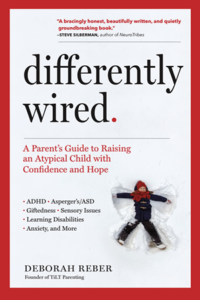
 Debbie Reber, MA is a parenting activist, bestselling author, speaker, and the CEO and founder of TiLT Parenting, a resource, top-performing podcast, consultancy, and community with a focus on shifting the paradigm for parents raising and embracing neurodivergent children. A regular contributor to Psychology Today and ADDitude Magazine, and the author of more than a dozen books for children and teens, Debbie’s most recent book is Differently Wired: A Parent’s Guide to Raising an Atypical Child with Confidence and Hope.
About Margaret Webb
 Margaret Webb is a certified Master Life Coach, parenting coach, nature-based coach, former teacher, wife and mother. As a life and parenting coach, she weaves together her experience as an elementary education teacher with the tools she’s learned in Martha Beck’s Life Coach Training, Sagefire Institute’s Nature-Based Coach Training, and what she’s applied to her own life as a mom of a now 20-year-old autistic son. Her most recent book is Hero’s Journey in Parenting: Parenting the Child You Didn’t Expect While You Were Expecting.
Things you’ll learn from this episode
- Why understanding the unique challenges faced by parents of neurodivergent kids is essential for developing flexible, responsive parenting strategies
- How tools like 504 plans and consistent routines can support smoother transitions and reduce stress for neurodivergent children
- Why introducing concepts like spoon theory and early conversations about neurodiversity helps children better understand and advocate for their needs
- How recognizing and supporting your child’s masking behaviors can lead to greater emotional safety and authenticity
- Why identifying flow activities and creating simple transition rituals can help children regulate and recharge throughout the day
- How encouraging experimentation in parenting and promoting self-advocacy in kids fosters resilience and long-term independence
Resources mentioned
- Dr. Mona Delahooke on the Power of Brain Body Parenting (Tilt Parenting podcast)
- Autum Romano on the Safe & Sound Protocol (Tilt Parenting podcast)
- The Autistic Burnout Workbook: Your Guide to Your Personal Recovery Plan by Dr. Megan Anna Neff
Want to go deeper?
The Differently Wired Club is not your typical membership community.
 There’s something here for everyone, whether you’re a sit back and absorb learner, a hands-on, connect and engage learner, and everything in between. Join the Differently Wired Club and get unstuck, ditch the overwhelm, and find confidence, connection, and JOY in parenting your differently wired child.
Learn more about the Differently Wired Club
Do you have a question for Debbie to address
on an upcoming Parent Lean-In episode?
Submit your question (via voice message or in writing) below!
Episode Transcript
Debbie:
Today, Margaret Webb is joining me. If she’s not on your radar, Margaret is the author of the wonderful new book, A Hero’s Journey in Parenting: Parenting the Child You Didn’t Expect When You Were Expecting. And I’m also so fortunate that she is the lead parenting coach in my Differently Wired Club, where she provides a ton of support for the parents in that community. So thank you so much for being here, Margaret.
Margaret:
I’m so glad to be here.
Debbie:
I love doing this with you. Okay, so let’s get to today’s question. This one comes from the mom of a seven year old and she wrote to us. My son thrives in school and therefore doesn’t qualify for an IEP. The issue is he is basically masking all day. He comes home either amped up, falling apart or no energy at all. Weekends on holiday breaks are a disaster when he’s out of his routine. How do we get kids the support they need in school without an IEP. It feels impossible to add more after school appointments and give him the downtime his nervous system needs. So great question. I’m actually going to ask you to take this one first. You are a former teacher. I’m really curious to hear what your wisdom is on this one.
Margaret:
Yeah, so the first thing that came to mind was if there is a disability, and I don’t like that word, but like if there is a disability to inquire about a possible 504 plan where you’re able to think about like, there asks or tasks that your child is being asked to do during school that is requiring a lot of energy from them and requiring the masking. so knowing that upfront and saying, here’s, and getting the teachers involved to see, yeah, like, okay, my hunch is that this is probably a kiddo who’s a perfectionist, who’s a gold star seeker, who’s like a high achiever. And so it’s like, I gotta keep it together. It could be a people pleaser. I got to keep it together when I’m at school. And then when I come home, then like that’s when I get to unleash, release, and then, you know, the parents are often kind of surprised because it’s like, whoa, you know, like I’m getting this feedback from the teachers that like everything’s great at school. But then I get this kiddo who’s like, utterly exhausted. With regards to the parenting aspect of that, find and like really think about what are the flow type activities that that your kiddo like that helps them to kind of recharge. And it could be swinging, swimming, showering, bathing. It could be reading.
It could be playing with Legos. Think about what your child does or has done in the past that when they don’t have anything to do, that’s what they choose to do. And try to incorporate those as much as possible after school so that they get that time to recharge and remember like, okay, wow. This feels good being me and I don’t have to be this other, know, I can be that person when I’m at school, but this is also me. And then with regards to the weekends and the holiday times, I know a lot of people are resistant to creating routines or structures during off times, but if your kiddo is thriving in a structured situation, kind of take note of that and see if you can create some sort of, even if it’s a loose structure, where they kind of know like, okay, this is what we’re doing throughout the day so that they can, you know, they can regulate themselves and they can know what’s being expected. I think the unexpected can often throw our kids into dysregulation. And so knowing that, and saying, okay, even if there’s a change in plans, letting them know as soon as possible can be really helpful.
Debbie:
Well, I love that you mentioned the 504 plan. I think that is really important. I mean, when I first read this question, I was like, that’s awesome that he’s thriving in school right now. Like that is a win. And that’s where he is right now, right? He’s seven. And so there may also come a time when he isn’t able to hold it together, whether the demands at school ramp up and, you know, a lot of other social, there could be social things happening, know, puberty, all these other pieces that could kind of make things more complex. So I do think it is really important if there is a diagnosis, just to think about how can we make sure that we have the documentation that we need so that when it is time to make a case for more support in the classroom, you’re kind of ready to go. But I, you know, going to the part of the question, the last part of the question was it feels impossible to add more after school appointments and give him the downtime his nervous system needs. And so I read that I was like, I actually don’t think that support necessarily means more appointments, just as you said, like it’s finding those things that he enjoys to do that he is in flow to be tending to his nervous systems. You can do that at home. You could do that without other people.
And I wanted to mention spoon theory. I was just talking with Dr. Megan Ananeff about her fantastic book, the Autistic Burnout Workbook. And she writes about spoon theory in there. It was developed by Christine Miserandino. I hope I’m saying that right. But it’s basically a metaphor to explain the limited energy reserves that many people, especially neurodivergent people, might have, right? And so the idea is that spoons represent units of energy. So every task in your day is a spoon, getting out of bed, showering, going to school, attending to a lesson, interacting with other kids. All of those things can require different spoons. And when you run out of spoons, you are done for the day. Doesn’t matter what else is happening that day. So I think about that, I was thinking about spoon theory as I read this, that he comes home from school and his spoons are gone, like he’s got no spoons. thinking about how can you help your son collect more spoons? And again, that’s gonna be unique to him. What restores him? Are there sensory things, nature, rituals? And really working with him to figure out what those things are, this is a great opportunity to help him start to you know, tune in and become aware of the things that regulate him and that help him feel calm because ultimately, right, we want our kids to know what these things are for themselves so that they can self advocate and, and do what they need to do when they are out of spoons. Another thing I wanted to mention, while we’re talking to him is also talking to him about masking, like that is such an important concept.
And I think that so many kids are doing it, especially if they are high performing or they’re perfectionistic, or they are really like aware of where they are in relationship to other people, they may be masking subconsciously and they don’t realize that they’re doing it. They don’t realize that they have a choice about it. And so that is something I would wanna have a conversation about right now, being aware that you’re doing it, understanding the toll that it takes on you and knowing that the goal is that our kids are ultimately in choice about whether and or when they mask. So just helping him kind of start to understand the concept of that. Another thing, I took a lot of notes on this one. Another thing that I was thinking about that could be worth exploring is the Safe and Sound Protocol, SSP and that is, I’ve done a podcast episode on this with Audemars Mano probably a year ago, but it was developed by Dr. Steven Porges who developed the polyvagal theory and it is a very passive way to regulate your nervous system. And you can do it with young kids and it involves listening to music and while you’re doing other things, you can listen to music while doing a puzzle or while coloring or something. Music is designed to specifically kind of almost massage your vagus nerve. So it will help to regulate. So if you’re looking for some extra support to bring the nervous system down, that might be worth looking into. Dr. Porges has a new book out called The Safe and Sound Protocol. I haven’t read it yet. I was just sent the book and fingers crossed he’s coming on the podcast to talk about it. But that’s something that I think.
Margaret:
Is that something that you can listen to like in the car on the way home? Or does it have to be like headphones or AirPods?
Debbie:
Yeah, that’s a good question. Ideally it’s headphones and actually not AirPods. We did it here last year and you are meant to have headphones that kind of fully cover the ear. you again, you can be doing something very passive, but not something that would require reading or something like that. But if you have the right headphones, then I think you could do it in the car. Absolutely. Could be a nice kind of transition.
Margaret:
Yeah, I think our son did something very similar to that years ago, where it’s, you know, brainwave based or other things. So, and I’m always thinking like, okay, like how do we kind of smooth the transition from school to home as much as possible? And so if that’s something where it’s like, yeah, just, you know, and you can still be doing your thing in the car as we drive home but like just playing around with what are the different possibilities and options. So it’s not like, okay, get home, here’s another ask for you. You gotta put your headphones on. It’s like, we’ve got this natural time to do this and see if that helps. There’s a lot of experimentation with parenting our kiddos and playing around with different things.
Debbie:
Yeah, absolutely. And as part of that too, right? It’s not whatever, you know, figuring out what works now may not work a month down the road. So it’s ongoing experimentation. That’s the fun part of what we’re doing here. One of the fun things, but yes, I love that because, you know, I’m thinking too of, you know, I had a friend who was in therapy and was really struggling going from the work professional life to the home life and the therapist recommended that she create a transition ritual. So it literally kind of takes you from what’s happening here and then you can enter the home in a different place. So or you could have something that you do at home that again, you design with a kid that’s fun that you make it silly like ways to formally say, okay, we’re shedding off the mask, the skin, whatever, you could Minecraft skin, you know, and kind of transition to this other environment that, you know, if you design it together, could even just the environment could instantly send your nervous system the message that you’re safe and it can help bring it down. And one last thing on that, and then if you have any additional thoughts, share them. I was also thinking of Dr. Mona Delahooke’s work when I read this question. And one of the things she talks about is the nervous system platforms of our kids, right? And so we know neurodivergent kids tend to have platforms that aren’t as sturdy, but the goal isn’t to like, we can’t change our nervous system platform, right? But what we can do is learn how to tolerate the ups and downs and be more flexible with them. Right? So if we think about that as being the ultimate goal here is that your son is able to more fluidly move without huge disruptions or explosions, tolerate those changes and tolerate the frustrations and come down to calm more easily, right? And that’s through figuring out what he needs, what kind of tools he can have in his toolbox to help him regulate in the moment and kind of smoothly kind of tolerate that. So yeah, just some things to think about there. Anything else that I shared brought up in you or anything else that you want to add, Margaret?
Margaret:
No, other than just I’m imagining a trampoline and just, know, like as you’re talking about just the platform where it’s like, you know, seeing okay, and giving, giving, you know, as a parent giving yourself grace and also knowing like they’re not doing this, like, they’re not doing anything on purpose. This is just how they’re regulating and the more curious you can be about who they are and what they need. And I love how you talked about bringing them into the conversation to build awareness of their stuff. I think our kids are really lucky that we’re having conversations like this and encouraging parents to think about things like this at such an early age so that they learn more about who they are instead of getting to, you know 51 and figuring this stuff out.
Debbie:
Raising hand, feeling very seen, Yes, thank you. Well, I just wanna say thank you for the listener who sent in that question. If you’re listening to this and you have a question for us, you can submit it either in writing or you can actually call and leave an audio message with your question. We’d love to answer your question on a future episode. And Margaret, I want to say thank you so much for joining me today and tackling this one with me.
Margaret:
So happy to be here.
Do you have an idea for an upcoming episode? Please share your idea in my Suggestion Box.