Dr. Emily King & the Neurodivergent Learner: A New Approach to Your Child’s Success
Today we’re exploring a more holistic, humane approach to supporting neurodivergent learners — one that starts with understanding the nervous system and builds from there. My guest is Dr. Emily King, a child psychologist who has spent more than 20 years working with neurodivergent youth in both school settings and private practice. She’s the creator of The Neurodiverse Classroom®, a professional development curriculum for educators, and the author of her new book The Neurodivergent Learner, which we’ll be talking about today.
In our conversation, Emily and I talk about why safety and regulation are foundational for learning, how relationships at school can shape outcomes in powerful ways, and what it means to redefine success for kids who don’t fit traditional models. We also explore practical ways parents can partner with schools to better support their children, and how shifting our lens can open up new possibilities for growth, connection, and well-being.
About Dr. Emily King
 Dr. Emily King is a child psychologist who has worked with neurodivergent learners for over 20 years. She received a Ph.D. in School Psychology from the University of North Carolina-Chapel Hill and began her career in Houston, Texas, specializing in school-based mental health in K-12 public schools. She has since worked in private practice in North Carolina supporting the mental health, executive functioning, and social needs of neurodivergent youth. Dr. Emily hosts the Learn with Dr. Emily Substack, where she provides parent workshops, is the creator of The Neurodiverse Classroom®, a professional development curriculum for educators, and her first book, The Neurodivergent Learner, was released in August 2026.
Things you’ll learn from this episode
- How mental health, education, and neurodivergence are deeply interconnected in shaping a child’s experience
- Why building felt safety and a true sense of community at school is foundational for learning
- How navigating IEPs, homework, and behavior systems benefits from a flexible, relationship-centered approach
- Why prioritizing social satisfaction over social achievement supports authentic connection and well-being
- How parents can assess and choose school environments that truly fit their neurodivergent child
- Why leading with relationships and adaptability strengthens both parenting and advocacy
Resources mentioned
- Pre-order bonuses for The Neurodivergent Learner
- The Neurodivergent Learner: A New Approach to Your Child’s Success in the Classroom & Beyond by Dr. Emily King
- Learn with Dr. Emily (Emily’s Substack)
- Redefining Success for Neurodivergent Children, with Dr. Emily (Tilt Parenting Podcast)
Want to go deeper?

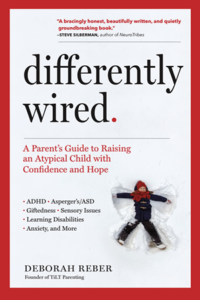
There’s something here for everyone, whether you’re a sit back and absorb learner, a hands-on, connect and engage learner, and everything in between. Join the Differently Wired Club and get unstuck, ditch the overwhelm, and find confidence, connection, and JOY in parenting your differently wired child.
Learn more about the Differently Wired Club
Episode Transcript
Debbie:
Hey Emily, welcome back to the podcast.
Dr. Emily King:
Hey Debbie, thanks so much for having me.
Debbie:
Well, I’m excited because I’ve known about this book for quite a while. And in fact, last time you’re on the podcast, I knew it was coming and I was like, my gosh, I can’t wait for that book. And now it’s finally here. So first of all, congratulations on, you know, as we’re recording this, you’re approaching the finish line.
Dr. Emily King:
Thank you so much. I’m so excited to have it out in the world. And I’m so honored that people are reading it and talking about it. And I can’t wait to just hear your questions and start discussions.
Debbie:
Awesome. Well, I’m gonna actually say the name of your book up front. And then I’m gonna ask you to tell us a little bit about your wife, we’re putting it out into the world. So your brand new book is called the neurodivergent learner, a new approach to your child’s success in the classroom and beyond. And again, when I heard you were writing this, like a year or two ago, it’s like, I’m so glad we need this book. So tell me tell us about why you felt so strongly about getting this out into the world.
Dr. Emily King:
Well, you know, as a mom of neurodivergent boys and then as a child psychologist and former school psychologist, I had lived all these different parallel journeys, right? As a clinician, as a parent. But then I started working with teachers more, working with parents more. And there’s such a disconnect between mental health and education when it comes to neurodivergent learners. It’s like, It truly is a Venn diagram. You cannot just know about education and teach them or know about mental health and treat them. It is a Venn diagram, I feel like, between the medical, the educational and the developmental, which is different from the medical. Because as a psychologist, you know, I’m trained on human learning development. And so I see it from that lens. And then I see how you know, things interfere with that when it comes to autism and ADHD and learning disabilities. And then there’s just the environmental stuff that happens with anxiety and family dynamics and the stress on schools all over the world for different reasons. So none of this occurs in a vacuum. But I feel like parents go to teachers, parents go to therapists, parents go to each other. Right. And they never get that. rounded approach to, but how do I help this child learn? And I wanted to make sure that the book was part for advocating within an educational setting, but also I really want all the readers to come away with the idea, because half the book talks about learning outside of the classroom. So the idea that learning is lifelong can happen anywhere. We culturally put so much emphasis on achievement. And that’s the new approach that I’m coming to with this book is it’s not all about achievement. And that’s true for everyone, but it is so true for our kids who have so many gifts to share and it may not be able to be measured in achievement.
Debbie:
And you know, listeners, you guys should go back and listen to our last conversation when Emily was on the show. I’ll put it in the show notes page because that’s what we talked about redefining success. And I think that’s such an important piece of this conversation. And I love this idea of being a lifelong learner that did jump out at me too, as I was reading the book that This isn’t just a book about how to get your kid through the system. I mean, there’s so much practical insight in there about how to navigate traditional educational systems, but you’re looking at kind of the child as a whole in a way I wasn’t expecting that I really loved.
Dr. Emily King:
Thank you. Yeah, I mean, there are many, many books, you know, from parents’ perspectives, from teachers’ perspectives, from advocates who work within the IEP system in the states about how to get your child access, all those logistics, but not one that puts it together and helps parents really know how to balance their energy because If you put all your energy, you can put all your energy into the IEP or all your energy into the doctor’s appointments or all your energy into behavior management. And at many times you are doing all of those things, but to know when to be concerned and when to step back and when to let the teacher and the child figure it out. That’s how we’re going to stay sane as parents, right? And how we can build a village beyond just us.
Debbie:
Yeah. How did you go about organizing the book and kind of thinking about putting it together? Because, you know, when you’re writing a book, you’re starting with a blank slate. can be anything, which is the both, both the beautiful thing and the really challenging thing. Yeah. Yeah. So I’m just curious to hear more about your process as you started to shape it.
Dr. Emily King:
And the terrifying thing. Yeah. probably spent more time thinking about this book than actually writing it. That is just how my brain works. I think about things for a very long time. I outline things, I talk about things, and then I’m ready. I decided that I wanted there to be science. I wanted there to be strategies, and I wanted there to be stories. And as a trained school psychologist, it kind of takes the form of how I was trained to write a psychoeducational report. You write the background and the story of a child, and then you go into the science and the data of like, this is what the testing shows. And then you go into the recommendations of this is what will help this child. And I think that’s ingrained in me a little bit of, you know, that story arc of telling, I always have thought about, and this is probably. why I am so excited to write a book and no longer do psychoeducational testing, but I’ve always thought of psychoeducational reports like a story of that child, like telling the story of that child. And so when I thought about each chapter, I knew that I needed there to be just a fundamental, basic understanding of the nervous system. So that’s where I started, because everything in the book is framed out from understanding the autonomic nervous understanding that you have to feel safe, then you have to feel connected, and then you have to feel capable. And then we sprinkle the strategies on top, right? And first part of the book is feeling safe in the building and with the relationships and with the curriculum and then feeling motivated and then going into what’s harder about school, which is mainly the hot topics in part two or homework, testing and friendships. And those are the things that traditionally I see so much in my psychology practice and really interfere not always interfere with learning, but disrupt it, right? It disrupts the flow of learning and can sometimes make it harder. And then the third section is all about empowering, self-advocating, learning through a chapter in there on anxiety that’s called, Hold On, The School Is Calling, which everyone I know can relate to.
Debbie:
Feeling the cortisol run through my body as you say that.
Dr. Emily King:
Right, right. And I have, you know, had that call too. So I understand what that feels like and how to respond to that. So every chapter starts with a story followed by the science, followed by recommendations. And then at the end of every chapter, I give parents an email script to communicate with a teacher. Because I would say one of the number one questions I get from parents not wanting to overwhelm teachers but also not wanting to just let it go and let their kid fend for themselves, right? This book is predominantly for entering elementary through about early middle school. So we’re still, we’re advocating for our kids. We’re still not expecting them necessarily to speak up. I hope there’s a follow-up book that talks about twins and teens and young adults, but we’ll get there later. But I have parents who say, what do I say? I don’t want to overwhelm the teacher. I don’t want to tell them how to do their job. So I hope those email scripts are helpful to just get you started on what to say to reach out. Because what I worry about is some parents won’t reach out at all because they’re worried about stepping on teachers’ toes. And teachers want our information. They want our collaboration. They want our teamwork. Our kids benefit when we share stories from home.
Debbie:
Yeah, I love that you included that. I mean, you know, I and I would just say full disclosure listeners, I did get to read Emily’s book in advance and I provided a blurb for it. And I’m gonna share the blurb that I wrote. So you guys can hear how it struck me. I said, if this book had only existed. It was everything I needed as the parent of a complex neurodivergent two week kid who was absolutely not thriving in school. As a young kid, it didn’t exist. And now it does. This is the unedited version, by the way, I cleaned it up when I sent it to you. But these are my raw thoughts on it. And it’s going to help so many families at the start of this journey imagine what can happen when we prevent a whole generation of neurodivergent kids to not be traumatized by their school experience. As the parent of a 21-year-old, I just think it really took me back to those years of just floundering and just feeling like we were speaking different languages. I just could not get through.
Dr. Emily King:
Yes.
Debbie:
What I was feeling the way I wanted my child to be seen and then what was happening at the school level with behaviors and other things. And I just felt like we were all, all of these stakeholders were living in completely different universes.
Dr. Emily King:
Yeah, and when my oldest son, who’s 18, a senior now, was four years old, was when he was diagnosed and when we and the IEP process, remember thinking, this is what I do for my job. Like, I know what they’re saying in these meetings. And my comparison to this was watching the parallel experience of my husband and me. So we were both, you know, in these meetings and he had no idea all this language they were using, right? And I understood all the language. had a PhD in school psychology. I’d been a school psychologist for five years already. But that did not protect me from the emotional experience of sitting there talking about really hard things about how my kid couldn’t handle the classroom. We were gonna need to change schools because he couldn’t handle it. going in thinking it was going to be okay and it very much was not okay. Like really unexpected moments in early elementary school that we just didn’t see coming even though I do what I do. So I also want to name that for parents. Like it’s not because you don’t know enough. Like knowing enough helps because it helps you feel confident and competent in these meetings. But no one gets away from this. emotionally and we have to really share our stories and connect with each other and recognize just as one day at a time. It’s like one day at a time and then I think I say somewhere in the book because I’ve said this for years. One school year at a time. I started saying that a long time ago, the very beginning of my son’s journey. Let’s just do the next best thing for the next school year.
Debbie:
Totally. Yeah, there’s very little long term planning. There’s very few of us who kind of start a K through eight school and we just kind of move on through that system without any hiccups. I always say, yeah, it would be. Yeah, I can’t imagine what that would be like.
Dr. Emily King:
Wouldn’t that be nice?
Debbie:
I’d love to go back to something, you know, as you were walking us through the different parts of the book, you talked about safety at school and you write about building a school family as establishing felt safety. And I’m just wondering if you could go into that in a little more detail. What does that actually mean? And how can we as parents really kind of foster that kind of environment for our kids at school?
Dr. Emily King:
Yeah, I think in elementary school, especially we think about just the teacher, the classroom teacher. And does my kid have a good teacher, not a good teacher? Do they get it? Do they not get it? And we put a lot of weight on that person. let me, I mean, let me tell you a good teacher fit will make the school year. That is true. However, there are relationships. all over that building, as well as sometimes through transportation or through after school care, before school care, throughout your child’s day that can help school feel safer for them. So think about your child’s day from their perspective from the moment they leave the home until they return home. And who are the people that they interact with? Is there a bus driver? Is there a fifth grader at carpool getting them out of the car? Is there someone on lunch duty they connect with or don’t connect with? Who are the people in the hallways? Is there a certain teacher that’s not even their classroom teacher that knows a lot about their special interest? Is there an elective teacher or we call them specials here like music, PE, dance, one of those teachers that’s not a classroom teacher, but your child is always feeling safe and connected with them. Those are going to become the family at school. And when you hit a rough patch with your child, or if there’s a staff member who’s not connecting, we want to be able to say, you know what, my kid always talks about the art teacher and how that person makes them laugh. I would love to hear more about that. And usually the art teacher does not come to an IEP meeting. And usually we don’t have much interaction with these smaller roles. Or it might be, you know, someone that our kid has mentioned and we’re like, who is this, who is this kid named Johnny? My kid keeps saying something about him and we can hopefully get more information about what’s going well because I Talk about this in the book, the education system is very much that the special education system is very much set up similar to the medical model where we have a problem and we try to fix it and no news is good news. Well, we can prevent so many things from happening if we think about this from a strengths based approach and think where is my kid laughing? Where are they not resistant at all to going? Where do that? Where do I never hear about a problem and what’s going on in those environments? Is it the time of day? Is it the person? Is it the topic? What is happening that’s working and how can we expand it out from there? Because those are where the solutions are.
Debbie:
Yeah, it makes sense. And just having that one anchor, I’m thinking about the kids who, you know, go have lunch in the art room, because the art teacher really gets them and it’s like a safe haven for them. So I really like that concept. So obviously feeling safe at school is a sign of a good school fit or that we have kind of those key people. What are some of the other known criteria that you would say for a good school fit? I mean, this is something that comes up a lot, especially as parents are entering early elementary. It’s like, how much should I say about what’s going on? I don’t want my kid to have a target on their back. And, you know, there’s a lot of kind of like, let’s kind of on a wing and a prayer, let’s just, you know, roll the dice and hope that it’s a good fit. And so, you know, obviously, I think that doesn’t work for a lot of us. And so really knowing what are what are we looking for and what would be signs that this is a good school fit for our kids versus, you know, this isn’t a safe environment?
Dr. Emily King:
This is when I actually want to challenge parents to get out of their head a little bit and get into their body when they are touring schools. And what I mean by this is your child has conditioned you to know what startles them, to know what makes them laugh, to know what’s going to be loud for them or overwhelming for them. I mean, how many of us think when a loud motorcycle goes by, you know, I know sometimes it makes me startle and then I’m really glad my kid is not with me because I know that would overwhelm him or something like thoughts like that. And so, you know, your child really well. So think about when you’re walking through a school, how you think your child would respond from a sensory perspective? Because number one, we have to feel sensory safe before we even get to the relationships. And so they are able to navigate the building? The lights, the crowds, the noise, are there things about the building they will love? The way it’s mapped out, are there room numbers that they love to track, maps and room numbers and things like Think through just how you think your child will respond, which is not something a lot of parents think about. They think about the stats of the school, the achievement of the school. And I often will tell parents, if you Google a school, and look for test scores, that tells you 0 % about the relationships in that building and 0 % about the sensory experience of that building. And so you have to get in there, meet the people, walk around, feel the space, and truly trust your gut if you feel overwhelmed. Now it’s possible too, if you are more overwhelmed. I’ve got my youngest, I would say I’m more sensitive than my youngest and he’s just like full steam ahead, fast as can be everywhere. He really needs a lot of movement. And so I know that about him I’m gonna see things, I’m like, he would love that. If you’re walking through a school and you’re like, they would love this, that’s a great sign because there’s gotta be stuff they love, because there’s gonna be stuff that’s hard in any school. And there’s no best school. There’s only the school that’s right for your kid. And the choice you make now may not be the choice you make five years from now, because you haven’t met that kid yet. work with kids over time, so I see them grow up. kids achieve things we never thought in our mind that would happen. This is true of my own kids. I’m like… It was partly protective, I’m sure, that I was like, I’m just gonna take this one school year at a time. But it’s not lost on me that this book is coming out at the same time, a few months later actually, than my oldest is graduating from high school. And I’m like, this is the year, is the year of like, I can’t believe this is happening because I, know, thinking forward, just not something I did. I was just in the moment trying to do the next best thing for him, which is what you’re doing when you’re picking a school.
Debbie:
Mm hmm. Yeah. I know that feeling too. Like, I didn’t know we were gonna get here. So that’s pretty cool that this is converging. This book coming out is converging with that milestone. It’s very cool. So okay, so in terms of red flags for a school not fitting, you know, I think this is, again, something I hear about all the time. It’s like, parents are always trying to find allies at school or we can kind of, if we notice our kids are getting more and more dysregulated, but we still wanna work with the school or we’re not ready to give up. Like I’ll just say for me, for one of the schools that we left it was definitely the teacher situation that didn’t feel safe. felt actually unsafe, emotionally unsafe for my child to be in that environment. Are there any other kinds of big things that you would want parents to pay attention to, to kind of consider? Okay, maybe it’s time to pivot here.
Dr. Emily King:
Mm-hmm. Yeah, before I answer this, also want to say it’s a privilege to be able to change schools. They’re absolutely some parents, most parents that I talked to, they’re going to go to their neighborhood public school and you will be negotiating, collaborating about services with the people that you got. And so that’s just reality for many people. There’s I write some in the book about, you know, all types of strategies for collaboration. But if you have the choice in public schools, you and the staff are going to be on the same page of trying to figure out, is this child in the right, you know, placement for services? Do they need more support if it’s not going well? So that’s one avenue. The other avenue is just like you’re feeling stuck on this is just the way the school is like it’s too big. You can’t change the size of a school. The curriculum is moving too fast. And so if you’re in a private school, they don’t have to change the curriculum for you. If you’re in a public school, an IEP, of course, can slow down that pacing of curriculum. What I would say is the biggest red flag is a few. I definitely if you don’t feel safe, if your child doesn’t feel safe, if the school has stopped collaborating with you, like if you feel like they’re out of ideas, if you because Because problems happen, problems are gonna happen and you could have a whole school year that’s awful as long as you feel like you have a team and you’re working on it you’re collaborating. Sometimes it does just take time for kids to mature. But it’s if you feel like they’ve stopped working on it basically. And then if your child is experiencing behaviors that are causing them to not be able to learn or their classmates to not be able to learn. that’s not sustainable, right, for either of them or for anyone. Because, you know, many times what happens is there’s social blowback from that, right? So kids who have big behaviors, you know, we have tons of compassion for them and we can be as neuroaffirming as possible, but their peers are going to be really hesitant to socialize or be close to them because they’re then feeling scared of the behavior and not fully being able to understand our child. So those are some red flags to look for.
Debbie:
Mm hmm. That is a really hard situation to be in, so let’s talk for a few minutes about positive reinforcement plans or behavioral systems. You talk about this in the book, these external motivation drivers. And I’m just curious to know your thoughts and you described them in the book, but I’d like to share them with listeners for when they can be helpful. What do schools get wrong? And how can we work with those systems? Because there’s just a lot of confusion around how and when to use these and if they’re effective.
Dr. Emily King:
So PBIS is what we call these in the States. And these systems are school-wide behavior systems that are meant to motivate kids to be kind, to do their work, to show up as good citizens of the school. You know, it feels like they’re good ideas, right? They’re good ideas. They’re If they’re doable for the child, it’s great to hold everyone accountable. However, when they become a problem is when a child doesn’t have the skills to meet the expectations, right? So if we really truly think about a behavioral expectation to be kind to everyone, and then you don’t earn a ticket when you’re not kind to everyone, well, If you have explosive emotional moments due to ADHD or someone interrupts your work plan and you’re very rigid because you’re autistic, there may be some moments where you’re not kind to people and it’s part of your disability. And so we have to think broader in the sense of I think about it in the sense of tears. So like there’s gonna be a swath of kids that absolutely can meet the expectations of a school-wide behavior program. PBIS is what it’s called in most public schools in the States and then private schools can have similar, I mean, things that have different names. There’s a swath of kids that can do it. That’s great for them. They’ll hold them to those expectations. And then there are kids that are going to be able to meet those expectations with support. So that may mean that they’re going to need to be prompted to be kind, or they’re going to need to be prompted to turn all their work in. They’re gonna need strategies, right? And then there’s probably a category of kids who cannot meet those goals because they don’t have those skills yet. And we don’t want them to be penalized because they don’t have the skills. where this comes from in talking about motivation is you can’t be motivated to do something that you aren’t capable of doing. So it’s like not giving a kid a ticket to run a race because he broke his leg. So we wouldn’t do that. We wouldn’t say you’re not invited to the party. because you didn’t run the race because your leg is broken. And so when you put it in physical terms like that, it feels obvious, but it’s harder, I think, too, with when we talk about mood and social interactions because when you have a broken leg, it doesn’t hurt anybody’s feelings. But if you have explosive emotions, you might hurt someone’s feelings. So it is more complicated than physical, but the analogy still stands as like, let’s talk about capability, right? And so what I would suggest and what I’ve consulted with teachers on is let’s make individualized goals for that kid so they can earn a ticket for being able to apologize. If that’s the skill they’re working on, being able to check in with a friend that they may have said something hurtful to, and that’s how they’re earning things. I don’t love the idea of external motivation all the time. However, when these systems are so ingrained, it becomes pretty obvious if you’re the kid that didn’t earn a ticket. So it becomes more than just externally motivated, and it’s like a culture, right? So we want to help. All kids work towards improving whatever the skill is that they’re working on. And for some kids, the goals just have to be individualized, just like with academics.
Debbie:
Yeah, right. And done so in a way that doesn’t guilt or shame anyone for not being able to meet. That’s why that individualized approach is so important. Yeah.
Dr. Emily King:
Right, because what will happen is, you didn’t get to go to the pizza party on Friday because you didn’t earn a ticket and it happens every Friday and then a child gets defeated. I’m so dumb because I have ADHD because I can’t earn a ticket and they’re probably, you know, incredibly intelligent and confused why they can be so intelligent and never remember to turn their work in if that’s the goal. And so we just need to find either another goal or we need to scaffold that goal for them. or support that goal with a strategy. So it’s doable.
Debbie:
Mm hmm. Yeah, yeah. Yeah, yeah, I like that. Okay, I want to pivot to talk about homework for a little bit. I took a lot of notes on homework. You have a whole chapter on it. And I really liked your take on how you think about homework in terms of these two steps, which were learning the learning understands the concept or skill and then the learner is motivated to improve their skill. That’s really what homework’s about. And I think there’s a lot of confusion, right, about maybe on the part of school and then parents can get really caught up in the homework nagging and all of those things. So could you unpack your general thoughts about homework and then we’ll go a little deeper into that.
Dr. Emily King:
Yeah, I think about homework as learning how to be an independent worker. If I could rebrand homework, I would say learning how to work alone, right? And so at school, they may work in groups, they’re working with supervision, so someone’s keeping them on task. They may have a friend that is working with them, you know, as a partner. But what homework truly is, like think about what we do in all of our work as adults. We have to focus on, let’s say a project or something we’re writing. We have those executive functioning skills because of the homework that we did, because of the independent work that we were taught to do over time. Now, the fact that it happens at home is what’s problematic, right? Because you could become an independent worker when it comes to things like executive functioning or writing, reading, creating projects, things like that. anywhere. You don’t have to be at home. Where it becomes problematic is that when you have a neurodivergent learner, know, most parents are not special education teachers. They don’t have the expertise to walk kids through homework that is really difficult for them. And so this chapter is full of strategies on how to scaffold homework, make systems for homework, make it visual, all those things. But what it comes down to is the purpose of homework is to help our kids learn how to be independent workers and then think about where do we want to teach them to expand those skills because we’re going to notice what they’re motivated by, what they’re not motivated by. And there is some benefit in doing work that’s boring, right? We have to do that in life. It’s chores, whether it is just mundane things that we do, we have to get used to that and get comfortable with that. There’s a limit to the benefits of homework. And I talk a lot about the research behind this. And we have a lot of research and this chapter in particular. I felt like wow We have so much research that we are not listening to we are not implementing this I mean the studies go back to the late 80s where we know that Homework is effective for about one to two hours a night For high schoolers and then after that it loses its benefit because they lose sleep And then for younger grades, it’s kind of a take it or leave it thing based on if they’re interested, if they’re motivated to do it. So I do feel like elementary schools are getting on board with let’s just read every night. Let’s read and play. Middle schools are my beef right now because middle schools are still trying to be high schools. But these kids’ executive functioning is not developed. So school is a whole cluster of executive functioning lift for these kids who are very much behind in executive functioning, especially if they’re neurodivergent learners, we’re trying to put high school expectations on executive functioning skills of maybe a third or fourth grader, because they’re generally a few years behind if they have ADHD. So when we think about things like that and parents are like, my gosh, why is middle school so hard? You’re not dreaming it. It’s hard.
Debbie:
Yeah, absolutely. I mean, in that chapter, you broke down 17 steps of doing a homework assignment. It was just so powerful to see it laid out like that. It’s not just sitting down and doing homework. There’s so many skills involved there and each one probably needs to be developed and paid attention to. So I really appreciated that. And you offered some great strategies like if homework is a sticking point, like consider having the child only do homework in their preferred subjects first, right? So they’re already kind of bought in, considering creative ways for your child to show what she knows as opposed to, you know, whatever the expectation is across the board for all students. Do you have any suggestions for parents who are feeling like the homework demands are crushing their kids and just creating so much stress for their families. Are there any best practices for how to talk to the school about that?
Dr. Emily King:
Yeah, I mean, when I talked with teachers, this is the one chapter I talked more with teachers than other chapters. They want to know if homework is overwhelming for your child and they don’t want to be causing more stress at home because that’s just going to lead into a cycle of I hate school. I don’t want to be here, especially with the teacher being the one that’s assigning it. Right. And so. When I talk to, specifically in the book, I mentioned a conversation from a third grader letting them know, sending, I think I have an email script at the end of that chapter, letting them know like, this is what it looks like at our kitchen table. And I’m curious what it looks like at school, because we have to get down to, is it the time of day? It truly could just be that. Like your kid, is exhausted and they have mastered this skill at school and the teacher had no idea that it was so rough at home because they’re just out of stamina. And the teacher may say, they can totally do this independently in the classroom. Don’t even worry about that at home. Because when we get down to like, what is the purpose of doing this at home? Well, if the purpose of this is either extra practice, then as the parent, you’re like, I don’t think I’m the one to help with this because I don’t know how to teach them this math. you know, basically passed like fourth or fifth grade, right? We get start to get like, I don’t know, even though we all did math for so long in school, I didn’t remember any of it. And then helping, you know, figure out the time of day? Is it because they haven’t mastered the concept? I truly think that we shouldn’t be sending homework home if they haven’t mastered the concept. That’s something that should I think be worked on more with a teacher who knows how to teach that concept. is for our learners, so for neurodivergent learners, because it doesn’t make sense that you would be able to independently work on something that you don’t fully understand. So if it’s not yet mastered, let’s not, or not close to being mastered. Let’s talk to the teacher about can we get a little closer to mastery so that we want to get to the point where you’re just sitting next to your child and you’re supporting their executive functioning, but you’re not supporting the content learning. But there are going to be times where you do need to support the content learning because that, mean, everyone’s getting assigned homework right now. But I think bigger picture, I do think we could do less homework and still, not still, but. Be happier, playful, connected families.
Debbie:
Yeah. Yeah. Yes, for sure. I know the struggle is real, the stress around homework, because it really, it triggers so much anxiety in parents, especially as our kids get older, and the stakes seem higher. and it’s like, our priority should always be staying connected, deeply connected with our kids. And so, you know, thinking about homework being the thing that that and screen time being the thing that kind of creates so much disconnect. So all right, there’s so many more things we could go into, I’m gonna just ask you about one more chapter, and then we’ll wrap up. Can you talk a little bit more about the importance of social lives in school? So you have a whole chapter on friendships, which I really appreciated. We know that friendships and social lives of neurodivergent kids can be really complex. So yeah, I just would love it if you could kind of talk about why that was so important to include and just some thoughts on that.
Dr. Emily King:
Yeah, I talk a lot about making friends and keeping friends, are two different skills, right? And so depending on your child, you may have one or the other concerns for them or both. And generally speaking, it’s hard, a little bit harder for autistic learners to make friends. And then many times ADHD learners that they’re very, very social will make a lot of friends and then can sometimes overwhelm them and have trouble keeping those friends. So you have a neurodivergent learner in an academic setting, of course, every kid is going to be unique. They’re going to be some kids that don’t have any learning issues. They just have executive functioning weaknesses impacting their ability to learn. So at elementary and middle school levels, this often will look like kids never study. They just show up and listen and they understand everything and they don’t really have any academic challenges. Whereas a child with a learning disability is going to really struggle in school and need to work a lot harder academically. And so you may have a child that’s struggling academically and or socially. But when we think about the social learning of our kids, we really need to understand how much that impacts them as a whole child, right? Because if you are doing great in your academics and you’ve never hit a snag, like you’re an intelligent, let’s say an intelligent ADHDer that is just, you know, all of a sudden losing all their friends, that’s like totally confusing. Why is this happening? But let’s say you are a child with a learning disability and school is really hard for you, but socially, it’s going really well. That is like your spotlight of the day, right? So we need to think about social learning as just another area of learning and connection for our kids. We never talk about social skills in terms of achievement, and we shouldn’t. I’m glad we don’t. But I think there is this idea, we talked about this on the last podcast as well. There is this idea of parents being worried. that their child doesn’t have friends or that their child doesn’t have enough friends, or especially the story I share in the book is the child who is wandering on the playground and being worried. So there is this idea of social success. It may not be achievement, but it’s like, they’re not okay socially, I’m giving air quotes with okay, because they’re wandering on the playground or they only have one friend. What we really wanna think about in terms of social success is social satisfaction. And that comes from the child’s perspective. Are they satisfied with their interactions? And what we want to look for is sometimes kids wander around on the playground because they’re decompressing from being in a room that’s buzzing with energy and noises and people talking and they are fine as can be walking around on that playground. So we don’t need to worry about them. Where we should be concerned is with loneliness. If our child is lonely, if they’re feeling a lack of connection, if they’re feeling rejection, that is when we do want to get involved and try to connect them with other kids who share their interests. And I go all into talking about how that may not be a same age peer. When we lead kids into social connections through interests, especially our kids that have a wild wide array of interests, it may not be someone their same age. So we’ve got to think beyond the classroom and the playground to find these connections and to find other just social satisfaction moments for them.
Debbie:
And I love that reframing of social satisfaction. I think that’s just such a great way to think about it. It’s so individual. And again, it comes back to our own. worries and fears as parents if this doesn’t look the way we thought it would one other thing I just want to point out that I just so appreciated you have, you know, as you said at the very beginning, you have stories from families and clients that bring, you know, the material to life, but you also have quotes from kids about their lived experience peppered throughout the book. And I loved that so much, like just getting to it’s just unusual and rare to get to hear from a nine year olds about what this actually feels like. How did you go about gathering those?
Dr. Emily King:
Yeah, so if you follow me on Substack or social media, know that, you know, I put out like an all call about maybe about six months ago. was just a Google form that was like, hey, you want to be a part of my book? Here’s the Google form to fill out. And I did one for like lived experience for neurodivergent adults who had memories of schooling and. for parents and then also for kids. And the kids quotes are amazing. And some of them wanted to use their real names. Some of them wanted to change their names. But even my publisher would ask questions or my editor would ask questions like, did an 11 year old really say this? And I’m like, Yes, this is a neurodivergent 11 year old and I absolutely don’t know this child like it’s because they I only asked for first names and age. Like I don’t even know where anybody lives. I mean, they could live in another country. But I was like, I could absolutely hear a neurodivergent child saying this about school. That’s just because I had a different lived experience than my editor did. And she was like, OK, as long as that feels real, you know. the vocabulary they used, know, sometimes the way they described things they noticed in their neighborhood or things that bothered them in the school building, was it was a part of the book that I really wanted to include. I was so grateful for the kids. Well, the parents who, of course, said like, hey, do you want to answer this question and I’ll type what you say? And then and for them trusting me with that information.
Debbie:
Yeah. No, I really appreciated that. And of course, I could hear all the kids’ voices and saying that because this is who these kids are, right? They are deep thinkers and they know what they know and they know what they like and are usually pretty bold in expressing that. So, okay, we’re going to wrap up. There’s so much more we could get into. But again, you know, going back to what I said in the very beginning, when I shared my blurb, like I really feel like this is the kind of book that any parent who is navigating having a young neurodivergent kid and is entering the school system or is struggling in the school system. Like this is the book that will help them know how to best not just navigate those systems, but also zoom out and understand what really matters here and how can we kind of create a better experience overall for our children. So it again is called the neurodivergent learner, a new approach to your child’s success in the classroom and beyond. And I don’t know, is there anything that we didn’t touch upon that you would want to make sure listeners are aware of in terms of thinking about this.
Dr. Emily King:
Just to add that, as I wrote this book, there was a theme throughout that reminded me of this dance that I’ve always had with my, especially my older son, sometimes with my younger son, but also with clients. And when I talk with parents, there’s no one way to do this. There’s no right or wrong way. It is a relationship. It’s dynamic, it’s fluid, and they’ll push and pull throughout the years, but it’s just following the joy and the beauty of your kids’ interest and what lights them up and following that. What kept me coming back to the computer. I’ve kept coming back to writing and finishing this and getting all of this into one book that could extend beyond my clinical work.
Debbie:
Well, it’s wonderful. Congratulations on the book. Now also knowing that you are already thinking about a part two for older students is great to know. So we’ll keep an eye out for that when you come up for air because I know launching a book is a lot of work. Emily, thank you as always just grateful for you and the world and the work that you do and the way that you support not just families, but you are really doing so much work in schools themselves to help school systems kind of understand who our kids are. So thank you so much.
Dr. Emily King:
You’re welcome. I’m so grateful for your work, Debbie. Thank you so much for having me.
Debbie:
Thank you.
Do you have an idea for an upcoming episode? Please share your idea in my Suggestion Box.