10 Years Later: How We’ve Changed, How the Movement Has Grown (And What Comes Next)
In this special 10-year anniversary and 500th episode of Tilt Parenting, I’m turning the spotlight toward the community that has shaped the show from the beginning. I’ll share key findings from a new parent survey about the lived experience of raising neurodivergent kids, including the profound isolation many families feel and the hard-won confidence parents develop as they learn to support their children. But the bulk of this episode features reflections from longtime community members on how the neurodiversity conversation has evolved over the past decade, how this journey has changed them personally, and where they believe the movement needs to focus next. Across their stories, common themes emerge: greater visibility and language around neurodivergence, deeper compassion and nervous system awareness, the importance of community, and the urgent need for more empathy and change in schools, healthcare, and other systems that still lag behind what families and research already know.
Things you’ll learn from this episode
- Why a lack of understanding across schools, communities, and social circles remains the biggest struggle for families
- How parenting neurodivergent kids can feel exhausting and isolating—and how finding language and community can be life-changing
- Why so many parents are discovering their own neurodivergence, highlighting this as a whole-family journey
- How parents are growing more compassionate, self-aware, and willing to trust alternative paths while holding both grief and hope
- Why the future calls for systems change and a stronger commitment to connection-first, strengths-based support for neurodivergent kids
Resources mentioned
- Neurodiversity-Affirming Schools: Transforming Practices So All Students Feel Accepted & Supported by Emily Kircher-Morris and Amanda Morin
Want to go deeper?

The Differently Wired Club is not your typical membership community.
There’s something here for everyone, whether you’re a sit back and absorb learner, a hands-on, connect and engage learner, and everything in between. Join the Differently Wired Club and get unstuck, ditch the overwhelm, and find confidence, connection, and JOY in parenting your differently wired child.
Learn more about the Differently Wired Club
Episode Transcript
Debbie:
This is a very special episode. This is officially my 10-year anniversary to the day special episode. And it’s also episode number 500, so kind of a big deal. People have been asking me what it is like to have started this 10 years ago, and honestly, I don’t even know how to answer them. I can’t believe it’s been 10 years. I can’t believe I’ve been doing this show for 10 years. And I think about how much my life has changed, how much the neurodiversity movement has changed, just so many things to reflect on. And I wanted to mark this anniversary in a way that felt really true to what Tilt has always been about, which is not about me. It’s not about this show. It is about you guys out there. It is about this community. It’s about all the parents who have found their way to Tilt over the years, sometimes at 3 in the morning on random Google searches, often in tears feeling overwhelmed and hopeless and confused, and often just wondering if there’s anybody else out there who understands what’s going on in their families. So I spent a lot of time trying to figure out what to do for this episode. Some people suggested doing a panel discussion and bringing on some past guests. And I just couldn’t quite figure out what was right. And then it hit me at 5 in the morning. Often I wake up early, and that’s when I start thinking about problems that I’m noodling on. And I just realized one morning that this episode should be a celebration of our community and really in your own words.
So in a few minutes, you’re going to hear from some of the parents and community members who have been part of the Tilt journey over the years, people who have agreed to share a little bit of their story, of their experience, and what this ride has been like for them. I’m so excited to share this with you. I’m so honored to have had these conversations. And yeah, just meant a lot for me to get to sit down with these folks. And now to get to share it with you is just really cool. But before I get into that, I wanted to share something with you that I’ve just put together. And I’m really excited to get out into the world. So last summer, you guys might have participated in this. Last summer, I did something I’d been wanting to do for a really long time. I sent out a survey to parents of neurodivergent kids.
So when I first launched Tilt back in 2016, the whole year prior to that, I did a lot of research and I started with a survey because I wanted to know that other parents were struggling with the same things that I was. So it just seemed like the right time to go back and do that again and find out where people are. And this is beyond the Tilt community. I just connected with parents of neurodivergent kids all over the world. And I asked them to tell me the truth about what their lives are really like. I had over 400 parents respond. And yeah, I went into this thinking I knew what they were going to say. I mean, I’ve been doing this work for the past decade and I’ve talked to thousands and thousands of parents in this work. And I have a pretty good sense of the landscape, right? But seeing it all together, it just hit me differently. It was really incredible when I got all of the feedback in. And there were a lot of open-ended questions, so I got such interesting responses about what was really going on in their lives.
So for example, I asked parents to rate their biggest challenges on a scale of one to five. And the thing that scored the highest above school struggles, above financial strain, above trying to figure out how to navigate their child’s behavior was this, the lack of understanding of neurodivergence in our communities, in our schools, and in our social circles. That was a 4.7 out of 5. The hardest thing for these parents is feeling unseen. Of course, I read through the open-ended responses and it all resonated with me. I understood that feeling very well. And the words that came up over and over again were words like exhausting, lonely, isolating. One of the quotes that I wanted to share with you, a parent said, “How isolating it is. I feel like our situation calls for casseroles and check-in texts, but we get left out and ignored.” Another parent said, “It is being told you’re a failure in a million ways and rising up again and again because you believe in your children and their inherent value in the world.”
Another interesting statistic I wanted to share, 71% of parents who responded are either formally diagnosed, they strongly suspect, or they are actively exploring the possibility that they themselves are neurodivergent. I’m sure this resonates with many of you listening out there and that means that for most of the families in this survey, this isn’t just a parenting journey. It is a whole family process of discovery and recognition. And so much of what I heard from parents in the open-ended responses reflected that. Learning about their child’s brain and suddenly it’s like the lights went on, they’re seeing their own life differently. There’s one other one I want to share with you before I move on. I think it’s super important and that is that 73% of the respondents felt confident in their ability to support their child. Despite the isolation and the school battles and the exhaustion and the feeling that the world just isn’t built for who our kids are, 73% feel confident. And I feel like that confidence is hard won. It’s built from years of learning and advocating and becoming so deeply attuned to who their kid is that they know they can navigate anything. You guys are relentless, resourceful and loving and you have this clarity even when the path is not clear. That’s who this community is. You guys listening, that’s who you are.
So there is a lot more in this survey and today as this episode comes out, I’m also releasing the full report. All the findings, the data, the parent quotes, everything and it’s available on my website. You can find it at tiltparenting.com/report. I really hope that you download it. I hope that you read it and then this is my ask. I hope that you share it. This is as far as I know the most comprehensive survey of parents raising neurodivergent kids to get this kind of feedback. What is life for us actually like? So let’s get the word out to people who need to understand what our experience is like. Share it with your pediatrician or share it with the teacher who means well but really needs context. Share it with your mother-in-law or your best friend or the person in your life who loves you and loves your child so deeply but just doesn’t fully get what your daily reality is like. So the data I collected, let’s use it to educate. Let’s use it to shift understanding. I believe that the more people who see this, the more impact it can have. So again, tiltparenting.com/report or just go to the homepage, you can find a link there. Please download it, share it and let’s make some noise with it.
Let’s get to what I am so excited to share with you, the feedback from parents in our community and their voices, their lived experience. So I reached out to eight longtime members of the Tiltverse. These are parents that I’ve gotten to know over the years and have kind of watched them change and grow and evolve and watch their family’s journeys and I asked them each to answer three questions for me. The first question is what have you noticed has changed in the past 10 years in this space, in the neurodivergence space, in the movement, in the revolution? The second question, how have you personally changed? What has your personal growth spurt looked like? How have you just changed as a human navigating the world because of this parenting journey? And then the third question is looking forward. Where should we as a community, as a collective be focusing our energy most moving forward as we continue to champion our kids and move this revolution forward?
So now you’re gonna hear from these eight wonderful humans and parents who are in it, who are so deeply committed to their kids and who have been doing this work for a long time. You’re gonna hear from Tully, Amy, Kathryn, Tina, Darla, Marna, Kristen and MJ. So before I even get into it, I just wanna thank all of you for sharing with me. It was such an honor to get to have these deep conversations with you. Okay, so the first question that we’re gonna dive into and I’m just gonna play the clips from these parents one after the other. The first question again is what have you noticed has changed the most in the past 10 years in the neurodivergence space? Here’s what they had to say.
Tulley:
I was thinking about this yesterday as I was walking and I was thinking that just in my day to day, I just see neurodiversity becoming more a part of the conversation. I’ve had a bunch of friends who have come to a realization of their own neurodivergence in recent years and yeah, I feel like the more open I have been about my kids’ experience, the more everybody has a kid with a similar story or knows somebody. And I feel like as I have become more comfortable in having this be part of my story and my narrative and sharing that and being open about it, the more that has encouraged others, I think, to come into the conversation and really own their truths and their story. And that just makes us all more comfortable, right? To just really be able to be a better community to each other.
Amy:
I feel like it’s a lot more acceptable. And I say that with a little hesitation because my kids are both autistic. So when I was pregnant with them almost 15 years ago, it was like, oh, you don’t want an autistic kid. Like as long as they have all their fingers and toes and they’re not autistic, it’ll be okay. And I feel like that stigma is a little less now. I think there’s still some of that there. We’re seeing a lot of that resistance in the world today. Like, oh no, no, I’m not autistic, but it’s fine if you are.
Kathryn:
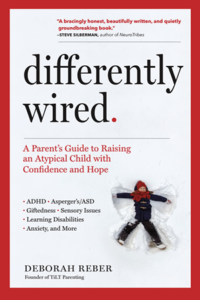
My oldest is 11, but we noticed that he was developing differently when he was one. So I have really sort of been on this journey for almost a decade, incrementally over time, increasing my exposure and really understanding what was going on. So what I’ve seen change is the way we talk about neurodiversity, how much more we’re talking about it and how the meaning has changed within our culture or within our society of what we consider neurodiversity. And now it’s so many more things. We’re talking about PDA, we’re talking about ADHD, we’re talking about different neurodevelopmental disabilities in a way that we’ve never considered them before. And really I saw that explosion really multiply in like the last five years. I think it’s because we have more resources at our disposal, we have a better framework and the language to describe these things and to apply that to what we’re seeing in our kids and maybe even ourselves, right? And I think that’s a direct result from podcasts, books, like people who, like you, people who’ve chosen to become like outspoken advocates in this space and create these places and put together the resources so that parents and caregivers can access them and learn how to understand their kids better and learn how to build that awareness and understanding that our kids and we all are just so desperately looking for. Your book, I’ve bought it for so many people, I’ve given it to so many people. It was literally like one of the first books that I read. It’s all about reframing how you look at things as a parent and in the world. And so reading it, it’s such an early state before I even had an understanding of like really what was happening in our family and like what was going on and just understanding that I needed to look at things from different angles, I needed to maybe toss out that parenting book that I got and all of those rules like didn’t seem already to be applying to my kid even when he was one. I think that was super impactful for me because I was so early on in my parenting journey and so early on into this like, we’re doing this differently journey and like reading that book, it was really impactful for me. And I think because I got it so early on that I was able to really internalize those ideas in a way that if things had been more calcified, I don’t know if it might’ve taken a little longer to chip away at some of that stuff.
Tina:
I think the biggest change is about connectivity. So COVID was a very difficult time and we still have lasting effects of COVID, but there were some really, I think, positive things and that was connectivity that opened up the world. And so that kind of led to, I think two things. One, I believe that parents today are able to connect with people where like 10 years ago, I had nobody, you know, and actually TILT was the one thing that actually opened my world to say, oh my goodness, this isn’t about me and things I’ve not done right. And also it’s opened up a huge path for parents to understand that school, like bricks and mortar schools, are not the only way for your child to learn. And that online courses exist and there’s just a different way to approach learning.
Darla:
I think that with the help of TILT Parenting and Differently Wired and the information that is out there from 2016 to now, 10 years later, like communication that humans are not all made of the same mold, which to me means we’re neurodiverse. So when I found the TILT Parenting podcast, so much of the research and the experts that I have been trying to find, you were bringing them together and you’ve continued to do that. And you’re kind of my executive function support, which I need. So that was just really lovely to be able to come to one place and then, you know, at some point trusting you, like this was some of the same research I was doing. It was some, you know, different research that I was doing. And then eventually you were bringing not only the experts together, the evidence-based resources together, but you started bringing this community together. So as a community that was trying to learn something, we could find it in more or less one spot. And so I think that that has been the biggest change is that we now have this body of work that we can find much easier than just being out there on our own. Really wondering and questioning ourselves, like when you’re on your own, you just think, well, it must be me. Like it must be me that’s doing this wrong. It must be my child that’s the only one that’s not fitting in. So, but when you can have some evidence to say, no, your gut feeling is correct, and then you can have a community of people saying, I’m struggling too, that was super important. And I just see it growing and growing.
Marna:
I think that overall there has been a lot of progress and we have come a long way from people not even knowing what twice exceptionality meant, not even knowing the word neurodivergent, and now people are more familiar with how to speak about neurodivergence and how to think about it. I think there is a higher level of awareness, even among the general population, parents, educators, physicians. I think there is still a long way to go on that, but I do see that there’s been improvement in overall awareness and knowledge. And I think there has been a shift in not just what are the school accommodations we need for a child with this or that label, but more like how do we look at this in a broader perspective?
Kristen:
I thought of so many things when you asked me this question. One thing, I think it is fantastic that we hear more and more of everyone being educated about the nervous system and about co-regulation. And it’s not just within our community, it’s within the broader community. You hear more people talking about it and the more people who understand how the nervous system works and how we can support each other through co-regulation. And the more we understand how the source of behavior, where it comes from, I think that’s just so much better for our community rather than just those of us who had to learn that kind of stuff. Now it’s broader and more people understand it. And that will just help all of us have more compassion and empathy for each other in all situations. Another one is that there’s more access to understanding an individual’s lived experience. We have more places where we can read about people’s experience, ask questions of autistic adults. There’s greater access through books and even representation in TV shows and movies. And not only is there more representation of autism, autism is not the story anymore. Now autism is represented in a nuanced way in the context of a greater story. People might not even realize that what they’re watching is autism.
MJ:
I’ve noticed less of a stigma and more acceptance toward people with certain profiles of neurodiversity, particularly those with ADHD. I think more people are stepping forward and they’re saying, “Hey, I have ADHD “and I’m also an artist or a journalist or an engineer.” I can’t say that I’ve noticed that across the board though. I think with certain profiles, particularly with autism, it’s harder for people to step forward, particularly young people. So I think I’ve seen progress in some areas of neurodiversity, but not all. And I can’t talk about this without talking about TILT because I have seen progress in spaces of support. I remember when I was navigating my daughter’s diagnosis, I would listen to your podcast while I was driving and this community held me when I couldn’t hold myself. And so it is part of the progress because over a decade ago, that wouldn’t have been my reality. So I thank you and your team so much for that. Yeah, it’s spaces like this that validate the lived experience when nobody else gets it.
Debbie:
Okay, those were all the responses for question one. And I love those answers so much. And I think what I found so interesting in responses to that question, but also the questions I’m gonna share with you next is just how there were these common threads, but there were also these very different things that stood out to people as being the progress. And I think what I noticed people really grappling with is that balance between there is progress and, right? There is progress and we still have a long way to go, but there is a lot of momentum that I think most of us feel. So let’s move on to the second question. How have you personally grown? It was so fascinating to hear everybody’s responses. There were some common themes and then there were some really interesting personal growth spurts that kind of caught me off guard. So have a listen.
MJ:
I think my daughter’s neurodiversity, well, it’s been a challenge, right? But it’s also been my greatest treasure. Like it has taught me that my job as a parent is not to push my kid, it’s not to pull my kid, it’s not to get her to do something. And interestingly, her nervous system won’t allow that anyway if that was my MO, like it wouldn’t work anyway. And so like, I’m not the boss as a parent. It’s not, you’ll do what I say. It’s, I’m gonna walk alongside you, kiddo. We’re gonna figure this out. And I do think she feels that. Even when she feels misunderstood, even when I don’t completely understand, I know that she feels deeply supported. I think the other major area of growth for me is that I have the capacity to hold grief and hope in a way that I never thought that I could. Like there is a lot of grief in that place where I recognize that my experience as a parent of an 18 year old is not what I envisioned. But I also have a lot of hope. And I think people like Zach Morris have taught me to just be open to possibility and to be open to opportunity. And like Debbie, you’ve taught me to stay curious, you know. So the capacity to hold multiple things at the same time has been a growth point for me.
And then the other thing, like I come back to a lot, is I come back to Ned Johnson’s quote where he says, “Our kids want their lives to work out.” You know, it’s not that they’re lazy. It’s not that they don’t care. And that sticks with me. I say that a lot to myself. I’m like, lower my expectations as a parent, preserve opportunity, and just offer compassion when you can. And when you can’t, say that you can’t. You know, there are days where I am like sitting with my kiddo and I can ride waves of feelings. And she’s, you know, down and out on the couch. And she’s asking me just to put a hand on her leg and I can sit with her and I can breathe into that. And I’m a spiritual person, so I can breathe into it. I can pray. And generally that decreases the anxiety. But in the times where I can’t, I’ve given myself the grace to say, I have nothing left to offer you right now and I need to go take care of myself so that I can come back as the mom that you need right now. But right now, my tank is empty. And so I’ve given myself that grace too.
Tina:
10 years ago, I was trapped. I call it a societal train. I was trapped on this freight train that said that, you know, your kids, they go to school and that that is what’s gonna make them successful. That’s what’s gonna allow them to learn about themselves. I was almost in decision paralysis. I didn’t know what to do. I was so scared I was going to mess up my kids’ life because I didn’t fall over. I didn’t do what you’re supposed to do, what every kid just does. I am now a more confident person to say, that doesn’t work for me. I’m on my own path and it’s okay and everything’s gonna turn out okay. And the other piece for me, I focused a lot on myself as a parent ’cause I actually think this whole journey starts with us because like our kids, they need us. We’re co-regulators. And how can we do that effectively if in our own minds we’re a mess and we’re worried, oh my gosh, the school isn’t working but I don’t know what I’m gonna do and he’s gotta go to school because how can he not go to school? ‘Cause oh my gosh. Now I have learned about myself and my triggers and how can I regulate myself first and then show up to a situation. It is huge change and I see it. I see it with my interactions with my kids and I get little wow moments like, whoa, oh my gosh, that went completely in a different way than oh my goodness, 10 years ago, it would have gone nowhere.
Marna:
I mean, really this whole journey of learning that I was the parent of twice exceptional children who didn’t fit the mold and didn’t thrive in traditional environments, that whole experience from the very beginning of the journey has been probably the most transformative thing I’ve ever gone through as a person, as an individual. And really, I mean, it’s pretty deep. I think the first year when I was kind of starting out and there were struggles and we were learning how to go get evaluations and then you get the evaluation and then you go through the whole process of what does this mean and what do I need to do? And at some point I got your website from a good friend of mine from high school who is a therapist and just happens to work predominantly with twice exceptional children. And she’s the very first person who told me what that term meant. And she said, check out this website, Tilt. I think you might find some great resources. And then once I found you and I found your movement, your community, your podcast, that was the first time I felt like I’m gonna be okay. I can do this.
Prior to that, I was going through all the stages of grief, just feeling angry, feeling sad, feeling confused and feeling like people just didn’t understand my child and what needed to happen in order to help this person be the best human they could be. It was so lonely, I felt like nobody got it. And I think going through that most profound experience like that, it can crack you open. If you really go all the way in and you’re like, what does this mean? And you realize I’m gonna have to do all this work to be able to transform enough to see different ways to different paths that I can take and counter the traditional systems. I think for so long, I had been like, do the thing I’m supposed to do, do what people expect, fit in the traditional systems, the education system, community systems. And this was the first time in my life that I really said, no, I’m gonna do it a different way. And it was not popular at the time among people that I was around. I felt like I had to be brave from there. It just got easier in so many ways. So I think that’s really the most profound change. I love that you made a whole movement, like your manifesto and this is a movement. And I think being part of something that I feel like is really aligned with my values and my interests. It’s really the first time that I felt like, oh, I’m really doing what feels good, what feels right for me, what is kind of bringing out the best of me in my effort to bring out the best in my kids. And I don’t think I would have gotten there if I hadn’t had to just make that initial leap. But like for me, I feel like it makes me a better human to parent this way. It’s been more like an all encompassing shift on how to think about people, the world, how to live.
Tulley:
This one, I have a very clear answer. And it’s that I’ve become a more compassionate person definitely to my kid and her experience of the world. And just getting outside of my own head and being in her shoes has definitely made me just feel a lot more empathy and connection with her. Of course, as I’ve been doing that, I’ve begun to feel all of the normal stages of guilt about all the years that I didn’t have that lens for her. And so it’s forced me into a space where I have to be a compassionate person for myself as well and have that empathy for how hard this has been, how hard it continues to be and how grateful I am that we do have this new lens, new perspective moving forward. But then it also has completely changed my perspective on how I see the world. Like I often tell people it’s like a pair of glasses that I’ve put on, right? And I can’t take off now. I go out into the world and before I would have seen a kid displaying behavior on a playground. And now I’m thinking, oh, you know, what are those kiddos unmet needs? Like I’m curious about what’s going on there. And you know, if I see a parent with a kiddo like this, I am more likely to reach out and just be like, you’re doing great. So just like, I wish somebody had come up to me on a playground when my kid was plastered to the grass having a meltdown and just offered at least like, I see you and I know you’re doing your absolute best, right? Like going into my kids’ schools, you know, and seeing, I just see all these little neurotypes running around, you know, as opposed to seeing, oh, a kid has problems or like those kids are good students. Or I don’t categorize anymore in the same way that I used to. Yeah, so just, I see that as another piece of this growing compassion that has happened since. So it really is a completely, a completely new lens for the world for me.
Kristen:
10 years ago, when my oldest was identified, the best way that I could support him was to learn. Learn more about autism, more about parenting, psychology, neuroscience. And I have learned so much and continue to learn constantly about all of those fields so that I could better support my family. But it’s had a broader impact for me in all of my relationships, because now I look through the lens that we are all doing the best that we can in the moment with the skills and the capacity that we have. And that impacts every interaction and every relationship that I have with everyone. It’s a very supportive, hopeful lens to move through the world. And I think that it’s been life-changing. I like it a lot better. Everybody’s doing our best. And when we all get what we need, then we all flourish.
Amy:
I had it all figured out before I had kids, that’s for sure. (laughs) I knew exactly how my kids were gonna be and how I was gonna handle discipline and whatever else came my way and how I was gonna educate them. And whew, that was a fun plan. I also have learned so much about myself. They are absolutely my gurus in so many ways and all the wonderful and frustrating ways that comes with that, because I’ve had to definitely work on myself and discover things about myself that make so much sense. I started late. I had my kids when I was around 40. So I had a whole life before I had kids. I was a professional, I had a career, and then I got married and then I had kids. And so I felt like I had a pretty good foundation. And as it turns out, this is my new special interest. So I’ve been learning how to parent differently wired kids for the last 15 years. I try to tell my kids all the time that we are all here to learn and I am still learning too.
Kathryn:
I remember the Me Before Kids being happily naive to so many things, ’cause I was just living my life and handling it the way I was fully in control of all the outcomes. If something went awry, I could look at it and be like, yeah, that was like, I probably should have done it differently or should have said it differently. And then being a parent, I was in control of nothing. I could not stop what was going on. And so I have really learned to let things go, let other people’s opinions, judgment, let their baggage not become my burden, which was not always something that I was able to do. Other people’s opinions and thoughts of me were really important. And if somebody’s opinion didn’t match what I thought or how I was trying to show up in the world, it would bother me and I’d be like, no, I have to change their mind about it.
And what I realize now is you can’t. And somebody’s opinion of me or my family now is meaningless and it has more to do with them. Like I’ve really been able to understand, is this about me or is this about them? And it’s most of the time about them, how my family, how my kid is like making them feel. And that isn’t something for me to do anything about. People are going to judge us. People judge things they don’t understand or they don’t agree with or they don’t know. And it doesn’t bother me like it used to. So if somebody is judging me, I can say with honesty, well, you know, it doesn’t feel really good, but you know what? They probably have no reason to understand what this is or what we look like to them. We probably look really bizarre. And they don’t have a way to make that make sense of it. You know, I would wish that they ask questions. I would wish that they would handle themselves differently, but I’m not in control of how they approach the world. I’m only in control of how I approach the world. It’s not my responsibility to get them to do anything or to get them to understand anything about us. We have enough going on. Like we have enough hard things. Like I don’t need to take on other people’s hard things.
Darla:
I started allowing myself to go on a journey with my child. I guess what I mean by that is I started releasing having to have the answers and just started using resources as a guide, myself as a guide, and especially my child as a guide. Like what did they need? So instead of just feeling like I needed to know everything, I need to know everything so that I can control this whirlwind that seemed to be happening in my family. So I wanted that tornado to stop that was happening in my family. So I was trying to put the brakes on the tornado instead of just really kind of maybe sitting in the eye of the storm. Like what did that mean to, instead of trying to put the brakes on, which I’m never gonna be able to do, what did it mean to sit in that and enjoy it and know that I could have some calmness in the midst of all that was going on? So I think that allowance and the understanding of that has been the biggest thing for me, which is equivalent to figuring out how to reset my nervous system. So once I started to see the beauty in it and being able to be calmer in the storm, certainly sometimes my arms or my legs started reaching out to stop the tornado, but I had a choice. I knew then that I had a choice to make. I can either break apart by trying to stop this tornado or I can sit with it and be present and be a healthier, more calm version of myself.
Debbie:
As someone who is deeply committed to my own personal growth as part of this journey, I just loved listening to those responses so much. I’m curious to know what resonates with you. Okay, and then the last question again is I wanted to hear from these parents about where they see us going forward. Where should we be putting most of our energy? Where are the biggest needs, the biggest gaps in terms of this broader neurodiversity movement and what we are trying to push forward for our kids? Some super interesting answers, and I’m really curious as you’re listening to this, what comes up for you?
Marna:
The idea of supporting people from a holistic perspective is really what’s missing, especially parents when their kid is first diagnosed. You’re rarely given, let’s start with a list of strengths. Let’s talk about how amazing your child is and all of the ways that all of these differently wired aspects of them make them the amazingly unique creative person they are. And then let’s talk about ways we can help them be their best self in their different environments. How do we help their nervous system stay more regulated? How do we help them be more curious about things that they’re naturally innately curious about? How do we help them do those deep dives and get the resources to explore things? How do we help them be more confident about what they are strong in and what they already know, and then be able to springboard and do more of that?
Tina:
We need to move away from the parenting ideals that kids are manipulative and they behave to get what they want. Dr. Mona Delahookie is a person who made a big impact for me when I read her work. And it’s all about, a behavior is a flag to say, whoa, hold on, something’s not okay here. And you gotta look beneath it. Because when I look back, my journey, because my kids are 20 and my son just turned 17, I look back and go, wow, if I had only been able to block out all the noise and I was able to focus on them and just take time, ’cause I’m not running a race, I’m running a marathon, just take a breath and look beneath, it really would have uncovered so much, so much. You hear the term life is short. Yes, life is short, but we can slow down, just slow down. You make better decisions when you slow down. Time is really on your side.
Amy:
When I talked about feeling like neurodiversity is becoming much more acceptable, I don’t wanna say mainstream, but there are certain elements of neurodiversity that I think everybody can relate to. I love what Emily Kertra Morris and Amanda Morin are doing, where they’re like, the supports that help neurodiverse kids help all kids. And I feel like that’s where we should be focusing our energy is how can we create a place where all kids can interact together? And it’s not these kids are neurodiverse, so they need special supports. These kids are in school and some kids feel this way and some kids feel this way and some kids learn this way and some kids learn this way. And we are all gonna learn together so we can apply everybody’s strengths. My mom worked in the schools for a long time. And she said, I feel like everybody needs an IEP. Everybody has something that they struggle with in school and everybody has something that is easier for them or more tricky for them. And so why wouldn’t we do something like that for everybody? Let’s make it an easy place for everybody to come to.
Kristen:
We still have a lot of work to do. I asked my teenagers, my autistic teenagers this question. And my middle schooler told me that autistic is now used as a term of insult regularly. And in the middle school scene, somebody does something kind of funny or unusual. Oh, stop being autistic, you’re being autistic. And she’s realized too that people don’t really know what autism looks like because she’ll kind of stand up and say to her close friends, I’m autistic. They’ll tell her, well, you don’t look autistic. I think there’s still not an awareness of, especially for girls and women, that you can’t tell if somebody is autistic from the outside and that a lot of her experience is internal. So we still have a lot of work to do so, my goodness, having it be an insult, that just breaks my heart and an understanding that it can look in lots of different ways. And aside from her answer, I think my answer would be that our school systems would do so much better if we moved away from rewards and punishments. They do not work for our kids. And if you look at our broader picture, if the goal is managing behavior, rewards and punishments don’t work. Currently, behavior gets wrapped up into your character and sort of as willful intent when a lot of times, especially with my kids, what’s going on is that they’re missing skills or something about a disability is getting in the way of them meeting really high expectations. So if there’s some sort of reward out there that’s been offered where if you can do it, for the kids who can do it all day, every day for nine weeks and you get this great prize, my kids don’t have access to that. And so even though we’ve made a little progress in flipping towards positive behavior incentives, that’s still not helpful because not having access to the rewards feels like a punishment to my kids because they can’t do it all day, every day for nine weeks to meet a high level of behavior expectation. So I look forward to a day where everybody is celebrated for what success looks like for each of them.
Darla:
I wanted to get down granular and think of like, what are these key three things, but that’s not really my personality. So the word that kept coming to me is love. When I was in the thick of it and it was just me and my family, the core value I had to get back to is, am I showing love? I guess we kind of have to like in the future in different systems, whether that’s the education system, the medical system, what is it to really provide love? Things like safety. I mean, safety is number one. You can’t feel loved if you’re not safe. So what does it mean when you’re taking care of other humans to truly love them? And that’s to try to get to the upstream understanding of what’s going on with this person, instead of just getting to the outcome. This is what I need to help this person produce. It’s really about getting back to love.
MJ:
I think that there’s still a lot of misunderstanding about autism in particular. As the mom of a high masking autistic teenage girl, I’ve heard a lot of well-intentioned people question her diagnosis because she doesn’t look autistic or she doesn’t fit their preconceived notions of what it means to be autistic. So that’s one space. I think systems, our educational system, our healthcare system, I mean, education’s been historically built for the masses. Like if you fit the mold and you can quote unquote, do school, if you can like spend six hours in school, if you can follow the teacher’s directions, if you can focus and work hard, if you can complete your homework, which a lot of kids can do, some with more pushing than others, you can find success if you can fit that mold. And if you are a square peg, it’s challenging and you might be eligible for special education services. But from my experience, our IEPs, they focus on student deficits rather than strengths. In terms of healthcare, we just need more compassionate neurodivergent providers. We need professionals with lived experience who understand what it’s like to be a person with heightened sensitivity and intense reactions to the world. We need people who get it when a kiddo says, “Can I not put on this papery gown because it doesn’t feel good?” Or, “Can we dim the lights?” Or, you know, like a lot of our neurodivergent kiddos, they just need someone to listen and to validate what they’re feeling. I can’t tell you how many times my kiddo has been misunderstood, has just bursted out in tears, like nobody gets it in the office of a provider, whether it’s a doctor or a therapist. And I say that as someone who lives in an area where there’s a lot of access. So I can’t blame it on access. So healthcare is a biggie.
And then going back to schools, there’s more awareness about neurodiversity. But when I was growing up, I think probably when you and I were growing up, Debbie, if you were gay, you didn’t share it in social circles for fear that you were going to be rejected. And we often heard, “You’re so gay.” Right? That was like a social slur. And today the kids say, “You’re so autistic. That’s autistic. And if you’re a high-masking autistic kid, why would you say, ‘That’s me’? Why would you risk that social isolation?” And so that’s really hard for me, but it also gives me hope because there’s a lot of kids now who have come out and said, “I’m gay,” or, “I’m part of the LGBTQ+ community,” right? And I see, at least where I live, we’ve embraced those kiddos more. And so my hope is that we can get there, but in the meantime, it’s really painful for a lot of kiddos. So I don’t think we’re really at the place of acceptance yet. I don’t think we’ve truly leveled up yet. I think we have a ways to go.
Kathryn:
I’m a systems thinker. It’s how I can make sense of things. We all operate within a community, which is a system in and of itself. Our kids go to school. That’s a system, public education. It functions in a larger state government system, which functions in the federal government system, and systems are really slow to change. We cannot make one change and expect overnight the whole system to be different. That said, it doesn’t mean we don’t try to do something. What I see missing in all the systems is empathy. I think we could all benefit. Like our kids could benefit in school from more empathy and understanding. Adults in the community could benefit from treating each other with a little bit more empathy. And then speaking specifically about the public education system, our teachers aren’t trained to know what to do with kids who are gifted or 2E. They don’t get any of that training, right? So they don’t have a framework to understand our kids and their tools are not practical or applicable mostly to our kids and how they show up in the classroom. And that’s not their fault. It’s the way it is. And when I think of what has moved the needle for my kids over the last eight years that they’ve been in school, it’s always been a person, not a policy. But approaching that person with curiosity and empathy, and what I see as being where we could focus our energy on and get the most like biggest bang for your buck is there. And trying to build that understanding and empathy one person at a time, which is so unfair. I will say like, it’s unfair and it’s not right. And it shouldn’t be this hard. And it is, but we can still do it.
Tulley:
I think this is gonna be what you hear a lot, but the systems, the school systems, the healthcare systems, the mental health, it’s like you start seeing the change happening, but it’s not, as we’ve talked about in the club, it’s not keeping up with where the research is telling us we need to be, right? I’m a historian by training. And so I know that just from looking at how scientific change has happened in history and how social change has happened in history, it’s slow, right? It’s very, very slow. And for a lot of stupid human bureaucratic reasons, but also because it’s hard to change, right? And when it’s hard for people to change and it’s even harder for groups of people to change. And so even if individual doctors or individual teachers are making strides in their understanding, that doesn’t change the system, right? It takes enough of us shouting into the void for long enough before that change happens. I try to keep that in mind every time I’m trying to advocate for my kid in a doctor’s office at school, that this feels like I’m not getting anywhere, right? But I’m another chink in the wall that we’re trying to dismantle here. And it just takes all of us pulling together in order to make that happen.
I think the other thing that, you know, again, my historical perspective gives me, and I talk with my kid about this all the time, every time she gets infuriated by something happening in her school or in the world that feels unfair to her, I have to remind her like we’re all playing the long game here, right? And if you look at any of the major productive shifts that have happened in our society, you know, whether we’re talking about the women’s vote or we’re talking about civil rights, you do see a backlash against that almost every time, right? It’s almost always accompanied by that. And so when we see these frustrating things happening at the policy level, we see our leaders saying things that feel so harmful and so backward that they’re doing that because they’re scared. They see the change happening and they know that is a threat to the status quo, right? So absolutely when we hear these astonishingly horrible things happening in the world, or what people say, we have to keep in mind that yes, we have to speak up and we have to keep fighting, but that also means we’re on the right track, right? That positive change is occurring, yeah. We talk about this a lot in my house.
Debbie:
Such good stuff. Again, I’m really curious to know how this landed for you, if you agree and what else you think needs to be included. Okay, I’m about to wrap up the episode, but before I do, I also put a call out and asked members of the community to share what they wish they knew when they first realized they were on this journey of parenting a neurodivergent kid. So I got a few responses and I’m just gonna play those for you right now.
Melinda:
Good morning, friend. Here’s what I wish someone had told me when we were just starting out this journey. I needed someone to understand that my heart was so much harder than normal. I would talk to other parents and be like, how are you surviving? And they were like, yeah, parenting’s hard. So how about the game? And I was like, it took me years to understand that what I was experiencing at home was so much more intense than typical households, ’cause it was my only known experience. And so I wish someone had told me there are words for what you’re going through. There is language to describe what you’re experiencing, and you are not the only one, but you and your family are experiencing a level of hard that is extremely unusual and there is help and there is hope and there is language to describe where someone finally, you’re gonna find somebody who’s gonna look at you and instead of looking at you like an alien, they’re gonna be like, me too. And that’s so life-saving.
Jessica:
In order to learn about the possibilities for your child and all the many ways forward, you gotta have other parents around to inspire you. What I would recommend is finding a way forward for your child and it will take time, but just keep asking for what they need and validating.
Loretta:
Here’s what I wish someone had told me when I was just starting out. You’re not alone and you’re not crazy. Your child does not need to be fixed. All the hard stuff, the behaviors, the pushback, all of your feelings, they’re valid and it’s communication. Kids do well when they can and when they can’t, curiosity matters much more than control or trying to meet some expectation or guideline that doesn’t fit for you and your family. It’s not about getting it right all the time. It’s about staying connected, learning as you go, taking care of yourself and remembering you and your child are on the same team. I wouldn’t be where I am without this community and even when it’s hard, you’re not alone.
Tara:
What I wish someone had told me when I first started this journey is that there is nothing wrong with my child. I wish they had told me to always preserve our relationship and our connection first. I wish they had told me that it is incredibly important to be my child’s biggest cheerleader and advocate because they will need that. And lastly, as long as the connection with my child is strong, we can overcome anything. Connection first and problem solved together later. You’re doing fantastic and I wish the whole community the best of luck. You’re not alone and let’s keep supporting our kids.
Debbie:
I’m really, gosh, I’m kind of speechless. Honestly, I’m just so grateful. I’m grateful for so many things and I’m not gonna go on and on here but I am grateful for my child who was the inspiration for this. I’m grateful for the incredible, complex, fascinating human that I have the honor of raising and who really encouraged me to dive in and go on this journey that I never knew I wanted to be on and it has completely changed my life. I’m so grateful for all of you out there, for all the parents who even if we’ve never connected one on one or you’re just on the other end of this, it still feels like a conversation and it fuels me and I have no intention of slowing down anytime soon. I love this work so much. I love what we are doing together. So thank you. I’m gonna do another shout out to the parents who shared with me in those conversations and again, that was Tina, Marna, Amy, Darla, Kathryn, Kristen, MJ and Tully. Thank you so much for taking the time to talk with me and for putting your words out there into the world. I know they’re gonna be really inspirational and helpful for listeners out there.
And again, just some asks. 10 years is a big deal. This is a great opportunity to kind of amplify our movement and get some attention on this important work that we’re doing because it’s so important for our kids that other people understand who they are and really see and respect their experience and ours as their parents. So the report I talked about in the beginning, check it out, download it, share it with people. You can find that at tiltparenting.com/report. And then spread this episode around. You can find it anywhere you listen to podcasts, post it on social media, do a story on Instagram if that’s your thing. Please help me spread the word about this. What we are doing together really matters. You heard it, the landscape has changed so much in the 10 years and I know that Tilt’s been a part of that. You guys have been a part of that. So let’s keep the momentum going. Thank you so much for listening. Thank you for being out there. Again, thank you for the past 10 years. And I can’t wait to see what we do together next.
Do you have an idea for an upcoming episode? Please share your idea in my Suggestion Box.