Stacey Shubitz on How to Advocate & Help Your Child Thrive at School
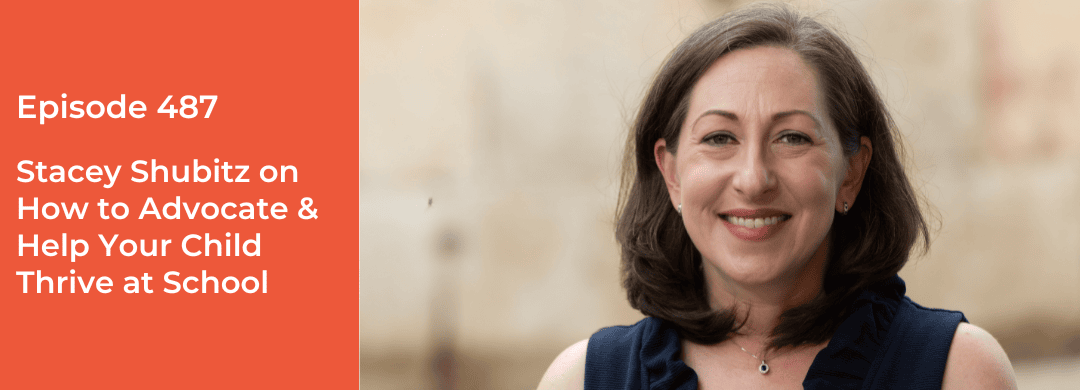
Today’s show is all about navigating the school system when your child has disabilities—and how to do that with clarity, confidence, and a whole lot more support. My guest is Stacey Shubitz, author of the new book Make the School System Work for Your Child with Disabilities: Empowering Kids for the Future. In this episode, Stacey shares her journey as both an educator and a parent, and we dig into what parents really need to understand about special education, effective communication with schools, and the IEP process. She offers practical, empowering strategies for advocating for your child, managing the complexity of the system without losing yourself, and finding moments of joy and meaning along the way, even if (or when) the path feels overwhelming.
About Stacey Shubitz
 Stacey Shubitz is a certified literacy specialist and former fourth- and fifth-grade teacher in the New York City Public Schools and a public charter school in Rhode Island. Since 2009, she has been a literacy consultant, supporting teachers with writing instruction. Stacey has also taught graduate literacy education courses at Lesley University and Penn State–Harrisburg.
She is the Chief of Operations and Lead Writer for Two Writing Teachers, a leading resource for writing instruction since 2007. She also co-hosts the Two Writing Teachers Podcast.
Stacey earned an M.A. in Literacy Education from Teachers College, Columbia University, and an M.S.Ed. in Childhood Education from Hunter College.
She has published several books about writing instruction, including Welcome to Writing Workshop and Craft Moves. Stacey’s most recent book, Make the School System Work for Your Child with Disabilities: Empowering Kids for the Future, was published by Guilford Press in January 2026. In this book, she shares her experiences as both a parent and an educator, equipping families with real-life stories, inclusive resources, and the knowledge to advocate for their children confidently. Stacey lives in Pennsylvania with her husband and children.
Things you’ll learn from this episode
- How Stacey’s dual perspective as an educator and parent strengthens her advocacy for families in special education
- Why educating yourself about your rights, school processes, and the IEP system is essential for effective advocacy
- How partnerships with teachers — built through clear, ongoing communication and regular check-ins — support your child’s success
- Why building a support network helps parents navigate the overwhelm of special education
- How practicing consistent self-care and finding joy in small moments protects parents from burnout
- Why celebrating every bit of progress, no matter how small, helps families stay grounded and encouraged
Resources mentioned
- Make the School System Work for Your Child with Disabilities: Empowering Kids for the Future by Stacey Shubitz
- The Kids Who Aren’t Okay: The Urgent Case for Reimagining Support, Belonging, and Hope in Schools by Dr. Ross Greene
- Strength-Based Assessments with Dr. Jade Rivera (Tilt Parenting podcast)
Want to go deeper?

The Differently Wired Club is not your typical membership community.
There’s something here for everyone, whether you’re a sit back and absorb learner, a hands-on, connect and engage learner, and everything in between. Join the Differently Wired Club and get unstuck, ditch the overwhelm, and find confidence, connection, and JOY in parenting your differently wired child.
Learn more about the Differently Wired Club
Episode Transcript
Debbie:
Hey Stacey, welcome to the podcast.
Stacey Shubitz:
Thank you, I’m thrilled to be here.
Debbie:
I’m thrilled to have you here and to talk about your book, which is just as this episode comes out, it’s out in the world. It’s called Make the School System Work for Your Child with Disabilities, Empowering Kids for the Future. So very appropriate book for this show. And I really just want to kind of get into to your work. So would you mind sharing a little bit about your background and kind of your why, but really like why this book right now? I’m really curious to know why you’re like, I gotta get this out into the world.
Stacey Shubitz:
So first and foremost, I am an educator. I was a classroom teacher ⁓ teaching fourth and fifth grade. And then I became certified as a literacy specialist. And about 16 years ago, I left the classroom and started consulting. And at the same time, I also began writing books for teachers. So I’ve had different roles within education and then I became a mom. And I have two children, one of whom has several disabilities and medical stuff. We should leave it at that. And I was going through a lot while trying to manage my own career. I was… trying to be the best mom I could be, but I felt like I was always like on a learning curve. And it was really, really hard. And even as an educator, there was so much I didn’t know. So as she got older and we moved towards the school system and things like evaluations started popping up and then an IEP and then a reevaluation, I mean, it goes on and on. Parents know this. I just felt like
I had great resources and people to ask, you know, you have your go-to people for different things. I have three people I can call if I have an OT question. I have probably 20 people I could call for a reading question. I realized that not everyone has that network of people that they can tap into. So basically what I did once we were out of the thick of things in K through six, I said, wow, first of all, we survived that. If we could survive that, we could survive middle school. And we did as well. I realized I wanted to share what I had learned because there’s no roadmap for getting through this as a parent. ⁓ When your child has a disability, it’s like getting in a car with or without your GPS. You might be able to get to where you’re going, but it’s much easier if you have your GPS or for those of us who grew up in the 80s, maps. I’m still a map person as well. So I was hoping to give people that lay of the land and help them know where they were going, what they could expect, and some friendly advice.
Debbie:
Always love it when people who’ve been working in education then have their own kids that kind of, especially in the neurodivergent space, right, when you start, when that intersection happens. because educators, I think, can be some of the most powerful voices and leaders in this conversation because you have that bigger experience. And now your lived experience as a parent, you can kind of pair that up and it’s exciting. So that’s really cool that you’re now paying it forward and sharing it with so many other people. just talk about, and you know, this conversation, just as a caveat is probably going to be pretty US focused. I know we have listeners all over the world, but there’s still going to be things that you’ll take away from this in terms of how to advocate effectively and communicate. But let’s talk about what some of the primary challenges are that you see parents encounter when they’re just trying, they’re kind of like, gosh, I have to deal with the special education system in the US kind of in a traditional school. Like what are some of the biggest things that are challenging for them?
Stacey Shubitz:
I think first and foremost, the special education system is complex. It’s a bureaucracy. And it’s emotionally taxing. There’s so much to know. And there’s so much being thrown at you all at once. Lots of jargon that’s unfamiliar, unclear processes, timelines. It’s just everything all at once. And there also feels like there’s sometimes a power imbalance between the parent and the school. And this can create frustration. So I think that the initial steps that people can take when they’re starting out with this is first just to educate themselves, learning about the federal and state laws and how that impacts them, what their rights are, what the processes are in their state. They can get really organized, have all their documents together. Just starting in a dedicated folder. I don’t know how far out this goes, but I mean, I’ve got my file folders right behind me. It could be a two pocket folder. It could be electronic. It doesn’t matter what it is. You want to start collecting communications and reports and records, anything that ⁓ the team at the school might need. You want to make sure that you have it.
And then I think it’s also really important to seek support because this can be really lonely or you can have a supportive journey. There are local advocacy groups, Facebook groups, I know I feel on the fence about how my participation is in those, but some have been really good for me. So I think they’re worth looking into. You could find people there. And then there are also these things called Parent Training Information Centers, and there is one in every single state. And these are centers that exist just to improve the educational outcomes of people up to, I believe it’s age 26, for people with disabilities. And what they do is they provide free information, and they provide resources and webinars, and there’s so much that they provide. Basically helps parents build their capacity in order to advocate for their child. So yes, it is just so much so fast, but I think educating yourself, getting organized and seeking support are probably the best ways I can say to take that on when it feels challenging.
Debbie:
I just want to before we kind of pivot and just kind of acknowledge that this is kind of an interesting time right now in US government in terms of the Department of Education. And there’s a lot of concern about our kids who do have additional support needs and the potential of some of those services not being accessible in the same way. I’m just wondering if you can speak to that kind of in a, we don’t have to go into the weeds, but just in a general sense of things that you might be paying attention to right now.
Stacey Shubitz:
I think the most important thing that you should do is know what protections your child has at the state level. Look to your state’s department of education and go on the website, understand what your rights are. You should probably have a procedural safeguards notice from your school district. Look through that. That’s going to give you information. I think it’s important that you… really know what you’re entitled to at the state level right now because I think that the federal level things are just constantly changing.
Debbie:
That makes a lot of sense. So let’s talk about communication because this is, you know, what I hear, what I experienced as a parent and what I hear from so many parents is, you know, this is where things can break down. And for so many reasons that parents are worried about over-communicating, we’re worried about under-communicating, we’re worried about setting the right tone. We don’t want to be that parent, right? So if, let’s just start with thinking about how parents can establish positive, effective relationships with teachers when they’re advocating for their kids needs? Do have any kind of like best practices about that?
Stacey Shubitz:
I do. And I’ve learned them over the years. It’s not like I knew how to do this perfectly out of the gate because I didn’t. like everyone, I’ve made mistakes. I think that the first thing that you can do when you find out who your child’s teacher is, is to respond to whatever newsletter, letter, email, whatever it is that comes out to you. Take the time to respond, write them back and then tell them that you want to have a partnership with them, that you want to be their partner in your child’s learning. And the reason I say this is that it acknowledges their expertise and also yours because you know your child best. And so if you’re in a partnership, it’s a two-way street, you would hope.
But I think that’s a nice way to get started. Also, you can ask, how do you prefer to be contacted? Some teachers will give you their cell phone number. Some will say email. Others will say use the learning management system. So I think that’s a really important questions and something to establish at first. And also asking when, if I need to contact you, what’s the best time? If I need to speak with you on the phone, what is best for you? I think it shows that you are respectful of the parent teacher boundary. And you understand that this teacher might have a home life that requires their attention. And therefore you’re showing from the start, you are willing to work with them and be respectful.
Debbie:
I love that answer. I love the idea of a partnership. And you know, I’ve talked about kind of being in alignment with that word partnership, you’re right, it really kind of creates a level playing field, like we’re both coming to this with our own experience. And we’re going to work together because we both ultimately want the same thing, right, which is for this kid to thrive and love to learn. And that question of how and when would you like me to communicate? think as you were saying that I’m like, yeah, that would have been a really good idea had I done that. But I think when parents often if things start to derail, right, and we already feel like we’re behind the eight ball, sometimes we might think things are fine. And then suddenly they’re not that can really trigger. We can react right instead of responding. And it’s hard to think thoughtfully about doing these things.
Stacey Shubitz:
Absolutely. A piece of advice, this is related to anything in life, but a piece of advice one of my cousins gave me when I was in college is never respond when you’re mad. Give it 24 hours. And unless it really is so important, if there’s a big issue, just wait the 24 hours, you’ll probably cool down and you will preserve that relationship with whoever it is you’re communicating with, but in this case, the teacher.
Debbie:
Mm-hmm. Yeah, let’s talk about resetting the dynamic. So do you have thoughts on if people are listening to this and they’re acknowledging like, I did not do that. And now we’re in this kind of, more combative or antagonistic dynamic and how we’re communicating. How can we push the reset button and reestablish or start to establish a different dynamic with our kids’ teachers.
Stacey Shubitz:
It’s really hard when you’re at that combative stage. In my opinion, I would like to be face-to-face with somebody so that I can see the body language, I can hear the intonation, and I think when you’re in the same room, it helps. So if that’s possible, or a video call, just something where you can face-to-face talk so that you see each other as people. Otherwise, you’re one of however many messages in the inbox, and it’s yet another thing that the teacher has to deal with. Some teachers may not want to do that, but I think most will. And I say that as being a former classroom teacher, I would have much preferred to talk to a parent in person if there was a big problem than having it out on email.
Debbie:
Yeah. Yeah, there’s so much room for misinterpretation. Or yeah, we put our own energy or emotions in how we interpret written texts or emails. Yeah, that makes a lot of sense. Could you give any insights from the teacher’s perspective? Because you had that, I always like to assume best intent, as we said, or as I said a few minutes earlier, that like everybody wants the same thing here. Do you find and have you found in the work that you do that most teachers are really open to having this kind of partnership with the parents of the students that they’re serving?
Stacey Shubitz:
Yes. It depends. I mean, I hate to say it depends, but it depends on the person and what the culture is at the school. I think that plays a big role in it. If the culture of the school is that parents are welcome in, then I think that’s a different type of teacher as opposed to parents are only allowed in at parent-teacher conference time. Then it’s a little harder to break through that barrier. I mean, I tend to work with, most of the educators I tend to work with are, is in a literacy consultant ⁓ capacity. So I don’t see their parent parental interactions, but I will say most teachers are good people and they went into this profession to help kids learn and to be excited about learning and to help kids have as strong of a start as possible. So my honest to goodness feeling is, yeah, most teachers really do want to have these partnerships with parents.
Debbie:
Yeah. So we know that if listeners have kids with learning disabilities or are neurodivergent, there’s a good chance that they have either an IEP or a 504 to have access to special services in school. And that initial introduction to the system can be really challenging. For me, it was so overwhelming. didn’t knoww hat was supposed to happen. I, and my executive functioning stuff was like really challenged to make sense. I had some tales of everything I was dealing with. So let’s start there. You know, if a parent is kind of just entering the space, what, what’s important for them to know they have found out that their child is eligible for, for services at school, they they’re going to do an IEP, they their first meeting, they don’t know even what to expect, how would you kind of prepare them for that type of meeting with a school?
Stacey Shubitz:
In my book, there’s a chapter on how to prepare for that IEP meeting and it goes through what to expect and even, you know, the order in which things are typically done in an IEP meeting. I think that familiarizing yourself with that as a parent really helps. I like to know how things are going to go as much as possible. So I think if you’re not sure, ask your child’s teacher, hey, can I talk to you? Like what should I expect at the IEP meeting? Most teachers will take the time to say, okay, let me explain it to you. Once that IEP is in place, I think it’s really important that parents have strategies to document and monitor what’s happening. And the first thing is just Again, it’s an organizational tool to organize your digital or your paper files. You need a place to put everything. The official notices, the report cards, the IEPs, everything that comes in. Are you going to keep it digitally, paper or both? I think also creating a communication log can be really helpful if you’re the kind of person who really wants to remember your interactions and just doesn’t know how to keep them top of mind, not doesn’t know, but you’ve got a lot going on. that you can not take up that space in your brain, I think keeping a log is really useful. Again, you can do it in a notebook or one thing I was thinking of, I actually worked on it this morning is a Google form where you just create a very simple Google form and it’s like the date, the time. The short summary of the interaction and then you hit submit. And of course it goes into this nice little spreadsheet that it’ll be right there for you. And then you don’t have to do any digging, it’s available. You know, I think just reviewing the IEP and knowing what’s in there or the 504 plan really understand all parts of it. It’s a dense document.
Debbie:
I love that. Yeah.
Stacey Shubitz:
It’s hard to read, it’s often very boring, but it really is important that you know what’s in there.
Debbie:
I love that idea for the Google form. That is very smart. I love it. No, I mean, I will say that I literally only created a binder for all of these documents years after, of so many years of being like, where was that report again? And trying to find this stuff.
Stacey Shubitz:
Thank you. It just came to me this morning.
Debbie:
Every single time I had an important meeting. Then it was only in my kids’ last two years of high school that I started keeping track of the communication I had with the city, just so I could keep track of what happened when. Gosh, if I had had that from the start, that’s really good advice.
Stacey Shubitz:
I totally understand that because there’s so much that I say to myself now, if I had only known that back then, again, that’s why I wrote the book. know, I mean, yeah. Yeah.
Debbie:
That’s my whole life as a parent, what you just said. Yeah, for sure. So if we think about the IEP meeting itself, we know that those can be really intense. They can be emotional. I remember before my first one as a with a young adult in high school, because I homeschooled in the middle of elementary and high school, a friend prepared. She’s like, you’re probably going to cry. So just know that there’s probably going to be tears. And I was like, OK, all right, I’m going to be ready for that. But are there any kind of common issues that come up that can be really hard that we could give listeners a heads up this might happen so they don’t have that deer in headlights moment?
Stacey Shubitz:
Sure. Here’s a this might happen. The present levels are going to be reviewed with you and you’re going to see things and your child’s present levels may not be anywhere near where you want them to be. And that can be really hard to look at as a parent. This is why I’ve always said to people, get that IEP ahead of time so you can read through it so nothing is going to shock you at that meeting. I don’t like being shocked and I don’t want to cry in front of a group of people. I’ll cry in the parking lot, but I really don’t want to do it in that room. So that’s one thing. If they’re going over the testing results, there might be areas where your child is scored, has scored well below average. And I think that’s really hard to look at as a parent. You know, it hits you. You’re just getting hammered. So those are two things that I think can be very emotional for parents. I think it’s really important that when you’re working with the IEP team that you try and take an asset-based approach or a strengths-based approach because this is how you want your child to grow. don’t want, yes, you need to know present levels. You need to know how they scored on testing. All of that’s going to inform the IEP goals, the instruction that they’re going to receive accommodations, et cetera. But like, if you’re only hearing the negative, it makes it very hard. I was just recording a podcast with my colleague yesterday about cognitive flexibility in the writing workshop. Talk about very specific. And I was thinking about how we can rebrand rigidity.
Like we talk about children who are autistic as being very rigid often. What if we’re saying this child is working on their cognitive flexibility? I mean, that’s a strengths-based approach, just that little bit of change. I’ve heard and have corrected people in a meeting, people talking about regular ed as opposed to special ed. And my response has been, let’s call it general education, because that is what it is, first of all. And second of all, like you’re saying that my child is irregular if they’re not in regular ed. So I think going at it with, you know, trying to encourage the language of strength is a really good way to go into those meetings.
Debbie:
Yeah, and I’m just gonna give shout outs to two different conversations that listeners might want to check out as well. And I have links in the show notes. But one is I interviewed Dr. Jade Rivera a couple years ago about strength based IEPs and strength based assessments. And that’s a good listen. And she has some suggestions for specific language that really focuses on strengths andn umber two, I just interviewed Dr. Ross Green about his new book, which comes out probably about the same time your book is coming out. And it’s called The Kids Who Aren’t Okay. And it’s really like, it’s for educators to think about what those underlying unsolved problems are, or the skills that need to be, that we’re working on. He said, if we do this work and get curious about the unsolved problems that writes your IEP. And it’s a completely different thing. Like this is, you know, there’s a, there’s a strength here. And there are skills that we’re developing as opposed to problems that this is wrong, this is wrong, you know, and trying to get kids into this kind of to fit into a mold that is wasn’t really designed for them.
Stacey Shubitz:
Yeah, it’s really hard to hear that as a parent.
Debbie:
Yeah, yeah, absolutely. So okay. What about when an IEP, we have the IEP. And I remember when my kiddo was in second grade, it was our third school in three years. And we were deciding, what do we do? What’s the next move? And a friend said, you know, it’s a pretty decent IEP you’ve got there. And I’m like, I don’t even know what that means. What is a decent IEP? But an IEP also isn’t always implemented in the way it’s written. So you have this document and this plan, but oftentimes, it doesn’t unfold that way. So what if, or what are some practical strategies for making sure it’s implemented in the way it’s intended in a way that is supportive of the student, and not just this document that’s, you know, we’re referring to a couple times a year.
Stacey Shubitz:
Right. I think it’s really important for kids to know what their IEP goals are. Because if they don’t, by the way, this is something I was also guilty of not communicating this to my child. I assumed that it was going to be covered at school. It was not consistently covered at school. So how do you know what you’re working towards if you don’t even know what the goal is? So the first thing I suggest is making sure your child knows their goal and what they’re working on. And then you can have conversations with your child about ⁓ how it’s going in school. Some kids are more chatty than others. I realize this. ⁓ I’ve got one of each. So I know that. ⁓ But that is the first thing I would suggest. I think it’s really important to know what their related services are. Where do they go, with whom do they go, and on what day do they go, and why? Because then you can check in with those teachers and say, obviously not on a daily or even weekly basis, but every other week, how is it going with, and then fill in the blank, whatever it is that you’re interested in getting more clarity about. I think that is really an important thing.
Finally, setting up regular check-in times with a teacher is really helpful. If you’ve established that partnership early in the year, you know what is a good time you can check in ⁓ at the end of the month, every marking period, ⁓ the third Wednesday, whatever it is that works for that teacher, just kind of get an update of how it’s going and what’s happening. I think those are just ways to stay on top of it. But you need to be the name that they know in the school, not like as in being a pain. And I mean, I’ve felt like that many times, but you need to be the name that they know so that ⁓ your child is not forgotten. Because unfortunately, the reality is that class sizes are just so big and teachers have the ability to focus on, yes, the whole class, but one kid at a time. And even if your child’s being pulled for remediation, there are usually still other kids in the room. ⁓ How do you know what’s happening? You don’t. But if you are checking in on a regular basis, I think it really matters.
Debbie:
Yeah, I totally agree with that. Okay, let’s, we’re gonna wrap up, but I just want to, you know, take a step back for parents who just feel overwhelmed and daunted by being charged with the role of advocate for their child that might not have been part of their plan or a role that they feel comfortable in at all. So do you have some words of encouragement for listeners who are raising kids who are engaging with this special education system and just like it’s really uncomfortable for them.
Stacey Shubitz:
Yeah, there are a few things that you can do if you’re overwhelmed. And the first one is something I hate it when people tell me this, but it really is true. You need to breathe. And I’m not saying this as in take a deep breath. I’m saying this as in like, you need to build in time to just be every day. It doesn’t have to be meditation, but just having some type of breathing practice to calm yourself down. And, you know, it could be box breathing, it could be the four, seven, eight breathing, there’s so many different techniques out there, just Google breathing techniques, you’ll find one that you like. But breathe, because you need to catch your breath in order to do this work well for your child. One piece of advice that I think is really helpful is to concentrate on now, not later. You know, my mind can spiral and I can be thinking, what aboutw hen she’s in middle school, how is that going to play out? And what about in college? How’s this going to go in college? We don’t need to worry about college when our child’s in second grade. Think about the here and now. Focus on the next steps that you can take and not the whole big process. Not even the whole school year. Just what needs to get done now, today. I’m a big list person. Make yourself checklists. I think that is really helpful. Again, could be on paper, it could be using your phone, whatever works. Anyone who reads my book will know that I prioritize self care. It is woven into the end of every single chapter, a tip for how to take care of yourself. It’s the theme of the books afterward. You cannot take care of your child and be a good advocate if you are putting yourself last.
And I know so many of us think that we need to put ourselves last, but unfortunately that only leads to parental burnout. so I think finding something you can do for yourself every day is ideal. It could be once a week. And I’m not talking about schedule a spa day every week. I mean, if that’s your thing and you can do it great. All the power to you but, I’m just thinking something that will make you feel good. My self care is at the end of every day by nine o’clock at night. I am in my bed, like in my little nest with my heating pad and my pillows are propped up and I’ve got my book. And I don’t want to be bothered because that’s my reading time and it’s my sacred reading time. And even on weekends, like my son, you know, in the summertime or on a weekend will say, can I watch the game in your room?
And unless it’s like the World Series game seven, the answer is no, you can watch downstairs. This is mommy’s time. And I protect that really fiercely because that is how I care for myself. It’s how I wind down every day. I think seeking support is a big one. There’s an organization called Parent to Parent USA. I signed up to be a peer supporter in 2024. And basically this organization connects parents who are in similar situations. It is free and it is really phenomenal. So somebody might say like, I have a child who has ADHD and speech difficulty and I’m having trouble getting them services in third grade. The folks at Parent to Parent can find you someone who has been there, who’s been in a similar situation and who wants to give you advice. So use that as a resource if you don’t have people who can support you locally. And I think it’s also really important to recognize successes. Take the time to notice your child’s progress because while big milestones are worth celebrating, small steps forward matter too. One person told me years and years ago, mark what happens at the holidays. And this was a speech related thing. Our children were both struggling. They both had childhood apraxia of speech. And it was really hard to talk in the beginning. And she had said to me, like, keep an eye on the holidays. And it was interesting, you know, Facebook memories, they come back up, and I see pictures or videos of my child singing a song and then I’m like, wait, she sang that same song the next year. It was so much clearer. And then I know she could sing it perfectly now. So I think using holidays as markers is just a nice way or special occasions, whatever it is, if you don’t have to be religious, just having some type of landmarks in your year to kind of check in and see how things are going.
Debbie:
Hmm. Such good answers there and strategies and I love the focus on self care that is like you are totally speaking my language and something I talk about all the time on the show. And yeah, especially if you are in this with a kid and you’re you know, we have to restore ourselves or we are gonna burn out because it is it’s a lot of extra energy, emotional labor. I love how you have that reading time for yourself that’s very aspirational. So thanks for sharing that. So let me share the name of your book again. It’s called Make the School System Work for Your Child with Disabilities, Empowering Kids for the Future. It’s an excellent resource. We really just scratched the surface, but it’s really kind of everything you need to know on how to navigate these systems in a way that feels empowering and supportive for you and for your whole family. Any last things that we didn’t touch upon you want to leave our listeners with before we say goodbye.
Stacey Shubitz:
I will leave with one more thing that’s upbeat. Another theme that goes throughout the book is about joy and taking the time to be joyful and creating joyful moments on purpose and working to cultivate joy. I think it’s really important. It shouldn’t be an extra. You may not be happy all the time, but we can be joy spotting and looking for things that are good. And whether you choose to record it in a journal or not, that is your thing. ⁓ I’m a writer and I don’t record those in a journal, but I am constantly on the lookout for things that are joyful. So take the time, your child is, this is your kid. Like find joyful moments and try and celebrate them and look for opportunities ⁓ to engage with your child in ways that will bring you both joy.
Debbie:
Wonderful. I love that sparking joy is another thing that we talk a lot about here. So I really appreciate that. So listeners, I will have links to Stacey’s book and some of the other resources that came up in the conversation in the show notes page for this episode. And I just want to say thank you again for everything you shared today. Super interesting conversation.
Stacey Shubitz:
Thank you so much for having me, Debbie.
Do you have an idea for an upcoming episode? Please share your idea in my Suggestion Box.