A Conversation with Lynn Lyons About Navigating Anxiety in Families
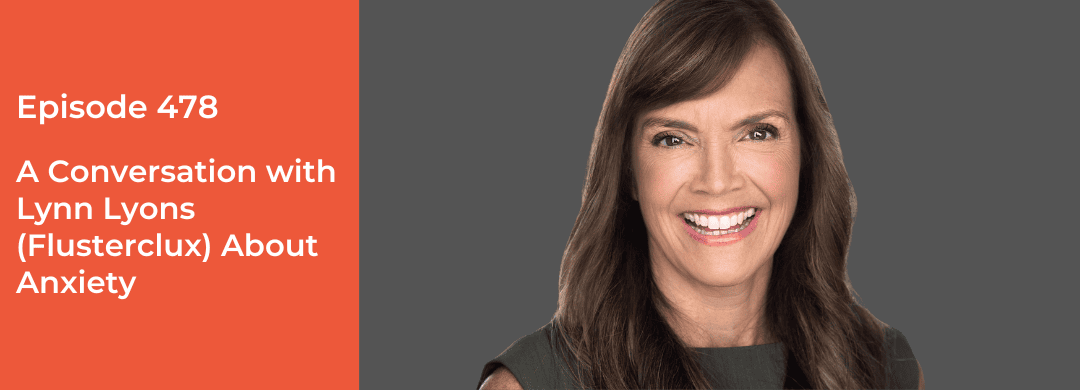
Today we’re talking about anxiety—how it shows up in families, how it affects our kids’ growing independence, and what we can do to keep worry from running the show. My guest, Lynn Lyons, is a licensed clinical social worker, psychotherapist, and leading voice in the treatment of anxiety disorders in children, teens, and adults. In our conversation, Lynn and I unpack the dynamics of anxiety within families—what happens as kids begin asserting independence, how parents can best support their social and emotional growth, and how to notice when our own habits might be feeding the cycle. She offers practical, compassionate strategies for shifting from worry to courage and for helping both our kids and ourselves move through anxiety with more confidence and calm.
About Lynn Lyons
 Lynn Lyons is a licensed clinical social worker and psychotherapist in Concord, New Hampshire. She has been in private practice for 35 years specializing in the treatment of anxiety disorders in adults and children. She is a sought after expert, appearing in the New York Times, Time, NPR, Psychology Today, Good Morning America, Today Show and other media outlets. Lynn is a featured expert in the 2023 documentary Anxious Nation.
With a special interest in breaking the generational cycle of worry in families, Lynn is the author/coauthor of several books and articles on anxiety, including Anxious Kids, Anxious Parents: 7 Ways to Stop the Worry Cycle and Raise Courageous & Independent Children, and the companion book for kids, Playing with Anxiety: Casey’s Guide for Teens and Kids. Her latest book for adults and teenagers, The Anxiety Audit was released October ’22. Lynn is the co-host of the popular podcast Flusterclux.
Things you’ll learn from this episode
- How anxiety can take on a powerful “cult leader” role within families, influencing thoughts and behaviors
- Why parents often unknowingly bargain with anxiety in early childhood to maintain calm or control
- How growing social pressures and the shift toward independence can heighten anxiety for both parents and kids
- Why changes in sleep, participation, and social engagement may signal deeper anxiety concerns
- How the loss of parental control during adolescence can trigger its own layer of worry and stress
- Why understanding these family dynamics is essential for effectively supporting children’s mental health
Resources mentioned
- Anxious Kids, Anxious Parents: 7 Ways to Stop the Worry Cycle and Raise Courageous and Independent Children by Lynn Lyons & Reid Wilson
Want to go deeper?

The Differently Wired Club is not your typical membership community.
There’s something here for everyone, whether you’re a sit back and absorb learner, a hands-on, connect and engage learner, and everything in between. Join the Differently Wired Club and get unstuck, ditch the overwhelm, and find confidence, connection, and JOY in parenting your differently wired child.
Learn more about the Differently Wired Club
Episode Transcript
Debbie:
Hey Lynn, welcome to the podcast.
Lynn Lyons:
Well, thanks for having me. I’m delighted to be here.
Debbie:
I am delighted to get to meet you and your name has come up in my community for years. And I imagine a lot of my listeners are familiar with you, but for those who aren’t, would you just take a few minutes and introduce yourself in your work in the world?
Lynn Lyons:
Sure, sure. So, Lynn Lyons is my name. I live in Concord, New Hampshire. I have been in private practice, gosh, over 30 years. So I’ve been a therapist for 36 years. I’m a social worker by degree. I do a lot of clinical trainings of therapists. I work a ton in schools, trying to help schools get up to speed with what kids need in terms of anxiety. That’s an interesting thing we can talk about actually. The majority of accommodations and interventions for anxious kids are actually the opposite of what we need to do clinically. So I bang that drum a lot. Still have a practice. Here’s my office in Concord. You’re seeing me. I don’t work with kids alone in my practice. I am a huge advocate of making sure that parents are really included in the process. They need information. They need coaching. This is often a generational thing that families are dealing with. yeah, that’s me. I’m a mom too. I have two sons. are both grown. One’s 27 and one’s 25. And I work with my husband. He manages my business. And I do my podcast with my sister-in-law and brother. So, it’s a family affair.
Debbie:
I love that. That’s great. My husband recently, well, I guess it’s been almost a year he’s been working with me at Tilt and doing operations and it was a little bit of an adjustment, but it’s starting to work now. So it’s been really fun.
Lynn Lyons:
Yes. Yeah, well, we’ve been doing it for a long time and we still have to make adjustments and he’s really good at the things that I don’t like to take care of. So that comes in handy. Yeah.
Debbie:
Perfect. Yeah, that’s great. I’m curious because you said you’ve been doing this work for over 30 years. Has the landscape changed? I just imagine not only in terms of our brain science and what we know, but just the reality of life for kids today. What could you say about that?
Lynn Lyons:
Yeah. Yeah. So I think a lot has changed. And I think that the reality of life for kids has changed. Certainly. think parenting has changed a ton. And that’s something that probably within the last, certainly before COVID. And of course, you we, know how it is, we’re like pre-COVID and post COVID, but the anxiety world and parenting in this world and anxious parenting has really sort of ramped up probably in the last 10 years. And one of the things that I’ve noticed in my work of doing this for a long time is parents are more uncomfortable with their kids’ emotions than ever. And I feel like we’ve really lost the sweet spot of normal in a lot of ways. So that’s the biggest difference that I’ve seen in the anxiety world. I also think that something that has not helped is that there is just an enormous amount of misinformation out there. And I think parents are very often getting bad advice. I think they’re getting bad treatment. I think schools are really struggling to stay on top of things, but yeah, it’s, it’s hard to navigate for parents out there and it’s hard to sort through all of the stuff that’s coming at them. There’s just a lot of nonsense out there, which I try and break through and try and talk about on a regular basis. So yeah, that’s really what’s been different in the last five to 10 years, I’d say.
Debbie:
Well, you, you mentioned the term anxious parenting, and then you said what’s changed the most as parents being uncomfortable with their kids’ emotions. Could you unpack that for us a little bit?
Lynn Lyons:
Sure. So we know that anxiety runs in families and there is some genetic component to it for sure because temperament matters. And then if we’ve got other things hanging around in there too, as you discuss, if we’ve got kids that have ADHD or kids that have learning differences of some sort or kids that are on the spectrum. So we know this thing is in families with the anxiety component of it. The genetics is not as powerful as everybody would like to believe. And the research is pretty clear about that. There’s temperaments that can set you up. There’s always risk factors that can make you more likely to develop an anxiety disorder. And one of the big risk factors is having an anxious parent. And it’s not, again, no shame, no blame. I always say that, no shame, no blame. We are social creatures, and this is how this thing works. If you are an anxious parent, of course your anxiety, your worry is going to be really directed at your kids because what’s more important to us than our kids? If you tend to be an anxious person and then you have a kid, having a baby, it’s like your anxiety disorder is like, my gosh, this is really going to give us something to work with. So parents have a really, more so I think than ever, have a really hard time not parenting in a way that unfortunately sort of supports the patterns that we see with worry and anxiety. Yeah.
Debbie:
So, and you use the word temperament. So, could you actually just define that for us too? Because I think, you know, again, the listeners of the show are neurodivergent. And then, so we know we have personalities, temperaments, there’s so many factors. So, what is someone’s temperament?
Lynn Lyons:
And personality and temperament, they’re sort of the same. So if we’re talking about it the way that research talks about it, we’re talking about the way you interact with the world, the way information comes in, how you process it. And so for example, one of the biggest predictors of an anxious kid is having what we call a behaviorally inhibited temperament, which means that these are the kids that we might call them shy. We might call them introverted, although those are kind of two different things. We might call them highly sensitive, all these terms that float around, but these are the kids that hang back a little bit. These are the kids that can get overwhelmed. These are the kids that aren’t going to be diving in. They’re going to observe a little bit, they’re going to take their time. You’ve been at the playground, right? There’s this kid that comes up and is like, hi, my name is Joshua. I’m five years old. I love fire trucks. Will you be my friend? And then there’s another kid who’s, she’s just gonna, or he’s just gonna stand back. A behaviorally inhibited temperament is a risk factor for anxiety because they have a hard time stepping in and engaging with the world. And what happens of course, is that if you also have a behaviorally inhibited parent, which because temperament is pretty genetically mediated, they sort of model the same behavior. And so when kids aren’t giving practice stepping in, when they’re not giving the opportunity or the coaching to step in, when everybody’s sort of hanging back, then the world can be viewed as a more dangerous place. So we’re thinking temperamentally of what are the things that make it easier for kids to stay out of things versus move into things? And when you move in, that allows the brain to learn, that allows the neural pathways to be built, that allows the social connections to be built. And so it makes it a little tricky. We just did an episode actually on my podcast because somebody asked the question, what’s the difference between saying somebody’s shy and saying somebody’s introverted?
Somebody who is introverted is very internal, but they enjoy that internal life. They’re fine with solitary or internal activities. So somebody who’s introverted, they might say, well, I totally love just being in my room reading and letting my imagination go wild, or gosh, my dream day is just watercoloring by myself or I love just walking and listening to music and letting my brain just absorb all that stuff. They’re not seeking that external interaction. Somebody who’s shy, they tend to be a little bit more uncomfortable with this. If you’re introverted and you’re like, yeah, this is cool. I like this. If you’re shy, you’re sort of having this internal struggle. Like you wish you could engage, but you don’t know how to do it. And you feel worried about it you feel nervous about it. So shy is more connected to being socially anxious, introverted. Sure, somebody can be introverted and socially anxious, but that’s not necessarily the same thing. Yeah. And all of those are just measures of personality and, and temperament and all that mix of who a person is.
Debbie:
Yeah, that’s a really helpful distinction. And that makes so much sense. And so I guess I have a multi-tiered question, as I usually do. But if we think about a little kid who’s shy at the playground, might that be a sign that a child is more prone to being anxious? And then the second part of that would be just kind of generally speaking, what are some signs that you would look out for to indicate that a child has anxiety and might be moving towards some sort of an anxiety disorder.
Lynn Lyons:
So yeah, so if you see a child who’s very shy, right, they’re having a hard time stepping in, these are kids, oftentimes the earliest anxiety we see is separation anxiety. That’s the one where the age of onset is the earliest. So you can see that very early on. are some kids where you’ve seen these babies, you hand them to a stranger, they’ll go to anybody. They’re like, sure, I don’t know you, but let’s go. And then there are other kids that are hanging back and have a great difficulty separating from parents. Those are things you want to pay attention to because we know those are risk factors. So that shyness, now what do you want to do about that? If you’ve got this shy child, you want to make sure that you are giving them opportunities to step in and practice. So what very often happens is that if you’ve got a child who’s shy or has difficulty, then parents of course feel protective and they know that their child may get overwhelmed at a birthday party or doesn’t like to be left with a sitter. So they will put that shy, potentially anxious part in charge of their parenting decisions. So I like to pull the worry out and give it a name, right? So say you’ve got a little kid who’s shy and gets overwhelmed. And instead of saying, okay, how can we help this child through practice, through exposure, through living begin to learn how to step in, we say, we’re going to do what the anxiety wants, or we’re going to do what the shyness wants and make sure that she never feels uncomfortable or doesn’t get upset. So that might be like somebody might say, well, we’ve never had anybody but my mom babysit her. So things like that. So you’ve got this risk factor, and then it gets worse when you put that part of the child in charge of your parenting.
Now, it doesn’t mean that we’re going to say, you know what, look, my child’s shy, so I’m going to enroll him in clown school and drop him off. So you want to work with it, but you want to make sure you’re not putting that part in charge. The thing we pay attention to, to know if we really have a problem, just sort of the question we ask is, are there things that this child developmentally wants to do or needs to do and that the anxiety is getting in the way. So it could be sleeping in their own bed at a certain age. It could be being able to be dropped off at kindergarten. It could be being able to have conversations with either adults or with children. It could be really big, terrified, emotional reactions when they’re confronted with something that’s out of the norm. So we want to pay attention to those things. And then when a child starts to avoid things and when a family starts to make rules to accommodate the avoidance, that’s really what we want to pay attention to. And oftentimes when people come to see me for the first time, if they’re coming in with their eight year old or their nine year old, they’ve been doing all of that, not on purpose of course, but maybe they’re a little anxious too. They’ve been doing all of that because that avoidance and that accommodation works fabulously. So if you have a hard time separating from your parents and so they say, well, we’re not going to ever separate from you. Well, problem solved. If you have a hard time with bumblebees, so your family makes sure that during the spring or when the bees are around, you circumvent the blooming rhododendron, it works like a charm. The problem is, that cements those patterns of avoidance and doesn’t give a child, a family, the opportunity to develop what we want is this, this sort of motto, this sort of approach, which is this feels uncomfortable, but I can step in and handle feeling uncomfortable and uncertain. And that’s where we really begin to see the problem escalating. Yeah.
Debbie:
So in the example you shared too, we’re looking at even looking at that separation anxiety, which I had like flashbacks to when my child, I was so excited when my two year old could go to like drop off, you know, daycare for four hours. I was like, my God, I got four hours to myself. But I had to work at the Starbucks like a block away because I would get those phone calls. When we’re talking about anxiety and the families that you work with, does it tend to then be something that we see signs early on and then if accommodated, it can develop a new anxiety or maybe it’s an and or? Are there teens, tweens who develop anxiety who kind of comes out of nowhere and it’s more developmentally tied to what’s happening in their lives?
Lynn Lyons:
Yeah, I would say very rarely does it come out of nowhere. And very often though, parents will say, this came out of nowhere. Or they’ll say, she was fine until. Now we certainly have exceptions to that where somebody experiences some traumatic event. So you were always fine driving in the car. You didn’t care at all. And then you got in a bad car accident and now you’re really hesitant to drive on the highway or you get bit by a dog or whatever. But it’s almost as if we’ve seen these patterns along the way, and then something happens that sort of tips it into a place where parents begin to wonder, is this not normal or is this not what my child should be doing? Very often, families have accommodated the anxiety, have accommodated the worry, and they’ve been able to manage because the child is physically smaller and because they’ve been able to accommodate and the child hasn’t been going to school or it’s okay if your little three-year-old sleeps in your bed with you or etc etc and then something happens that it didn’t make the child anxious it just made the family realize we don’t know what to do about this it is very often having to do with academics or sleep so
Families are good at kind of, you know, I call anxiety a cult leader. Families are very good at bargaining with the cult leader in the early years. And then they get to a place where they’re like, this cult leader is really, really hard to manage. So people aren’t getting sleep or they’re getting calls from school saying, you know, your child isn’t able to participate in things. And then the third thing we see, and this often happens more in like the tween years, is when social stuff starts to become a concern. So parents will get more concerned when their child doesn’t, they’ll say she doesn’t have friends or she’s not going and doing things or when she was little, she was on the gymnastics team and now she refuses to participate. Often that’s because when kids are little, parents are given a lot more control over a child’s social life. Right? When you have a three year old, they’re not calling and making their own play dates and they aren’t arranging their schedule and they’re not deciding what activities to sign up for. But when they get older, now it’s not cool for mom to come to the sleepover. Then they begin to see, gosh, there are some really big things that my child is refusing to do and this is concerning to me. Yeah.
Debbie:
So what might be some other signs then? Or I guess how might it be expressed? think when I learned that anger could be a sign of anxiety that was kind of like, I had no idea about that. So we might think of the anxious kid as the one who’s saying to themselves and perseverating on things or whatever. But what are some others? Ways that it might be exhibited that parents might not realize, my gosh, this is actually what’s going on here,
Lynn Lyons:
Yeah. And so we see, when you talk about the anger thing, remember it’s fight or flight. So we’ve got the kids who will get themselves out of there, but we’ve also got kids that are going to fight. And it doesn’t mean that you’re one or the other. If somebody is anxious and they feel trapped, they feel like they can’t do something and their fight or flight or freeze system is activated. That’s what we get. So we do see anger in that now I’ll just put a little caveat on that. I said earlier, there’s a lot of misinformation and things that parents are getting all this stuff. Not every kid who is being explosive and who’s having tantrums and is angry is anxious. And I see that very often. You’ve got a kid that really needs some help with their emotional management and the parents are like, well, it’s because of his anxiety. Well, not all the time. So we have to be careful about that. So anger for sure.
With little kids, we see what we call somatic symptoms. So the younger you are and the more anxious your parents are, the more likely it is that you’re going to express your anxiety in physical symptoms. So tummy aches are incredibly common. And what we know about kids that have tummy aches when they’re anxious, is that very often then parents will try and fix the tummy ache, which is totally understandable, without really understanding that the reason they have a tummy ache is because when the fight or flight or freeze system gets activated, your digestive system shuts down, we know that big emotions just wreak havoc with our GI system. So we want to look for those physical symptoms. Kids will sometimes report what we refer to as vague somatic complaints, which means they’ll say, I don’t feel, or I’m tired, or interestingly, they often say I’m bored when they’re trying to avoid something. So we’ll see that. The other thing that happens a lot, and this is missed very often, is that kids will ask a lot of questions. So they’ll want to go over something over and over and over again. and oftentimes, parents are like, just was making an Instagram video on this because it’s missed so often. Parents or teachers will be like, well, they know the answer to that question. I just told them the answer to that question. But anxiety is about seeking certainty. Anxiety is about seeking comfort. So if you have a child that needs a lot of reassurance, a lot of information, parents will say to me,
If I ask a parent, how do you manage their anxiety? How do you manage their worry? They’ll say, as long as we go over the plan, as long as they know exactly what’s going to happen, as long as we give them all the information upfront, then we’re good. So they feel like they’re trying to stay ahead of any uncertainty. So that’s a real flag to pay attention to. And very often, you know, if we’re talking about kids that have anxiety, they’re asking these questions in school. They get flagged or identified as kids that are having attention and focus issues. So they’ll say, well, this child must have ADHD because she can’t remember anything, or she asked the same question over and over again, or she has trouble paying attention. I told them four times that this is what we’re going to do. And she asked, is this what we’re going to do? We really have to fair that out because that need for certainty that need to know is a really, really common thing that we see with anxious kids. Yeah.
Debbie:
I would love to know, you talked earlier on in the conversation about the way that parents are inadvertently accommodating or not kind of addressing because it’s probably in the short run seems easier, right?
Lynn Lyons:
It doesn’t seem easier, it is easier in the short run. Yeah, in the short run. Yep.
Debbie:
It is you have to follow the cult leader. Yeah. So let’s talk a little bit then about how you advise parents to, to support and help their anxious child. And I also we’ll talk about this. I just always like to kind of caveat this because we know that some anxious kids, if they are autistic and anxious, like it might be different. And I want to ask you how you might adapt your work for parents with neurodivergent kids, but kind of, what are the kind of basics that you would guide parents in kind of who are navigating this journey?
Lynn Lyons:
So you always want to ask yourself as you’re helping your anxious child, which part of my child am I serving? Am I serving the part of my child that we want to develop autonomy, that we want them to be able to step into things, that we want them to be able to feel uncomfortable and move forward? Or am I serving the part of my child, which is the anxious part, which is rigid, which is inflexible in a lot of different ways, but very hesitant to move into uncertainty and very unable to tolerate any discomfort. So you want to ask yourself that question. And then you want to think about if you’re serving the anxiety, which as you just said, happens because it’s easier in the short term. How am I going to look for opportunities to give my child the experience of stepping into things that feel uncomfortable and uncertain? And we want to do it with support. We want to do it with validation. We want to do it with empathy. We want to do it with not too much talking, by the way. I have a mug that says talk 85 % less. Anxious parents talk too much. But we want to figure out.
What are the skills that my child needs to develop versus what does the anxiety want from me and from my child? So first, a homework assignment that I give to parents is I want you to pay attention to how you accommodate the anxiety. So do you feel like you have things you have to do in your family so that you don’t upset the anxiety. Are there things that your other children have to do? If we were to ask the siblings, and I have the siblings come in because they are a really good source of information. say, do you think that mom and dad or mom and mom, whatever the parental configuration is, do you think that your parents. do what your brother’s anxiety wants. And they’re like, yes, my God, right there. They’re like, my God, you wouldn’t believe how much we have to cater to that. So I want parents, and I may even say for two weeks, I want you to just write down every time the anxiety shows up and what you do in order to placate it so that they can have an idea of how much this thing has held them hostage over the years. And then we’re gonna start pulling back those accommodations.
Now, when I talk about accommodations, I want to be really clear, particularly since your audience is really dealing with kids that are neurodivergent, and there are lots of reasons why we accommodate kids. Here’s the problem with accommodations in the anxiety biz. What we know with anxiety is the more that you accommodate its demands, the worse the problem gets, and the more likely I’m going to fail at my job. So when we look at the accommodation model in schools, it gets tricky because there are so many reasons that we want to accommodate kids in an educational setting. But when we look at anxiety as the primary issue, it is the exact opposite of what I am doing clinically. So it gets a little tricky sometimes. So an example might be, say you’ve got a child who’s got ADHD and they also have anxiety. The anxiety is very often secondary to the ADHD because these kids are stepping into an environment in which they know it’s going to be tough. They’re trying to figure things out. Their executive functioning is not great.
They’re worried that they’re going to make a mistake. They’re worried that they’re going to get in trouble. Maybe they have gotten in trouble. They’re worried that they’re going to screw something up and their friends are going to be mad at them. So we are looking at anxiety secondary to the ADHD. So we want to put accommodations and skill building in place for the ADHD so this kid has the executive functioning support that they need, but at the same time making sure that we are not saying to them, we’re going to help you avoid the very things that we want you to step into because you need some practice with your social interactions. We’re gonna work on your executive functioning. We’re gonna work on your perspective taking. We’re gonna work on your impulsivity and we’re gonna make sure that we don’t step in to help you avoid the very things that we need you to practice. when I’m working with parents, the hard part is … and I totally get this… the hard part is, is that their child is going to feel uncomfortable and their child is going to feel uncertain. And if you have a little kid that’s afraid of dogs, we’re not going to lock them in a closet with eight dogs and say, get over it. But we are going to probably have to interrupt a pattern in a family, which has been, she gets upset around dogs. Let’s do everything we can to make sure that she’s not around dogs. Let’s give her a lot of reassurance. Let’s do some avoidance. Let’s put things in place. Let’s plan, plan, plan. All of that is going to make the problem worse. So we take it a step at a time, but stepping in with support, with information, with coaching, with not too much talking, stepping in is what we ultimately want to do. Yeah.
Debbie:
Yeah, and we’re turning that dial then, according to what we know about our child, their capacity and their nervous system regulation at any given time. Yeah.
Lynn Lyons:
Correct.Exactly. The thing that is really helpful for parents to recognize is that cognitive rigidity is a part of so many of these things that kids deal with. So if we look at the four big things that you’re looking at, ADHD, autism, anxiety and depression, all of them have cognitive rigidity out the wazoo. And so when we’re targeting flexibility, that means cognitive flexibility. How do we handle things when they don’t go the way we want them to go? And then also just what you said is the flexibility to know when do I need to step into something and when is it okay for me to avoid? Because there are many things, if you’ve got a child who gets overwhelmed by big crowds and loud noises,i t is not necessary for them to be in the middle of an environment in which they are going to be overwhelmed. And being able to help your child differentiate and being able for you to differentiate, we don’t want to go to either end of the spectrum, which is like, we have to expose our kid to all of these things because this is what life is about. Or, you know what, my child is too fragile to handle anything. And so we need to create a world in which they are never uncomfortable or uncertain. And like you say, that’s knowing your kid, but anxious parents tend to, for the most part, they tend to err on the side of, I don’t want my child to feel uncomfortable. I don’t want my child to feel uncertain. And that gets in the way of developing those skills.
Debbie:
Would you say that I’m thinking about listeners of the show, many of whom have, who may be experiencing PTSD themselves from things their kids have gone through at school or ways that they’ve had to advocate or been kicked out of schools or, know, if we’re dealing with bigger behaviors. So I’m just wondering for those parents, I could see why they would want to be maybe overprotective and also protecting themselves, right? Cause it’s, they don’t want to feel that discomfort. How do you coach parents in learning to tolerate more discomfort?
Lynn Lyons:
The same way I teach kids, right? Is that it is about, it is about first of all, having the knowledge to know what’s going on. So one of the very key things that I do at the beginning, I do it in all my trainings, I do it with all my families, is understanding how this thing works. The prefrontal cortex fires up the amygdala, sends a message to the adrenal glands, systems are activated, right? So that it’s not a mystery. So that if you are feeling these things in your body, You know exactly what’s going on and all of these symptoms that people are feeling make perfect sense if you are in a life threatening situation. So they need that information. They need that accurate information. When you say PTSD, I sort of wince a little bit because that language is way overused. If we are talking truly about how do I step forward knowing that I’ve had so many traumatic or difficult experiences with my child, the key skill we’re teaching is differentiating between then and now. And when somebody is dealing with post-trauma stuff, that means that their current situation is being hijacked by past events. And so we really work on helping a parent differentiate between then and now.
So that’s what happened and we understand why and how, and we understand you have strong feelings and memories about that. Luckily, we have a lot, we’re in a different place now. So let’s not conflate, let’s not combine then and now. Let’s focus on what we need now. And that’s a very helpful frame for anybody who’s doing post-traumatic work. I mean, it’s hard. These are your kids. You love them. And you probably have memories of going through the very same things that they went through. So when I’m working with an anxious parent, one of the reasons why they are so empathic to protecting their children is because they knew what it was like. And maybe they didn’t get support and they didn’t have information. And they say, I will never let my child feel the way that I felt. Right? Which is a wonderful thing to want. We just have to make sure that again, we’re not going so far in the other direction, that we’re not letting our child develop the skills they need in order to move through the world, which is just what we want for all of our kids, don’t we? Yeah.
Debbie:
Yeah, of course. Yeah. so just we’ll wrap up in a moment, but I was just thinking, you know, what is the trajectory or the hope for our kids? Like if someone is an anxious person, are they always an anxious person, but they have coping skills to tolerate discomfort and have a more flexible nervous system or you know, what are we working towards?
Lynn Lyons:
Was it? Yeah, so you’re not always an anxious person. So anxiety is the most common of mental health disorders, but it’s also the most treatable. So we have to be really careful because when we know, particularly with anxiety and depression, the research is showing the stronger you identify with that as a permanent condition, the less likely you are to do the things that you need in order to manage. The biggest mistake that people make is they do this all or nothing thing where they say in order for me to not have anxiety it means I’m not going to feel anxious. We all feel anxious. We all have worries. And the way this thing becomes a disorder is not that you feel uncertain or uncomfortable or have anxiety or have a stomach ache or have your heart pounding. That’s not how it becomes a disorder. The way it becomes a disorder is that you start working diligently on preventing and avoiding those feelings from showing up. So when I talk about somebody not having anxiety anymore, I am not saying you’re not going to feel anxious. I’m saying that the cult leader no longer dictates what you do and what you don’t do. And so it is, there is every reason to be hopeful about that because kids, teenagers, even adults can really learn how to respond differently to their anxiety and worry when it shows up. The goal is not to prevent it from showing up. We have a little saying in the biz, what you resist persists. So whenever somebody says, well, I have to get rid of, paradoxically, it’s going to come back even stronger. But if we start saying to kids, it is okay that you feel this. This is totally normal. The two words, I cannot do my job without are of course. Of course you feel that way. Of course that feels uncomfortable. Of course you had a tummy ache when you were about to go for your job interview. Once we allow, once we widen the range of normal, then we see kids learning with time and repetition and practice like most things better able to manage what life throws at them. That’s the goal. And that’s really, really misrepresented in a lot of the social media nonsense that I see going around these days. Yeah.
Debbie:
Yeah, that’s super helpful. Wow. Thank you. This has been such an interesting conversation. you have so many resources available, including your podcasts and your books. So if listeners are sparked by this, I would encourage you to go down that rabbit hole and enjoy all of Lynn’s content. Where do you encourage people to connect with you?
Lynn Lyons:
So the podcast is Fluster Clux with an X. I would say if, and we’ve been doing it for a while, I think we have like 290 episodes now. So sometimes people are like, my God, where do I start? Go to the Anxiety Disruptor series, which started in June of 2022. There are seven episodes, not quite in a row, because summer was in there and we had a few best ofs, but you will see them labeled one, two, three, four, five, six, seven. That gives a really good foundation for parents that are looking for a roadmap, like what do I do? That’s a great place to start. Anxious Kids, Anxious Parents is the book that I wrote with Reid Wilson 12 years ago now. And that does the same thing, gives a roadmap. And then I’m on Instagram at Lin-Lin’s anxiety and I try and put stuff up there that’s interesting. Yeah, yeah.
Debbie:
Great. Well, listeners, as always, I will have links in the show notes and I’ll put the first of that series in there as well so it’s easy to find. Lynn, thank you so much. This has been a fascinating conversation. I just really appreciate it.
Lynn Lyons:
Thank you, Debbie. It is my pleasure. I’ll come back any time.
Do you have an idea for an upcoming episode? Please share your idea in my Suggestion Box.