How Can I Help My Kids Find Meaning When I’m Struggling to Find it Myself? (Listener Question)
Zach Morris joins me for an honest conversation inspired by a listener’s question about how to find meaning and connection while navigating personal challenges. We talk about the emotional load so many of us carry as parents, the importance of tending to our own well-being, and what it really looks like to show up authentically—especially when we’re in leadership or caregiving roles. We also dig into how powerful real-world, tangible experiences can be in helping our kids feel connected and find purpose.
About Debbie Reber
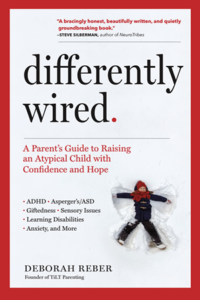
 Debbie Reber, MA is a parenting activist, bestselling author, speaker, and the CEO and founder of TiLT Parenting, a resource, top-performing podcast, consultancy, and community with a focus on shifting the paradigm for parents raising and embracing neurodivergent children. A regular contributor to Psychology Today and ADDitude Magazine, and the author of more than a dozen books for children and teens, Debbie’s most recent book is Differently Wired: A Parent’s Guide to Raising an Atypical Child with Confidence and Hope.
About Zach Morris
 Zach Morris is a thought leader in education who is committed to helping people increase compassion, collaboration, and learning. Zach supports individuals, families, and organizations who aim to develop a greater sense of safety and empowerment in themselves, in their relationships, and in their communities. Gently guiding humans through the resistance they encounter is at the core of Zach’s work. Learn more about Zach here
Things you’ll learn from this episode
- Why prioritizing self-care and addressing parental burnout is essential for sustainably supporting neurodivergent children
- How finding personal meaning as a parent can feel elusive during hard seasons—and why it matters anyway
- How leaning on support systems, even unexpected ones like neighbors or friends, can positively impact both parents and kids
- Why showing up authentically—especially in leadership or caregiving roles—can help integrate personal and professional lives
- How real-world, hands-on experiences can help neurodivergent children develop a sense of purpose and connection
- Why creating chances for kids to contribute to others’ well-being can help them build confidence and feel valued
Want to go deeper?
The Differently Wired Club is not your typical membership community.
 There’s something here for everyone, whether you’re a sit back and absorb learner, a hands-on, connect and engage learner, and everything in between. Join the Differently Wired Club and get unstuck, ditch the overwhelm, and find confidence, connection, and JOY in parenting your differently wired child.
Learn more about the Differently Wired Club
Do you have a question for Debbie to address
on an upcoming Parent Lean-In episode?
Submit your question (via voice message or in writing) below!
Episode Transcript
Debbie:
Hey there, I’m Debbie Reber and this is Full Tilt Parenting. It’s a podcast for parents raising neurodivergent kids. And this is a special parent lean-in episode. That means I answer a listener’s question, sometimes by myself, but usually with the help of one of my people that I learned from and people who are parent coaches in my differently wired club. And that’s the case today. But if you have a question for a future Parent Lean episode, you can go to tiltparenting.com slash lean in and you can submit a question and then we can answer it in a future episode. But today I have Zach Morris joining me and Zach is a coach in my Differently Wired Club community. He has advised me over the years. He’s been on the podcast many, many times and he’s a wise human. Zach specializes in working with parents and young adults who are navigating complex dynamics of neurodivergent experience. And he is uniquely equipped to serve families with profiles of autism, especially PDA and families who are navigating trauma and families who are needing to heal and repair relationships. So thank you so much for being here, Zach.
Zach Morris:
Thank you, Debbie.
Debbie:
All right, well, let’s get into it. Let’s get to today’s question. So this listener is the parent of two kiddos, ages 11 and nine. They both have ADHD, depression and anxiety. Both parents have the same diagnosis as their kids and possibly more. So a neuro-spicy family. And the listener wrote, I’m an ordained rabbi recently divorced from another ordained rabbi who is the son of two rabbis. You might think that our kids are connected to their religion or have a sense of meaning, faith or religious community, but because we’ve all been professionally engaged in the world of spirituality when we come home, we are exhausted, depleted and resentful and filled with doubt. The thing that we give to others, we have nothing left to provide at home. Our kids are both neurodivergent, have a sense of meaningless anxiety and depression, and I’m finding it impossible to create a framework of meaning for them. My work feels like a lie that I perform for others. How can I help my kids find meaning and connection when I’m struggling to feel it myself?
Okay, so let’s just dive right in. And I will just say, Zach, I’m curious to know what came to you right away, because what came to me right away are a bunch of metaphors. Like, put on your own oxygen mask first, you can pour from an empty cup. And I was like, how many metaphors are coming to mind? And I don’t like metaphors in this circumstance, because they can feel trite. What came up for you right away when you read this question?
Zach Morris:
Sure. Yep. Yeah, just the complexity of this, right? Because we’re not just talking about the challenge for our kiddos, right? We’re talking about our own challenging experience right now, right? Exhausted, depleted, resentful, right? Like that’s hard. That’s hard to be in that experience, right? And that’s a tribute to like, I have some needs going unmet, right? So.
So just the first thing that came up for me is the complexity of like, I’m trying to tend to my children and I’m trying to tend to myself to your point. I’m trying to tend to myself so I can tend to my children. This makes it really complex. Right. And so I, you know, I know there are complexities to what I’m about to say depends on where you are, depends on resourcing, depends on a lot of things. But, but it sounds like if, um, if the parent is kind of going to continue in the current, you know, sort of routine that they’re in, right, with their work and all of these things, you know, that it may be the time to sort of explore getting some other mentors involved, right, and some other people that can offer what I can’t offer in these times, right, because there’s no just making myself not exhausted when I’m exhausted.
There’s no just like changing my resentment in the moment. These have some processes in length to that as well. So I think about how in, there’s a lot we could talk about like tending to all of that and what might be involved at that. But I think in the short term, I might be wanting to put some other things in place as well. And that might be where I’m looking to find someone who can come hang around and isn’t as exhausted and depleted and resentful and can just be with my children and be someone that can walk alongside them, go where they wanna go, right? Like this isn’t the person that comes with an agenda. This isn’t the person that comes to like work on anything specific, right? The person to come and again, like maybe someone to walk alongside you as we like pursue trying to find meaning and connection in our life in some way, right? And so different than therapists, coaches, teachers, right? They just serve as someone that we can build relationship with and that we maybe come to value spending time with and maybe value their contributions in our life, right? And so lots more I could say, but I don’t know. I’m curious if anything comes up for you in that or anything you wanna add.
Debbie:
Yeah, I mean, just as you were talking, I was thinking it’s kind of like a leveled up version of respite care, you know, because, yeah, I love that idea of bringing in other people to support people that can have positive impact people who could be, yeah, again, not having to play this very specific role, but being a positive presence for your kids for you and to give everybody a break, right? Yeah.
Zach Morris:
Yeah, and that mentor, I often encourage people, not that this isn’t a route either, but think well beyond the mentoring agency. Think about the extended family member perhaps. Think about the neighbor. Think about the university student in the area who’s looking for part-time work. We are just looking for someone who’s interested and interesting, someone who’s intuitively patient, right? That just sort of already comes stock with a lot of the things we would need. Like they don’t have to be a professional in ADHD, right? And like all of these things, like we just need someone that comes with a lot of those offerings that then we can fill in the blanks for. And I can tell you about the unique things about my kiddo, right? Or what we might wanna be just being careful around right now or whatever those pieces are, right?
Debbie:
Yeah, I think, you know, as you’re talking, I’m remembering that many years ago, I think, you know, when my kiddo was eight, I would do this, you know, I was in an outdoor fitness group, and we met like twice a week. And one of the young guys who came to help run those sessions was, you know, was a dancer and also really into fitness but also just had the best energy. And I was like, I want you to hang out with my kid. We know these people when we see them, people that we feel are moving through the world and bringing an energy or a quality of life to our interactions with them. Then we want our kids to be exposed to that. I was like, would you hang out with my kid once a week? He did for like a year and he would make up games. He would come pick Ash up and they’d go to the playground and they’d do adventures and all kinds of stuff. And it was just like, it was just positive all around and a really special relationship in the end between those two as well. So I do really love that idea. And I think just like you said, it doesn’t have to be like we’re formally looking for this person. Like we probably have these people in our lives. So asking, would you be willing to explore some hang time with my kiddos?
Zach Morris:
Yeah. Yeah, and it doesn’t have to be a lot, right? Like we might, it just might start with an afternoon, right? It just, but just sort of starting that process and maybe even engaging with our kiddos around like, does that sound like something they’d want? Like someone else around sometimes who might be able to do X with them or Y with them or things like that, right? So, you know, it’d be interesting what kiddos might say too around that as well. The piece that was coming up for me in this that I think just brings on some hard to hear messaging, some grief, right, is that when we talk about helping our kids find meaning. I think… it’s, we’re not super set up for success in just sort of like our current modern, you know, the United Statesian culture. I’m not sure where this person’s from, right? But like modern sort of dominant Western culture sort of things, right? Especially in terms of like the pathways that kids are sort of put into, right? And in that, like, there’s a lot that’s offered to kids that isn’t super tangible or real or relevant to them, right? And so as we sort of ask that question of like, how do I help them find that, right? It might be in some really novel and unique opportunities, right? And it sort of, you know, I can kind of put this in context of like a story of when I had my school.
And if I’ve already told this before, I apologize for anybody that’s heard it, but when I had my school, felt like I was navigating a similar thing with a lot of the student body, right? Just like having a hard time helping students find purpose, meaning, you know, like something beyond seeking out just sort of entertainment and ease, right? And things like that. And then I would see this a lot in terms of like, know, that’s why people didn’t want to like work on their math practice, right? And things like that, where it’s sort of like, sure, that might be relevant and really tangible, like sort of at some point in my life, what that might provide, but not really today right now for me, maybe, right? And so I could think about all the things I tried to do, whether it was building rockets or, know, whatever the things were in it.
And I just could see for students, it felt so manufactured a lot of times of the sort of like, why, why would I do that or give attention to that or all of these things, right? And there was one year that we had some serious flooding in our town where our school was. And this was just sort of like a crescendo of snow runoff and a bunch of rains, right? And the rivers were flooding and it was like flooding our town. And students who again, I was like, we’re stuck on Minecraft and stuck in the beanbag chair on their phone, right? I had found when this event was happening, where there was a sort of support site in town happening for the flood and where people were filling sandbags and bringing, you know, items of donation, right? And all these things. Students wanted to be down there.
Students were like, we need to go, we need to fill sandbags, right? Not the whole student body, but like a serious collection of students there. And spent like multiple days that week filling sandbags and engaging with the community and helping with this very real, tangible thing in their lives that was so different than the like, should we build a rocket today? Or like, what do we, do we wanna like get into this? Right, and this was so real and it had so much substance and it gave so much purpose and sort of meaning that week. And that I try to carry with me to help make sense of why it makes sense a lot of times that we’re struggling to help our kids find that meaning and purpose and connection. It’s like, what are the offerings for them? Are they feeling really real and relevant and tangible to them? Or does it just feel sort of like manufactured and something they’re sort of supposed to do for later parts of their life?
Debbie:
Yeah. I love that you share that story. Yeah, I mean, I experienced similar things with my kiddo. And I also had, one of the things when I was taking notes and preparing for this conversation, that’s where I went to, I was thinking of on my block, we have a WhatsApp group, which there’s a lot of conversations about missing cats and moving your car. But also there’s a, there’s occasionally the injured bird and there was an injured bird on a stoop and someone was like, had, you know, early in the morning, I’m going to work. I’ve called, you know, the place, the deer and arts, the vet to come, but they need somebody to hold on to the, you know, so the bird in a box, can somebody go to this stoop with the box, you know, and so the whole like block was rallied around it and that kind of stuff, you know, to feel like you’re making a difference. So I was too thinking of like, you know, there’s not always going to be like a bird that’s, you know, that’s fledged and, you know, fallen and injured themselves or a flood or a disaster. But no, but if you think about the things that your kids care about, and if it’s animals, maybe it’s like figuring out can we…
Zach Morris:
Right, not wishing for any floods, right?
Debbie:
Is there a way to walk dogs or visit the dogs at the local shelter or something with the environment? Are there ways to get involved so you can kind of create that sense of real meaning where kids can actually not just be doing performative things but feeling like they’re having an impact? I wanted to add one other thing that came up for me as I was reading this and what I was thinking about for this person who wrote in with this question, can you bring more of your own authenticity and current experience into your work? Because what I heard is this conflict of like, feel like I’m living a lie, you know, because I’m like this person in the community and at home, my life is this way. And so I think it’s really hard when you are in a role of leadership, spiritual leadership or some sort of role within a community where other people are learning from you and you’re kind of held up as a model. And then your personal life is suffering. And so that feels terrible, you know?
You know, you know, full transparency when we’ve gone through really rough periods, I’ve been like, well, gosh, who am I to be talking about how to support neurodivergent kids when I’m really struggling myself? And so but one of the ways through that is to just be like, I’m struggling, this is what it is. And it made me wonder if there’s an opportunity for this listener to, to bring some of that into the professional role, that spiritual leadership role so that it doesn’t feel like so much of a disconnect between what’s happening.
Zach Morris:
I think that’s such a good point, you know, and I resonate so much with it. I feel like this has been a big part of my journey in that dissonance as well. Like I’ve experienced plenty of that. And for anybody that’s heard me talk sort of over maybe some years, maybe you’ve been hearing me talk a lot more lately about some of my experiences and challenges and struggles. And I feel like I’m bringing some more of that into that, right? Because I was having some of that same experience at times as well, I’m struggling with something similar. And I don’t know if I’m talking about that enough with people. So I just so appreciate you bringing that up.
Debbie:
Yeah. So my last thought, then Zach, please share if there’s any last things you want to share, but just again, going back to what we started talking about at the very beginning, like, you know, this question to me, and I think you read it the same way. It’s not really about what you can do for your kids. It’s about what can you do for you? Because this is clearly a parent who is burned out herself and is feeling like she has nothing to give. And so just thinking about and not just like this would be a nice to have, it would be a nice to have to do a loving kindness meditation, you know, start my day that way, or it would be a nice to have to, you know, to go to therapy or to take five minutes to listen to the song that I know fills me up. I don’t think those are nice to haves. I think they’re really non optional when you are running on fumes like this. We have to start with ourselves. There’s just no, will, if we don’t, we will reach a point where it all goes wrong, right? And so, and also that’s how we model for our kids. So if there’s anything that this listener can do, small, tiny things, but just something every day, even just to remind yourself that you matter and to invest in yourself, that would be kind of my last thought. Anything you want to add?
Zach Morris:
Yeah. Yeah, the last thing I would say is in relation to, you know, this person talking about, you know, they’re the whole family, you know, being neurodivergent. And, you know, even if we’re talking about similar neurodivergent profiles, we’re going to have a lot of different manifestations within the family and different needs. Right. And, it just made me think about what we talk about in our family a lot, like the neurodivergence convergence. When our neurodivergences of each of us are sort of slamming into each other. And rather than creating this great harmony, it’s actually creating waves in some way, right? Where it’s sort of like, oh, I’m sound sensitive and needing quiet and this person is engaging in echolalia and needing high vocal stimulation. It’s sort of like, okay, cue the neurodivergence convergence, right? So I think about what might be going on for this family around some of that, right? And some of these moments where I feel like we’re missing each other. And if that’s ever bringing me to this place, which it sounds like it is sometimes, right? For this family around like, gosh, am I not getting it totally right? Or like, what else could I be doing? Right? Is that actually, no, there’s plenty of times where this makes total sense that like, we’re just totally missing each other on these levels or like we’re co-activating and we’re not co-regulating because maybe we got some neurodivergence convergence going.
Debbie:
Yeah, I love that. I mean, it sounds very challenging and it sounds like a cool name for a band or maybe like a game show or something. Anyway, thank you for that. And I just want to say thank you to the listener who sent in that question. I hope this was helpful. And for anybody else listening who is navigating these kinds of big challenges. So thank you, Zach, for joining me for this.
Zach Morris:
Yeah, thanks Debbie.
Debbie:
Yeah, and if you’re listening to this and you have a question for a future episode, you can just go to tillparenting.com slash lean in and you can submit a question and we’ll answer it on a future episode. So thanks so much for joining us today and we’ll see you next time.
Zach Morris:
Thanks all.
Do you have an idea for an upcoming episode? Please share your idea in my Suggestion Box.