Author and Advocate Julie Green on Generational Autism and Radical Acceptance
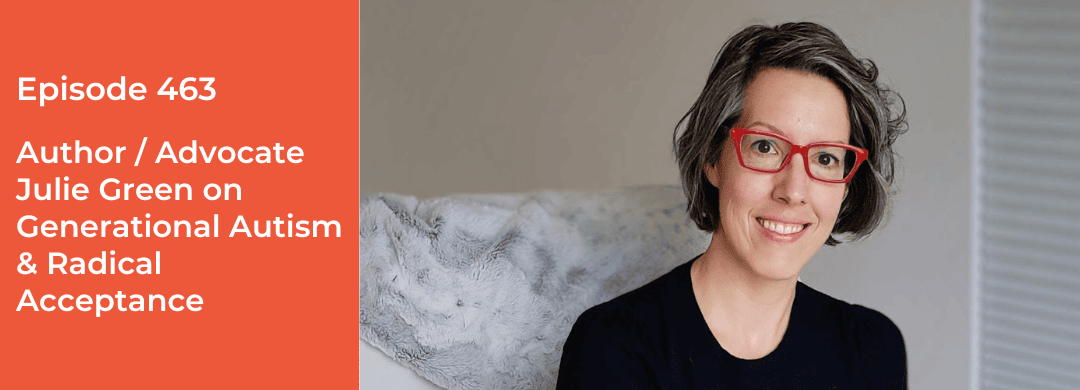
In this episode I’m talking with Julie Green, author of the memoir Motherness, a powerful exploration of generational autism, parenthood, and radical acceptance. Julie, who was late-diagnosed herself and is raising an autistic child, takes us inside her journey of self-discovery and diagnosis, and we talk about the emotional complexities of coming to understand our own neurodivergence while parenting neurodivergent kids. We explore the healing power of writing, the importance of storytelling and compassion, and the challenges many families like ours face along the way. Julie’s memoir is a testament to these shared experiences, and this conversation is a deeply honest look at what it means to parent—and to live—with radical acceptance.
About Julie Green
 Julie Green is the author of Motherness, a memoir about generational autism, parenthood, and radical acceptance, released by ECW Press in September 2025. Her writing has appeared in the Washington Post, HuffPost, Parents, The Globe and Mail, Chatelaine, Today’s Parent, and more. She has been featured on CTV, BBC Radio, Global News, Sirius XM, and other media outlets, and was a finalist for the CBC Nonfiction Prize in 2024. Through her platform The Autistic Mom, Julie shares her lived experience as a late-diagnosed autistic woman raising an autistic child.
Things you’ll learn from this episode
- How Julie’s decade-long journey to understanding her neurodivergence was shaped by limited representation for autistic women
- Why writing became an essential tool for Julie to process her experiences and emotions
- How receiving a formal diagnosis brought relief and clarity to her life story
- Why Julie’s memoir Motherness shines a light on the complexities of parenting an autistic child while navigating her own identity
- How practicing self-compassion and protecting her child’s privacy are central to Julie’s storytelling
- Why community, connection, and embracing one’s identity remain vital for neurodivergent individuals and families
Resources mentioned
- Motherness virtual book launch on September 23 (free registration via EventBrite)
- The Electricity of Every Living Thing: A Woman’s Walk in the Wild to Find Her Way Home by Katherine May
- Wintering: The Power of Rest and Retreat in Difficult Times by Katherine May
- Katherine May and the Electricity of Every Living Thing (Tilt Parenting podcast)
Want to go deeper?

The Differently Wired Club is not your typical membership community.
There’s something here for everyone, whether you’re a sit back and absorb learner, a hands-on, connect and engage learner, and everything in between. Join the Differently Wired Club and get unstuck, ditch the overwhelm, and find confidence, connection, and JOY in parenting your differently wired child.
Learn more about the Differently Wired Club
Episode Transcript
Debbie:
Hey Julie, welcome to the podcast.
Julie Green:
I thank you for having me.
Debbie:
Yeah, I think this is gonna be a great conversation because what you write about in your book and it’s something I know many listeners have experienced or may experience in the future and that is discovering their own neurodivergence and specifically autism through the course of parenting their autistic kiddo. And you wrote about this in your new memoir, it’s called Motherness, a memoir of generational autism, parenthood and radical acceptance, which you kindly asked me to read in advance and I was happy to do so. I really enjoyed it. I blurbed it. I was actually going to start this by sharing the blurb just so listeners can kind of know where I’m coming at this from. So in Motherness, Julie Green offers a beautifully written deeply attuned account of raising an autistic child while simultaneously making sense of her own late discovered autistic identity. Raw, honest, and thought provoking, Julie’s story will resonate with any neurodivergent parent who recognizes parts of themselves in their child and wants to embrace these common threads to foster deeper connection and acceptance. So I loved your book. Probably you can tell from that. Yeah.
Julie Green:
Thank you. Thank you so much. Well, and I loved yours, which is why we approached you in the first place, because it’s nice when you can tell certain people are kind of on the same wavelength. And earlier on, you were already taking the narrative in that direction, which was good for parents, because we’ve had an awful lot of the other direction, which we won’t get into. But I was like, yes, she gets it.
Debbie:
Yeah, thank you. True. That’s great. Thank you. Yeah. my gosh. Well, we know we when we find our people, we know them, right? Yeah. Well, I would love if you could share some of your experiences. I mean, this is really what your book is about, but kind of overall some of your experiences that led you to consider that you might be autistic. If we could start there.
Julie Green:
Yeah, was, whew, it was such a long, I think I mentioned overall it was about 10 years because back in the day, even when my son was diagnosed at three, it was such a learning curve. We did had nowhere near, we didn’t really even, I mean the internet was there but it was not the thing that it is today. So the information, you really had to go digging for it and it wasn’t very affirming. So there was just such a learning curve for that and the whole narrative there was boys lining up trains, hand flapping and my son didn’t even hand flap, but anyway. So really we were just so zoned in on him. never would have occurred to me because there were no girls, the female phenotype just wasn’t a thing. It wasn’t even talked about. mean, this is kind of even. before Temple Grandin was really well known as well. So there was just, and even then I’m not really very much like Temple Grandin, so it was just, it was not on my radar whatsoever. And I was writing about parenting and I had started becoming involved in writing, learning about autism and writing about autism. And through that, I think in the blogging days, Everything I say is dating this but I got to meet a mom who was reading who had an autistic son and she ended up becoming diagnosed and she and I sort of became acquainted and friends and I would say to her like I think I am but I’m not sure and she’d say well there’s this quiz online like things are in a very nascent stage. But I really, I said, you know, I really am not sure and I don’t want to go and get a very expensive private evaluation. So I kind of sat on it for a lot longer, but she was the first kind of real person that I met and she was, she was not like the little boys. And I thought, you know what? Yeah, it’s a little bit uncanny. She’s autistic and that’s what autism can look like. Then I have a feeling perhaps. I am too, because there was always this overlap with my son, lots of differences, but enough of an overlap in terms of sensory issues that I just always had and I was always just extremely sensitive, extremely picky, extremely, you know, all these other labels which were just me, they were a Julie thing, they weren’t, they weren’t an autism thing, but then they were also a my son thing. So there was a lot of overlap there and in terms massive anxiety, but again, I was just, I had long been diagnosed with anxiety, depression, know, lot of mental health issues. But again, that was a me thing or also just a woman thing as it were. But just so many differences with my son too because he’d have like really epic meltdowns where I would just, everything was very internal for me and. thought, you know, I can make eye contact and I have, I’ve had difficulty with friendships, but I have friends and there’s still so many, I sat on the fence for such a long time and it really wasn’t until, hmm, I want to say it was around before COVID, I finally approached my family doctor who knew about my son’s history and she knew my whole checkered medical history with mental health. issues and so on that she was willing to put me forward for an assessment for that referral because I think she knew she knew the stuff with my son and she she obviously knew enough by then whatever year we were talking I’ve lost the I’ve lost the timings too many years but by then it was like okay it’s starting to be a known thing that look this is hereditary so and luckily she was
She didn’t shoot me down. She didn’t say, nah, you seem way too like with it and competent. There’s no way, but she just took it seriously and she forwarded me for the assessment. And luckily being in Canada, I waited about a year, but I got it through our public healthcare and I got it done through basically kind of like a leading. leading place in Canada that does a lot of autism research and autism assessments because I thought, you know what, if I don’t get it done and I need to get it done at like, you know, the people who really, really know their stuff, because I think I would have just sat with this imposter syndrome forever. And even if I’d gone to, you know, a private psychologist or some other route, I don’t think it would have convinced me.
Debbie:
Interesting.
Julie Green:
So anyway, ultimately it was such a roundabout way. I think nowadays there’s so much more information and there’s such a community there that I think we, it’s a much more direct route for people who think they are and are curious. Hopefully they don’t have to go and wait 10 years like I did.
Debbie:
Yeah. Yeah. And how did it kind of change you initially? I mean, I have talked with many women who, who haven’t gotten the diagnosis when they were pretty certain that that is what is going on. And they wanted that validation or that confirmation from a medical professional, and then it, can really create, you you said imposter syndrome, can just really create a lot of confusion about identity, I think. And so I’m wondering you having that formal identification. What did that mean for you?
Julie Green:
Yeah, it’s a weird thing because… It’s very strange at this stage in life, because people are like, why are you doing this? And it’s not like you suddenly get, there’s no welcome membership package, you don’t get a badge. And I think it’s kind of anticlimactic in a strange way, but it’s just this massive sense of relief that, okay, I definitively know it’s more this long process after, I think, where you kind of… perform this post-mortem on all these different events and situations from your past where you internalized, at least I did, a lot of feelings that, just a lot of shame and thinking things were like a per, you know, as I said, it was a me thing, was a personality flaw, I was to this, I was not enough that, why could I never do this? Why did that relationship go sideways? So you looking back, I think over maybe the next six months to a year, even longer, every now and then something would come up would surface and I would think, oh, so that explains that. And it just, I think allows a little bit of, I mean, it doesn’t excuse people are still people, you’re still accountable. It doesn’t mean you could go off and do whatever, but understanding why I… I was the way I was and acted the way I was in certain situations or why I couldn’t understand things that other people did. It helped me forgive myself for a lot of things. And going forward, it changes a lot, obviously, as well. But that’s kind of where the book came from because I was still trying to process, okay, well, this is like my son’s whole experience. And I’m looking back on all these other things that happened to me in life. And I was basically starting to write it down, which is that’s how I process things best. And then once I saw the overlap, like each chapter obviously is kind of on a different topic where I’m figuring out, okay, this was my son’s experience of sensory overwhelm and this is how it looked for me. So it’s like early years with my son going back and forth between. past situations that happen with me and comparing that in all the ways that they’re different and all the ways where they are similar. But it allows you, as I said, you go through, dig through all this, past events and you look at things in an entirely different way. But in doing that, I thought actually, you know what, this isn’t really just for me. think a lot of, first of all, on the parenting side of things, a lot of moms carry so much guilt and shame and just so many emotions. It’s a very isolating and difficult thing that we go through, whether you happen to be neurodivergent yourself or not. There is so much that is still not really talked about. There’s so much that moms carry. And I thought it would be good for moms to read some of what I’ve been through potentially and to be seen. but also for women who are going on this journey and wondering, thought, yeah, maybe there is some benefit in not just keeping this as a kind of journal. And that’s kind of how the book came out, came to be.
Debbie:
Thank you. So I really did love how you structured the book and how you’re going back and forth within each chapter, you’re touching upon a theme and you’re highlighting your kid’s life and figuring him out. And then considering or reflecting and exploring that same experience or topic through your own childhood, which was fascinating to me and just and also as a writer I really appreciated that because I know you know to write a memoir is kind of a daunting task like where do I start how do I structure it so I appreciated that it felt like a really safe and accessible kind of container. as a reader to share to understand your your journey as well. I would love to know just you said this was part of your processing your own neural divergence and figuring that out. I imagine there was some healing in there. Were there any kind of surprises along the way as you were writing that you’re like, you were still making discoveries like I didn’t look at it that way or was the whole thing like that?
Julie Green:
Yeah, like I literally am figuring it out as I’m writing. I don’t sort of think, I’m gonna write about that and this is what I already know. Sometimes it’s, yeah, it’s in the act of writing it. And I don’t know, this is probably just very naive of me and everything, but I had crafted this book and it’s still, it’s only starting. It makes no sense at all because I’ve just received a box of books this week and I’m holding it and going, my, like all this stuff about my life is going to be out there to, you know, in the world. I don’t know. It’s just strange as a concept. I wrote it and obviously agreed to publish it and now it’s only dawning on me. Wow. Yeah, you’ve put a lot of
Debbie:
Mm-hmm. you
Julie Green:
Really personal information there and you’re happy because you want it to help people, but, and you were happy to do it, but now it’s really starting to occur to you that, yeah, you’ve, all this stuff is gonna be like common knowledge out there. It’s strange that you would think. But like previously, I’d written essays and things before, so I had a toe in the water of sharing some aspects. life publicly. But again it’s very curated. There are a lot of things I chose not to share. It’s I think people do assume when you write memoir they know absolutely everything about you and there’s a lot of very personal truth in there and it is truth. But it’s it’s there’s a lot you leave on the cutting room floor and a lot you you share and don’t share and it is sort of sculpted and still crafted. like a creative work. you know, that’s why it has that container and that structure. So it’s not just a entry. But yeah, there were parts obviously that were really difficult to write and I’ve changed names and I’ve spoken to my child about it, but I still am nervous. You know, he hasn’t read it cover to cover. He’s read sections of it.
Debbie:
Mm-hmm.
Julie Green:
And I still think I hope he’s in the right place to understand why I’ve shared certain parts. And I have his blessing. He knows it will help people. He was fine with it. But even so in doing and sharing my experience, I’m necessarily sharing some of his experience. it’s, I mean, no one would write memoir if it is a very difficult thing and it’s something everybody really wrestles with. And I’ve been trying to, I’ve tried to obviously do it in a way that’s fair to him. And I’ve, I’ve reserves, you know, I haven’t written about certain things deliberately and I’ve tried to write things from my experience, but from a way that’s fair to everybody and respectful to him. I’ve tried. I don’t know. I hope that he will always see that and feel that in knowing the book is out there, but it’s, it’s a tough. It’s tough choice. But it’s strange. The only person really who read it pre-publication was my mother, because I was quite concerned because my mother is my mother. There’s only so much concealing of identities and things that you can do. she, to my surprise, she’s a very intensely private person and thinks, why on earth would you do some, she can’t fathom why anyone would publish a novel, really.
Debbie:
Mm-hmm. you Yeah.
Julie Green:
And I was a little bit concerned. So I did give her the opportunity to flag things and strangely she flagged really random details that to me were really kind of insignificant and she really loved it. So was like, It’s funny what people like sort of take issue with or not. So I was happy about that because yeah, they’re
Debbie:
Yeah.
Julie Green:
There are different sensitive points for different people. But again, your experience, I’m conveying my experience of. every, everything that happens. So it is colored through that lens. So, but it’s tough, you know? I mean, that is just an occupational hazard, I think, for memoirists is that, you you don’t go out seeking to get revenge on anybody. That is not the right reason, but even in painting your own experience, or we don’t live in isolation, we’re bumping against other people and they have completely different recollection of events.
Debbie:
Mm-hmm. Mm-hmm.
Julie Green:
Than you will in their own perception. But it’s still worthwhile telling stories. I think ultimately that that takes, well, not takes precedence, but it really is very important and makes it worthwhile.
Debbie:
Yeah, it is. It’s tricky. I, Differently Wired was not a memoir, but there were a lot of memoir components within it. And I definitely grappled with that. I too had the blessing of my kiddo. And they did read it. And still, it’s still something I think about. So I understand that complexity there. what I really enjoyed so much, I mean, the right you’re writing, first of all, I just want to say I enjoyed your prose. Like I think you’re such a talented writer, and it was a pleasure to read as just as any piece of work, right as a creative, creative work of art. But your deep love for and commitment to showing up for your kiddo is like the through line, like you it’s so fierce that want to protect and to really dig deep to make sure that his needs are met. That is what kind of shined through. so I just wanted to say that. I actually, of course, and I would love, good. I’m glad. mean, it really, yeah, I felt your mama love so strong. I guess, I’m trying to let me look at the time. But it is hard to do this. And so I’m just wondering, what was your biggest why? Why was it? important to you to share your I mean, I know why it’s important as being in this space, why people need to hear your message, and how comforting it can be for parents who feel unseen, and feel isolated in their experience. But what was the driving force for you to make this book happen?
Julie Green:
Well, I also just, I mean, there were some, just saw this empty space where, you know, I was then diagnosed and I mean, it’s a very difficult, it’s a hard journey. I mean, as I say, it’s a bundle of everything. It’s not, the whole media has this very simplistic, like 2D narrative, but autism is like people, it’s super complex. one minute, I mean even in the space of a day, I think you’re laughing your head off and then you’ve got, you know, a five siren meltdown or whatever. It’s very complex. It’s not a tragedy and it’s not, a superpower and it’s amazing. It’s all those things in a day sometimes. So it’s, I did write elements of it because it is extremely isolating. People who don’t live it, have no idea. And I think, I mean, maybe there are people who still won’t read the book anyway, but if people can have a little bit of awareness of how other people, how we live and maybe bring a little more compassion, then that would be great. But even within our community, I think there are still layers of, I talk about, you know, going through situations where meltdowns are aggressive and That’s a whole other thing I feel that is not really talked about very much. I certainly know when I was going through really dark times, other than maybe my immediate immediate family, friends didn’t know, it’s still very taboo. And there’s a deeper level of isolation even within this already very isolated community. So. That was also one element in terms of the parenting journey that I wasn’t reading and I wasn’t seeing. So I guess being a real truth teller for better or for worse, I wanted to talk about that because I think people have to talk about things. Otherwise they just nobody knows they exist. But on that other level, I was just seeing this empty space. I hadn’t read, you you had books from
advocates who were diagnosed like kind of young women or not parents. I hadn’t seen any books by people who’d, a lot of people have gone through what I’m going through now, having kids, and then that’s kind of the portal to their own diagnosis and their own understanding, but I hadn’t seen or read any authors doing that, and I thought, well, why not my story, I suppose.
Debbie:
Yeah, so as you were talking, I’m like, yeah, I have read some books, I’m thinking of Catherine May’s memoir and some other memoirs that really mostly centered on the person’s individual experience, but didn’t make that connection with the the child’s as well. So I do think that was a gap that motherness is filling. And it is a gift because you know, I love this language of being a truth teller. It’s hard stuff to write about. And it’s there’s shame around it if it’s happening and no one’s talking about it. And we just think we’re the only ones experiencing this and it is incredibly painful. it is such a gift, think for you to share that with other people. I wanted to ask, so you have chapters on things like Friendship, social lives, you have chapter on food, sensory, you do have the chapter on aggressive behavior, gender identity, you really kind of explore so many things. One of the things that jumped out at me was when you were talking about stimming, and I pulled out this quote you said when my mother-in-law learns of my diagnosis, she isn’t the least bit surprised, and frankly, that surprises me. But how did you know? She suspected I’m autistic, she says, because of quote, that thing you do with your hair. What thing until that moment, I’m genuinely unaware of my stems. You’re forever doing this thing with your hair, she says. She might’ve said something sooner. I wonder how many autistic people are the last to find out that they’re autistic. And that really jumped out at me. And it made me curious, like how do you show up now? Like what is your relationship with? your autistic identity and the way that you externally present to the world or in relationship with other people.
Julie Green:
Strange, it’s not like everything’s still magic, right? But I think just knowing, I still have to manage the same things. You know, I have painted nails. I still have moments where I’m picking my nails and until they’re bleeding and I still have days, certain days where, and it sounds really ridiculous, where it’s sometimes it figures with my hair. I don’t know why I’m doing so well because I have fidgets now and I’m I’m I have this awareness so I’m trying to not do I’m trying not to do radical radical things and things that will be harmful as much as you can control it. I’m trying to lean into it a little bit but again these were just growing up in the late 70s and 80s these were just quirks you know I remember having certain ticks and things and Again, it was just a me thing. I used to have this nose twitch like a bunny. I must have done that for a solid year, like a real, real tick. And a lot of, I guess, habits that were considered like OCD leaning, not enough to maybe get my mom to take me to be assessed, but a lot of, you know, I would completely lose my mind if. Say I had a bottle of hairspray as a teenager and it was like moved a fraction of an inch. I’d know someone had been in my room or the brush was not exactly, I had everything. But they were just quirks. So I mean, I think having an awareness helps you not hate yourself to be blunt, but the things, everything is still there. And as a perimenopausal woman, everything really ramps up because physiologically. And now research is starting to talk about this, but for whatever reason, I’m not a scientist, I’m not a medical doctor, but the effects of the hormone shifts tend to ramp up a lot of the sensory experiences that autistic and ADHD women go through.
Debbie:
Mm-hmm.
Julie Green:
So that’s another layer, which is fun. But yeah, I have the awareness. So now I guess I just try to manage it. But there are things that are, were always so minor that again, I’m not, I wasn’t hand flapping. My son never hand flapped. And that was like, well, that’s like the golden standard of the only thing I really believed was dimming. So again, the more you learn and then it only really occurred to me. much deeper into reading the book, sorry writing the book, I didn’t even realize, my god, I used to really like bludgeon my nails like I’d have band-aids on I think eight or nine. I’d walk around and it never occurred to me that something like that, it took even maybe a good year or two after being diagnosed for things like that to start occurring to me that, okay, so I wasn’t banging my head.
Debbie:
Mm-hmm. Mm-hmm.
Julie Green:
But I did still have some of these more minor. stims, they were stims or minor elements of self-injury that I didn’t recognize were anything. You know, and I still put that in perspective. I know my needs are very, very minimal, but they’re still legitimate. It’s not a comparison game and that’s the sad state that we’re in right now because a lot of people don’t think… they don’t validate your experience because you’re not head banging and I am verbal, you know, I’m very privileged in a lot of ways, but a lot of people with so-called lower support needs have immense mental health challenges. So we can still have challenges that show up in other ways. I think the issue right now is people don’t want to call it, they don’t want to call it all autism because it is so vast. I think it’s very difficult for people to say, well, you’re not like my son. How dare you even try to, you know, take on that identity.
Debbie:
Mm-hmm. Yeah. Yeah.
Julie Green:
So who knows, maybe it will be divided again the way it once was and called a different name. But for the moment, are, you know, I say apples and oranges are very different. They have completely different qualities, but essentially they’re still fruit. And that’s sort of how I feel about the whole thing. mean, my needs are not the same, but that doesn’t mean there aren’t still. issues and even at this stage of life. I’ve like got a lot of, I’ve done a lot of adapting and I’ve found, I’ve grown a lot as a person. I’m a middle-aged woman for God’s sake. So I’m not where I was, you know, when I was six or 16, just as my son is not where he was when he’s six. So people kind of do evolve. It doesn’t mean you completely discount them where they’re at now. It’s probably the product of a lot of a lot of work or masking, so or both.
Debbie:
Yeah, or both. Yeah. Yeah. Yeah. And I imagine to the process of kind of connecting the dots and having these realizations that’s you’re not done with that work. That’s probably going to be part of your life moving forward is continuing to excavate and, you know, make more connections and and just a deeper understanding if you continue to lean into that.
Julie Green:
Yeah, yeah, that’s what I feel like. It’s never really too late, right? I’ve heard from people in their 60s and 70s who are finally realizing it. Well, great, you know what? You can live the rest of your days maybe not hating on yourself and feeling such shame for how you are. It’s unfortunate that you’ve gone through most of your life being told certain things about yourself, but… I feel it’s not too late and it’s not a threat. It’s not a comment on anybody else’s children or what they go through. But I think there’s immense value in that at any stage of life. I think everybody deserves self understanding and to like yourself, right? I think I definitely, I’m not, know, rah rah. But I think I have a little bit more. confidence and just compassion for myself now than I ever ever have. So I think that’s if people can go through that it’s it’s worthwhile.
Debbie:
Yeah. Yeah, absolutely. mean, the conversation I had with my therapist just two weeks ago was, you know, I’m a 55 year old woman, like, it’s all good. Like, do I and she’s like, yes, that those other parts of you that six year old part of you that those parts of you are still there and they still deserve to be heard and validated and seen. And Yeah, so I love that idea that it is never too late. And if we can have compassion towards those younger parts of ourselves that were misunderstood or not seen that can be so healing. So I definitely think it’s worth doing that work as well. And I’m wondering, you know, kind of as a way to start to wrap up, if there are listeners who are hearing this conversation, they’re going to check out your book and read it with great interest because they have this like suspicion. You know, gosh, I wonder if this is me too. I’m just wondering, what would you say to them?
Julie Green:
Whew. I mean, not everybody I think needs that rubber stamp. know, I don’t think, I think sometimes there’s too much emphasis on, I know I felt that way. I think if you identify and you recognize in yourself, I mean, then start having that self-compassion and start making accommodations for yourself. Nobody even needs to know, you don’t have to write a book like I did. or go around from rooftops, there’s nothing to stop you having that self-compassion and making those small accommodations. And also seeing it really helps with that connection to your child. ironically, I say, the empathy, which we’re not supposed to have as autistic people, but. It fosters so much empathy when I think of the experiences, the things that I genuinely found difficult and I see my son find it. Yes, it’s a little bit difficult, but different than what I went through. But the overarching theme is nervous system activation and anxiety. And if you’re taking it through that lens, then you’re a lot more compassionate to your child. And that builds just such a connection. whether you are autistic or not and maybe even reading books like this, even if you’re not a parent who’s neurodivergent, maybe reading things like this and understanding it just through reading about someone else’s experience, then maybe that will enable more understanding and compassion too.
Debbie:
Yeah, I would encourage all readers to read this book. I mean, you have a chapter in there about school and the way you describe your kid’s kindergarten year was so like, I was there too. I was right there with you. I felt it and you wrote about it in such a way that. Yeah, it’s painful, right? And there’s so much misunderstanding and you experience some, a lot of misunderstanding from the community that you were needing to engage with. And so I think for sure, this is a valuable memoir for any parent to read, for any person to read, just to have a deeper understanding of the human experience, especially with people who are. have more invisible differences and we might not even know what’s really going on. So I wanted to end by reading this quote that is probably on the last page of your book. I found it so beautiful. And you’re talking about you as a girl who was kind of dismissed and… Yeah, just not treated well. When you were singing at church and it kind of came out in a way that wasn’t okay. According to some people. You said now I wonder where she went that girl who sang her heart out at church the one who dressed up in kooky clothes and dance with wild abandon around the duplex apartment. I need to find her and tell her it’s okay. She can come out now she no longer has to hide or worry about what people will say. I want her to know that I will stand up for her. I will have her back no matter what happens. I owe it to her. It moves me to even read that. I’m wondering, you know, can you say what this this means to you this kind of sense of I’ve got this little girl’s back?
Julie Green:
Well, it’s funny when you were when you were talking about that thinking of your your five or six year old self and really we’re all all those versions of ourselves are we’re like the Russian dolls, right? They’re all still in there and the emotions like I the funny thing was my editor and I were talking and she was like, you know what you just need we need to round off the book. I feel like there’s something kind of missing and then all of a sudden like that memory kind of surfaced from nowhere. And I wrote, I ended up sort of tacking that on as it were, shh, I tell you the insider stuff. But it just like, I had written the last essay, but she said, it don’t feel like it’s great, but it’s not really closing off the whole message of the book. And then just, it’s funny, these memories surface and you think how ridiculous you’re so young. But I thought that little Anecdote just kind of has greater ripples on, we still feel those times when we were children and we were shamed or by strangers or by family and it leaves this kind of little shadow. And it’s funny all these years later, I had kind of forgotten about that and I have no idea where it came up but I remembered and popped that on and… Yeah, as you say, it kind of somehow summed up like the overarching feeling. Thank you.
Debbie:
Yeah. Yeah. Thank you. Yeah, I mean, I’m just gonna name the book again, and then we’ll wrap up. But if there’s a place you wanna have people go, I’ll ask you to share that as well. the memoir is called Motherness, a Memoir of Generational Autism, Parenthood and Radical Acceptance. As I said, it’s just a lovely read. And if you’re especially the parent of a neurodivergent kid, you will see yourself in the pages of this book. Where would you like people to connect with you and learn more about you?
Julie Green:
Well, I have and I’m still going with a sub stack every week called the Autistic Mom. So that’s free by and large. I haven’t really pay walled much of anything. Like everything seems to be pay walled these days. So that publishes every Tuesday. People can sign up there for free. I publish original posts and That’s mostly where I’m at these days. have, depending when this airs, I have a virtual launch happening on September 23rd and I can maybe give you the info for that in the show notes if people want to sign up to that another Zoom. And I really don’t know beyond that. I am working on another memoir, so fingers crossed. Very different vibe.
Debbie:
Okay. Ooh. Okay. but you’re jumping right back into the fire. Okay. Well, keep us posted on that when you have news to share. But I just want to say thank you. I’m so glad that we connected, that you reached out to me and that I got a chance to read it first. I feel very lucky and thanks for everything you shared today. This is going to be so helpful for our listeners to connect with this conversation.
Julie Green:
Me too. Well, thank you so much for this space and the work that you do, Debbie. It’s really appreciated.
Debbie:
Thank you.
Do you have an idea for an upcoming episode? Please share your idea in my Suggestion Box.