Myriam Sandler on Raising Confident, Creative Kids Through Independent Play
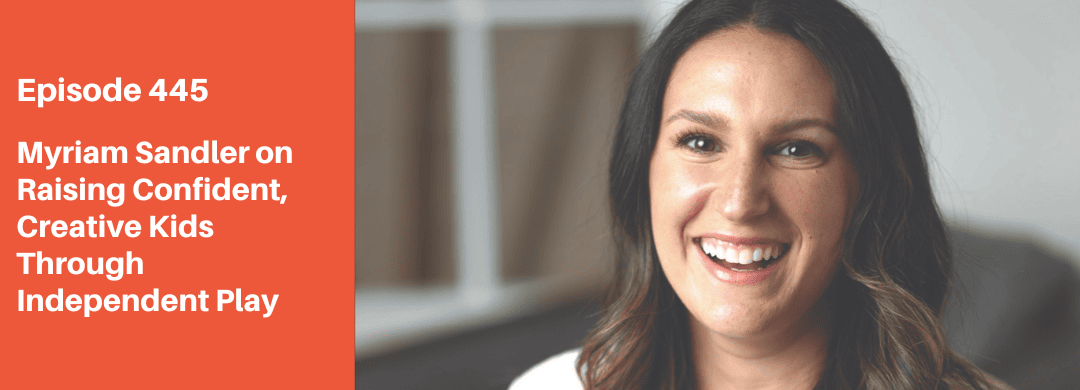
Creating a home environment that supports meaningful play can feel like a constant puzzle, from managing toy overload to setting up spaces that actually encourage focus, creativity, and independence. So today I’m sharing a conversation with Myriam Sandler, the creator of the hugely popular Mothercould platform and the author of the new book Playful by Design: A Stress-Free Guide to Raising Confident, Creative Kids through Independent Play. As a mother of three, Myriam shares engaging, easy-to-follow video tutorials that offer accessible DIY play ideas, parenting hacks, family travel tips, and more on her wildly popular Instagram and TikTok. Though I’m no longer dealing with toys lying around the house and cluttering our communal spaces, I definitely found life with my child’s toys challenging, from how to organize them and store them, to how to avoid having too many toys that never got used. I really could have used Myriam’s insights way back then.
But if you’re still very much in it and sharing a home and life with things like toys, art supplies, and more, have a listen to this episode. Myriam and I discussed the power of independent play and why less is more when it comes to toys, how boredom can actually be a gift, and how small tweaks, like decluttering a play space or setting up “play hotspots,” can make a big difference in your child’s ability to play solo. Myriam really believes in making the space you have, the toys you have, and the system you implement work for you instead of trying to make someone else’s system work for your family. I hope you walk away feeling empowered knowing that you don’t need a ton of new things but just some time to evaluate what’s working and what’s not.
About Myriam Sandler
 Myriam Sandler is the creator of Mothercould (@mothercould), a beloved kids’ activity and family lifestyle community trusted by millions of families. As a mother of three, Myriam shares engaging, easy-to-follow video tutorials that offer accessible DIY play ideas, parenting hacks, family travel tips, and more. Mothercould has grown to offer family-friendly, problem-solving products now available at major retailers.
Things you’ll learn from this episode
- Why boredom is an important aspect of sparking creativity and self-directed play
- How fewer toys can lead to deeper, more meaningful play
- The way that decluttering creates space for imagination to flourish
- What the key ingredients to independent play are, and what means and looks like
- The importance of boundaries and consistency in supporting sustained solo play
- How play “hotspots” and sensory activities can foster connection and emotional release
Resources mentioned
- Playful by Design: A Stress-Free Guide to Raising Confident, Creative Kids through Independent Play by Myriam Sandler
Want to go deeper?

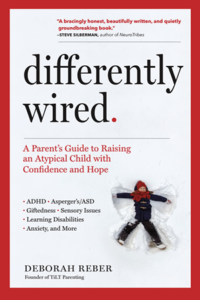
The Differently Wired Club is not your typical membership community.
There’s something here for everyone, whether you’re a sit back and absorb learner, a hands-on, connect and engage learner, and everything in between. Join the Differently Wired Club and get unstuck, ditch the overwhelm, and find confidence, connection, and JOY in parenting your differently wired child.
Learn more about the Differently Wired Club
Episode Transcript
Debbie:
Hey Myriam, welcome to the podcast.
Myriam Sandler:
Thank you so much for having me on.
Debbie:
Yeah, I’m excited to celebrate your new book. We haven’t met before, so I’m just curious to learn more about your work in this space. And we’re going to be talking about your new book, which as this episode comes out is new to the world. It’s called Playful by Design, Your Stress-Free Guide to Raising Confident Creative Kids Through Independent Play. It’s gorgeous. I just want to say congratulations. But before we get into it, would you, in your own words, take a few minutes just to introduce yourself, tell us about your personal why and the work that you do in this space.
Myriam Sandler:
Of course, of course. My name is Myriam Sandler. I’m a mom of three girls, 10, seven, and three. And I would say my first child kind of gave me the purpose and my why behind everything that I do. I had worked with kids that had ADD and ADHD for many years. And then I transitioned into working for a homeless shelter, working with children and families, all different walks of life. And then I became a mom. And my first child, she came into the world this delicious, yummy baby, 90th percentile in height and weight, which were not tall people whatsoever. Okay. So when I tell you that I go to the doctor on her first birthday, and I’m crying my eyes out that she will not eat any solids and the doctor is looking at me like, are you crazy? And I’m like, I don’t think you understand. She cries every time she sees the high chair. And I noticed that she had a texture sensitivity because we live in South Florida and we would go to the beach. Every time we would sit her down on the sand, she would crawl up her feet and she would cry. Every time we would introduce any type of food before it even before the taste could reach her brain, she hated it. So I realized that it was more of a texture thing and I learned that through my years of working with kids with ADD and ADHD Then it was a taste thing.
So I started develop developing all sorts of sensory play recipes that were Edible and safe for her age and I can introduce textures to her through play and not at the dinner table so I think I gave her this texture sensitivity myself. I was a first time mom. I was 23 years old. I did everything my mom and grandmother told me to do, which was basically sit them in a high chair, put a bib on, and as soon as they get a little bit dirty, wipe them clean. And to me, I don’t like parents blaming themselves, but to me, that signaled to my daughter that texture and dirt and mess was not acceptable. So she became kind of afraid to even try. And she was just one and you’d think, wow, babies can do, can put all two and two together like that. And I tell you, yes, from newborn, they can learn from us. So within six months of giving her this new life of textures, play dough, sand, slime, gooey, sticky, all sorts of textures through play, I saw a night and day difference. She was eating everything from quinoa to salmon, broccoli, all things that have very distinct textures. And that was my “mother could” moment. That was my moment of identifying a struggle that our family was going through, even when the doctors thought I was completely crazy, because let’s be real. I mean, I could read through the lines, but I looked crazy. And we did that. I did that as her mom. So I wanted to share that with other people that were kind of going through similar circumstances, whether it didn’t even have to be related to sensory. It could be any walks of life as a parent, if you have any struggles and you have somebody listen to you and kind of be like, I haven’t done that before, but I totally understand the struggle.And so I wanted to share that and connect with other parents around the world. And that’s what I did. That’s where MotherCould was born.
Debbie:
Thanks for sharing that with us. And you mentioned your book again. And so I’d love it if you can just tell us a little bit about what you hope to do through it, how you kind of, you know, took this experience with your child as a little one and kind of turned it into this bigger work that you’re doing in the space surrounding play.
Myriam Sandler:
So it was when I first started sharing kind of like my life really openly on social media, I had this series where every month or two, I would share a playroom rotation or a toy rotation, which is essentially looking at all of your toys in one space or in one head space, storing three fourths of those toys somewhere else around the house and only displaying one fourth of those toys at a time. So at the beginning, I was getting all these questions, a lot of interest. This is a practice much more common in countries like Australia, Indonesia, Turkey even, but not so much in the United States. So I was getting a lot of questions around this and I was able to answer them because my community was tight knit and I dedicated myself to this. But as my community grew, I got more and more questions and every question was very personal. It was, what if I have two children in a one bedroom apartment? What if I live in this space with only one square meter of outdoor space? It was very personal. So over time I stopped sharing these toy rotations and playroom rotations because I felt like I was doing a disservice to my community for not being able to answer these questions.
So it took me about two years, two and a half years to write Playful By Design and bring it to life. And I really wanted to write a resource where parents of all types, whether you have one child, you’re planning on having children, if you have 10 children of multiple different ages, different interests, as your kids get older, you can come back to it so that it can help you create a home environment with the space that you have with the items that you have and really make it work best for you and bring more play into your life. So many times I feel like parents ask me or the biggest misconception about me is that I play with my kids all day. And I get that because I have a kids activity account, right? I share kids activities, I playroom and toys and like all of these like fun things about parenting. So I understand why parents would think that I play with my kids all day.
And when I tell them that I hardly play with them at all, they’re like, I don’t understand. what, like what, what, what have you done differently than, than I have? And so, the book helps you look at the space that you have, the items that you have, and really create a system that works for you. And I think we’ve all watched the design shows and read the books and seen, and seen the TV and the Instagrams and the beautiful Pinterest boards. And I myself have gone to the container store, bought all the gorgeous clear bins, put them in my space. And I’m like, I did it. And then it doesn’t work. And then it doesn’t work. And I spend hundreds of dollars for a system that doesn’t work. And the reason it doesn’t work is because I am trying to implement somebody else’s system into my life and make it my system. So I think the number one thing that we can do as parents is to give up a little bit of control. And it was really hard. So if we set up this beautiful, clear spin system and we’re like, my God, it looks gorgeous. I did it. Mom, where’s the scissors? Mom, can you get the paint for me? Mom, is there paper? And then once you like, yes, here honey, here’s everything. They leave it all out. And you’re like, well, you asked me, so I had to stop cooking, I had to stop my phone call, I had to get up and I had to give this to you. And now you’ve left it all out. And that is like a moment where you’re like, well, I’m never doing that again, right? So then you stop trying to, so now you’re saying more no’s to your child because no, I don’t have time to get this for you and no, because I don’t want to have to clean up after you. Imagine if you set up a system where your child or your husband can go get it themselves. And then since they got it from a specific place, they know where to put it back. So that’s what I mean by giving up a little bit of control. It doesn’t mean it has to look ugly and be messy at all. It just means you don’t have to be the gatekeeper of everything in your house. And that’s what Playful by Design is all about. It’s helping you set up a system that looks beautiful, is functional, and is accessible to the entire family, no matter how old your child is.
Debbie:
So I just want to say, I definitely felt very called out when you’re talking about letting go of control. I think, you know, again, it’s been a while since I have had to deal with toys, although the bedroom here, there are electronics and wires and cables and soldering machines and other things. But at this point, I’m just like, I don’t even want to see what’s going on in there. But I was one of those parents who had a giant, and you talk about this in the book, I had like a giant wicker basket with a big lid. It was in the corner. It looked like furniture. I was like, everything just went in there. And you’re like, of course you can’t find anything. You’re like rooting through to find the toys anyway. So many times in reading your book, I was like, oh, I did this wrong. I wish I could have a do over with a lot of this stuff. But let’s pivot to independent play. This is something you really are talking about encouraging this and I know it looks different for every child depending on their capacity and their wiring and all of those things. But how do you define independent play and then what might that look like for different types of kids?
Myriam Sandler:
I think the key part about independent play is actually really providing independence. So I feel like we set up a lot of boundaries as parents and these boundaries are so tight knit that there is no room for independence. So let’s give a scenario of a child who goes to school Monday through Friday. They come home from school at three o’clock, but they also have soccer practice and then after soccer practice, they’re learning French and then after French during the week they’re also learning to play the piano. So you’re like I don’t understand my child doesn’t play with any of their toys and then you’re also not looking at their schedule and being like is there any time to play with the toys? Is there any time? So time is number one.
Time equals independence. If you have more time, you have more time to be bored. And you’re like, my God, bored? No! Boredom is where creativity is born. So if you have more time, then you have more boredom, then you have more creativity. And if you have more creativity, then you have more independent play. So it’s kind of going from one step to the other. You need time. You need time to be able to do that. A lot of times parents see a child playing independently and Interject themselves in a way where it’s like we have to go or it’s bath time or it’s this or it’s that. Sometimes when they are trying to play independently where you don’t notice that we’re actually Making it harder to play independently. And of course if it’s 9 p.m. Then it’s bedtime then it’s bedtime, right? That’s just how it is. But maybe it’s providing more time before bedtime for that free space to be able to play independently. And I really think that we’ve made it really hard for kids to get things independently within our house. And I’m gonna go back to that wicker basket because kids can’t see what they have. And a lot of parents feel like we’re doing we are doing the best that we can and we think that sometimes the best that that we can provide for our kids is to get them the newest flashiest item but I think that buying less things and having less clutter within your house is more beneficial than getting that flashy new item for Christmas. Obviously Christmas is one of those holidays where we’re going to give our kids presents. And that’s the joy of the holiday, I would say in many ways. But I always, always say you need to declutter before you bring in more items. So giving the child visibility and access to things that you already have. Don’t spend any more money. Stop what you’re doing right now. Do not go out. Don’t spend more money. Look at what you actually have. Put it all in one space. Declutter. And then you’re like, okay, I actually do need a really good storage system for these 10 cars. She could actually use a new puzzle because the puzzles that she has are missing four pieces. Like evaluate what you have. So then you can go out and really buy the things that you actually need. So less is more for independence. And I think that goes for any child across any spectrum. Less is more, especially if you have a child on the spectrum. If you have a child that has ADD and ADHD who is easily overstimulated, having less is so important because you can clearly see what they have. I always talk about this one open shelf system in my playroom and I’m laughing because every time I say open shelving, most parents are like, yeah, no, that’s not for me. Like, okay, I understand open shelving might not be for you. If you have 100 toys on that open shelf, it looks like a hot mess. Literally, no one wants to be there. But imagine if you only had like four or five things on each of those shelves how beautiful it would look and how inviting it would be. And the possibilities to create from those four to five items are so much greater than the 100 that you put on there. So no matter what your family dynamic looks like, less is more in order for your child to play independently.
Debbie:
When you were defining independent play, you talked about time, visibility, access, and boundaries. Those are things that jumped out for me. I’m wondering what advice you have for parents whose kids may be really invested in having you play all the time with them. I know, because I hear that from a lot of parents in my community. I definitely spend a lot of time, gosh, this is becoming another therapy session. But I do remember there was a lot of Lego-ing and a lot of books on tape happening in my life. And I would get down on the ground. And for me, I was like, I’m going to sort Legos. And that was very meditative for me. So that was my way of co-playing. But anyway, how do we encourage independence with kids who might struggle with initiation? Or maybe they do have a lower frustration tolerance, maybe the expectations we have aren’t realistic for where they are.
Myriam Sandler:
I love this question because I think one of the best things that we can do for ourselves is finding our playful parenting within ourselves. For example, I love art, but I hate pretend play. I also don’t like to construct things. I also don’t like many things, but I love art and I love to do puzzles. So instead of waiting for your child to come to you with, hey mom, let’s do this. It’s, I know I have five minutes or 10 minutes in my schedule. Let me go to the child and be like, hey, would you like to do this puzzle with me? So it’s being proactive with your time, a lot of time with children. It’s not necessarily that they want to do that particular thing. It’s that they wanna connect with you. And a lot of times kids will say, I want to play. And that’s their way of connecting. And if my child comes to me while I’m cooking dinner and she’s like, mom, will you play doctor with me? I hate playing doctor. And I also need to finish cooking dinner. So it’s not right now, or it’s kind of like one of those reactions that you might not want to give. But I know that I have 10 minutes before I start cooking dinner. where I have time to go do something that I enjoy. So I’ll go to my daughter and I’ll say, do you want to sit with me and we can draw grandma a Mother’s Day card? Or if they’re really little, hey, do you want to build a little castle with me?
So if you’re thinking that your child wants to play with you all the time, it might feel that way because they’re asking you to play at times where you don’t have the time or energy to give to them. So you always feel like you’re saying no, when in reality it might be once every other day, right? So imagine now a scenario where you’ve taken the free time that you do have to connect with them in a world where you both really enjoy it. Sensory play is that for me. Sometimes when I have 10 minutes. I’ll go to my daughter and I’ll say hey you want to make some play-doh immediately she’s like yes yes yes yes and we’ll go to the kitchen we’ll make play-doh and then she’ll take the play-doh and she’ll play with it for 30 40 minutes and enjoy it that time reference is going to change if you have a one-year-old or if you have a five-year-old right their attention span does have a lot to do with that if your child does have a low frustration tolerance, I think it’s really looking at the items that you have to help with that specifically. If your child loves magnetic tiles, but as they get to the third level, it crumbles, it’s doing a little bit of research and finding magnetic tiles that have better strength so that when your child does go to build a tower, it actually holds the strength. So it could be the actual item that they’re playing with that is causing the frustration. And it could happen with anything. Like my 10 year old, she loves to draw. But sometimes when she draws, the ink goes through onto the table. And that for me, it depends where she’s drawing, is a big deal, right? If she’s drawing downstairs on my marble floors, That to me is triggering. So setting yourself up for success is really, really important with the material that you do have. So yeah, just looking at what you have. Stop buying more stuff. Look at what you have and see how you can make it work best for you.
Debbie:
Let me just ask you about thinking about a lot of kids in our community. They have those sensory overwhelms and they may come home from school and really be like their capacity is just shot and they really need a break. They need some kind of a cozy space. I had created a little reading nook at one point that was literally in like this hidden room. in an attic that we found. was this tiny little space and that was pretty popular for a couple of years. Do you have any tips for parents on creating a kind of a retreat style space for kids who might need that decompression time during the day?
Myriam Sandler:
Yeah, I also love this question. I call these the play hotspots in Playful by Design. Play hotspots are basically creating spaces within your house that could invite play and comfort to your child. So for example, in my family room, every Friday we do family movie night, but my three year old, since she was born, she cannot sit through a movie, right? She’s three, her attention span’s low. So we created this little corner that she can go to once she’s done watching the movie and she’s overstimulated and she can play with four to six toys that are in that corner that are of her interest that will not continue to overstimulate her. So being very intentional with where the space is and what to put inside is really important. And I think a big part of this a lot of parents miss is that it’s not they need alone time, it’s they just need time. So creating a space that is still close to you, that they can still feel like you’re there for them if they need you is really important. And being intentional with the items that you put inside, like you said, a reading nook, if your child really loves to read and you filled it with books that were of your child’s interest and doing those intentional work really really pays off. It’s not just again he’s frustrated after school. It’s my daughter who is not neurodivergent every time she would come home from preschool at least for the first few months she would cry hysterically and she would have this big outburst.
And I noticed it’s because at school they hold so much in, right? They are just trying to be the best, best, best, best versions of themselves. And then they get home, their safe space and they let it all out. So one, it’s realizing that you are their safe space, that their home is where they’re most comfortable. And three, it’s okay. And creating that space for them. So when my daughter would come home, have this big outburst, we would do two things. One, have a snack. Food is really important. And two, sit down at the art table, whether together or if I had a phone call at that time, I would set up maybe a prompt for her, a new art material, something different. Maybe it was a sensory bin on the ground, something for her to kind of let out all of that energy through a different outlet than crying and screaming on the ground. So sensory play is so magical, in so many ways. And I know it’s hard for us parents, especially as we’re busy, to set up something new every day. And I’ll tell you, it doesn’t have to be new and different every single day. It could just be something that they are interested in and could be the same thing every day. But as long as it’s intentional and it works for your family, that’s all that matters.
Debbie:
We’re not going to have time, obviously, to go into everything in your book, but I do just want to let listeners know that it has a lot of suggestions. You offer so many suggestions for on-the-go sensory kits, for really, as you said, personalized space and toys that are specific and systems that are specific to your child and what works for you and your aesthetic and all of these things. It’s a book that I wish I had. I do do some things, right? Even when my kiddo’s home from university, I’ll set a puzzle out and just leave it available because I’m a puzzler too and that’s something we do together. I didn’t do it all wrong. But if you are the parent of a little kid and even up through the middle school years, I think you offer so many wonderful suggestions in the book and it is beautiful to look at as well. really, and your kids are the, the photos are of your kids. Yeah, that’s so cool. They’re adorable. So before we say goodbye, just for listeners who are kind of noodling over their play space, do you have a suggestion or something that they can do today that they could look at their design by play? Look at their space and maybe make a tweak.
Myriam Sandler:
Yes, declutter, declutter your space. I do this challenge once a year and it’s my one drawer, one cabinet a day. And it’s not, you don’t have to tackle an entire space because that takes a long time. But if you do one drawer, one shelf, one cabinet a day for 30 days, I guarantee by the time you’re done, so much would have been done. So much more mental space because you have less physical clutter. And you’ll be able to see what you do have and what you do need to start setting up those spaces.
Debbie:
You are so speaking my language. I love a good declutter. It’s actually my form of self-care. And I just want to say, I noted that you said anything broken or missing pieces is trash. And I was like, yeah, that’s a good tip. There’s so many good tips in there. So the book again is called Playful by Design, Your Stress-Free Guide to Raising Confident, Creative Kids Through Independent Play. And would you just, before we say goodbye, tell listeners where they can connect with you?
Myriam Sandler:
Of course, you can find me anywhere on socials at mother could or mother could.com and playful by design is anywhere books are sold. You simply Google playful by design, you’ll find us. Thank you. This is so lovely. Thank you.
Debbie:
Awesome. Well, thank you. Thanks, Myriam. It was so nice to chat with you today.
Do you have an idea for an upcoming episode? Please share your idea in my Suggestion Box.