It’s Been 9 Years of Tilt Parenting — What’s Changed in the Movement? A Special Solocast with Debbie Reber
In this special 9-year anniversary episode, I’m doing things a little differently. Instead of a guest interview, I’m doing a solocast in which I share nine shifts I’ve noticed in the parenting paradigm for those of us raising neurodivergent kids over the past almost decade since I first founded Tilt.
Some of the things I explore in this episode include the evolution of language within the neurodiversity movement, the increased recognition of dual diagnoses like Autistic ADHD and new identifications such as PDA, how concepts like Polyvagal theory and co-reguation have profoundly changed the ways differently wired children are understood, the importance of centering neurodivergent voices, and much more.
* I’ve put together a special anniversary playlist of the podcast episodes I reference in this episode over on Spotify. To listen to that, click here. *
About Debbie
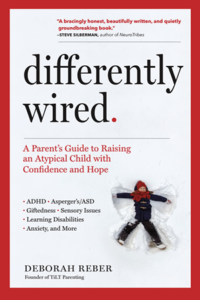
 Debbie Reber, MA is a parenting activist, bestselling author, speaker, and the CEO and founder of Tilt Parenting, a resource, top-performing podcast, consultancy, and community with a focus on shifting the paradigm for parents raising and embracing neurodivergent children. A regular contributor to Psychology Today and ADDitude Magazine, and the author of more than a dozen books for children and teens, Debbie’s most recent book is Differently Wired: A Parent’s Guide to Raising an Atypical Child with Confidence and Hope.
Resources mentioned
- Unmasking Autism: Discovering the New Faces of Neurodiversity by Devon Price, PhD
- Are you autistic? How a ‘lost generation’ of women on the spectrum went under the radar (The Telegraph)
-
The lost girls: ‘Chaotic and curious, women with ADHD all have missed red flags that haunt us’ (The Guardian)
- The Electricity of Every Living Thing: A Woman’s Walk in the Wild to Find Her Way Home by Katherine May
- Wintering: The Power of Rest and Retreat in Difficult Times by Katherine May
- Is This Autism? A Guide for Clinicians and Everyone Else by Dr. Donna Henderson and Dr. Sarah Wayland
- Brain-Body Parenting: How to Stop Managing Behavior and Start Raising Joyful, Resilient Kids by Dr. Mona Delahooke
- Beyond Behaviors: Using Brain Science and Compassion to Understand and Solve Children’s Behavioral Challenges by Dr. Mona Delahooke
- Navigating PDA in America: A Framework to Support Anxious, Demand-Avoidant Autistic Children, Teens, and Young Adults by Ruth Fidler and Diane Gould
- The Family Experience of PDA by Eliza Fricker
- Normal Sucks: How to Live, Learn and Thrive Outside the Lines by Jonathan Mooney
- Look Me in the Eye: My Life with Aspergers by John Elder Robison
- Unmasking for Life: The Autistic Person’s Guide to Connecting, Loving, and Living Authentically by Dr. Devon Price
Want to go deeper?

The Differently Wired Club is not your typical membership community.
There’s something here for everyone, whether you’re a sit back and absorb learner, a hands-on, connect and engage learner, and everything in between. Join the Differently Wired Club and get unstuck, ditch the overwhelm, and find confidence, connection, and JOY in parenting your differently wired child.
Learn more about the Differently Wired Club
Episode Transcript
Debbie:
I’m Debbie Reber, and you are listening to Tilt Parenting, a podcast that today is celebrating its nine year anniversary at the beginning of every episode. If you’ve listened to the show for a while, you know, I say the same thing that this is a podcast featuring interviews and conversations aimed at inspiring, informing and supporting parents raising differently wired kids. So today I’m just going to say if you’re listening, it’s because you are invested in making sure that neuro divergent kids thrive, because that is really what this show is all about. It’s what it’s always been about. And I’m so glad that you’re here. So this show, which started in 2016 was the very first podcast focused on helping parents raising kids who fit into the kind of broad neuro divergent umbrella. And I am so thankful to the hundreds and hundreds of wise and thoughtful guests who’ve shared their wisdom with us over the years. I mean, I remember having this kind of a wish list of the guests I really wanted to have on this show, and slowly but surely, with a lot of patience, a lot of persistence, I think I’ve gotten to talk with just about everybody on that list. I’m talking about people like Dr Dan Siegel, Steve Silberman, Dr Ross Greene, Carol Kranowitz, Julie Lythcott-Haims, Jessica Lahey, and on and on. And some of those folks have become colleagues and dear friends of mine, and that kind of blows my mind. I’m also so grateful that you are on the other end of this conversation, getting to do this show, this work to create this resource. I love that I get to do this and learn from all of these incredible experts and learn from all of you.
So today’s show is a little different. Nine years felt like kind of a big deal. 10 years I’m gonna do something really, really big, but for nine years, I wanted to mark this event. It feels significant to me. In the past nine years, I have had more than 400 conversations on every topic I can think of that would be relevant to parents raising neuro divergent kids. And there are people who are discovering this show all the time. Sometimes they want to go back to the very beginning and start listening from episode one. I love that great idea, and it’s a lot of content to go through. And I also know that when new listeners find TIlt, they are also usually looking for very specific information depending on what’s happening in the world. So before I get to the main content for this special episode, I wanted to let you know that we have just updated the podcast page on the website, so I know that the show is an important resource for educators and therapists and, of course, parents. And because there’s so much content to sift through, we’ve revamped this page so it now includes 20 categories at the very top of the page, so that you can easily find the episodes you need most now, those are categories like screen and tech, Couplehood and co parenting. There’s a PDA category, a therapy and meds category, mental health challenges, social lives and identity gap years and college and many more. So head over to tiltparenting.com/podcast. You can check out the new page. You can easily subscribe to the show, and you can really hone in on the resources that you need, all right, but let’s get to today’s episode.
Again, I wanted to do things a little differently, and so I’ve been spending time really reflecting on what has changed in the neuro divergent space in the nine years since I launched Tilt Parenting. So I’ve put together nine things that I wanted to walk through with you. Some of those things involve the language that’s used in conversations that we’re having. Some of those are in the shifts I’ve seen in the movement. Some of those are things that I’ve just kind of noticed have become more widely understood. I’m going to be sharing nine things that I have noticed have changed, whether that’s language we use, whether it’s awareness and understanding and just shifts that have happened that I’ve observed since I started Tilt back in 2016 I also wanted to let you know I am going to be referencing some episodes here and there that are tied to the changes and shifts that I talk about. And so I put together a playlist of the episodes that I mentioned. So if something I mentioned seems interesting and you want to go deeper, you can go right to the playlist. So the playlist lives on the show notes page for this episode, which is at tiltparenting.com/session 438, and if you follow Tilt Parenting on Spotify, you can also find the playlist there. I’ll call it the nine year anniversary playlist. And then if you really want to make things easy, if you’re not on my mailing list. Go to tiltparenting.com there’s a sign up box on the very bottom of the home page. You can sign up and be part of the community. And I will also be sending out a link to the playlist in my newsletter on Thursday.
Okay, so I just want to start by saying that when I launched Tilt nine years ago, I launched it as a revolution, right? I really saw Tilt as being a voice in this conversation saying that neuro divergent kids are not outliers, they are not broken. They do not need to be fixed. I really was embraced in this language that difference does not equal deficit. And I just want to say there have been so many factors that have come together to contribute to so many of the meaningful shifts that have happened over the past nine years when it comes to understanding and awareness of neuro divergence. COVID really changed a lot in the neuro divergence space. For many reasons, social media has played a pretty large role. I’d like to think that Tilt’s message of normalizing difference and pushing for a shift to a strength based lens and insisting that our kids not be broken down into these diagnostic buckets that keep them separated. I like to think that’s played a role in the shift, too.
So the first thing I wanted to mention as a meaningful shift is about the word neurodivergence. So when I first started tilled parenting, neurodivergence was not a word that was being used in the mainstream at all. The word neurodiversity was around. It was coined by an autistic sociologist named Judith Singer in the late 1990s and the term was used to describe the natural variation in how human brains are wired, and it was very specifically associated with autism, but neuro divergence. Neurodivergent as a kind of umbrella category that would capture people who have neuro developmental disabilities, that also included things like learning disabilities, ADHD, being gifted, being twice exceptional, it really just wasn’t a thing. That’s why I use the term differently wired. I was so put off by the language at the time, which was very much centered in disorder and a very pathologized, medicalized lens, and that felt just wrong to me. It felt like it didn’t accurately describe who my child was. It felt very again, you know that this is something wrong, something that needs to be fixed and addressed, and so I rejected that, and the term differently wired was really about acknowledging that there are differences, but they’re not good or bad. They just are. I’m so excited that the word neurodivergent as a concept is really ubiquitous, and for the most part, it is understood, and actually, I feel like it’s being embraced by lots of communities.
Little side note, I think that there can be challenges associated with neurodivergence being so widely used, because there runs a risk of it being used out of context, or being embraced by communities who don’t truly understand what it means, and that has some potential downsides, but in general, I’m really grateful that there is a term that kind of normalizes, that there is no one way to be normal or to be the second shift or change that I thought about as I was working on this episode is related to that, and that is the concept of neurodivergent affirming.
So because neurodivergence is widely recognized now, neurodivergent affirming as an adjective is being used in front of things like therapy or schools or approaches, environments or experiences. And the idea behind neurodivergent affirming is that whatever the adjective it’s describing is something that is not aimed at fixing a way of being, but rather to support the individual as they are. So a neurodivergent affirming approach to therapy, for example, would ideally be a strength based approach, rather than looking at deficits or focusing solely on deficits, it would be focusing on authenticity as opposed to compliance, right? So really inviting people to show up fully as themselves, no need for masking being embraced and accepted for who they are. It would mean having respect for the lived experience of that individual and honoring their autonomy and their ability to self advocate, and it would be making sure that environments are truly inclusive where neuro divergent folks can show up and not again have to mask or be in a way that is not in alignment with how they experience the world. So I really love this idea of neuro divergent, affirming, and I think it’s a real powerful shift in how we’re moving forward. And because the term is becoming so widely embraced and mainstream and seen as something that is a positive thing, there are also therapists and educators and others who have embraced the term and using that language in their websites or how they describe their services, but they’re not actually making the changes in their approaches. You might see a provider who talks about neurodivergent affirming, yet if you dig deep and you look on their website, you might find that they are still relying on behaviorist approaches in their work, or using language that pathologizes, or prioritizing goals that are really more about helping that neuro divergent individual behave in ways that look more neurotypical and that don’t really focus on their authentic way of moving through the world. So I wanted to mention that in this episode, because again, while there’s so much great momentum in the neurodivergent space, and I do think neurodivergent affirming approaches is a big part of that. It’s also really important that we pay attention to how those terms are being used, and really making sure, again, that any environment or school or therapeutic practice or program who claims to be neurodivergent affirming really is, if this is something you want to explore more, definitely check out an episode I did with Dr. Megan Anna Neff and Dr. Debra Brause where we talked about neurodivergent affirming therapies and ways that we can vet potential providers to make sure that their goals are in alignment with ours. That episode is in the playlist for this episode, so definitely check that out if you want to explore more.
The third thing I’m sharing for this episode is the last one related to language, and that is the language of disability. This is something that has really changed in the nine years since I started Tilt. So the word disability, for a long time, was seen as kind of a bad word, right? This idea that it was centering a deficiency, that it was focusing on what someone can’t do as opposed to who they are. And this has been a shift. In recent years, many neuro divergent individuals have been actually reclaiming that term as a powerful part of their identity. So this is really part of that bigger shift, right? Challenging this idea that being disabled is a negative thing. I just want to acknowledge this is a hard one for a lot of listeners. I think I definitely hear from parents who steer away from that language. I’m sure that I steered away from that language when I was early on in my journey of raising a young kid, because I hadn’t questioned what that word meant I hadn’t challenged my own ideas around disability. But what we know now is that it isn’t about someone being less than or broken or deficient in any way. It means that because of the way they experience the world, there are systems and environments that are inaccessible to them, so they’re literally disabled by the environments. This is something I’m really happy to say we’ve been talking about a lot in recent years, and as part of that playlist I mentioned earlier, I’ll have a couple episodes about this. This is something Dr. Devon Price has talked a lot about. He speaks about the importance of claiming the word disabled as part of autistic identity. Another activist I’ve had on the show, Morenike Giwa Onaiwu, talks about disability and embracing it in all its forms. And then Emily Ladua, she wrote a wonderful book called Demystifying Disability, and she has been an outspoken advocate for reclaiming disability as an identity, as a proud identity. So reclaiming this idea of disability within the neurodivergent space has been a big shift that I’ve noticed, and it feels like a very positive one to me.
Okay, the fourth big shift I’ve noticed is not related to language, but it is about the fact that there has been a large influx of adults identifying as neuro divergent whether they’re self identifying, or they’re getting a medical diagnosis. But this has really changed dramatically in the past nine years, really in the past four years, four or five years, I do think COVID had something to do with this, and there have been articles talking about that connection of people being at home and having more time to kind of observe and understand their areas of challenge, and just kind of notice what happens when all routines are off. I also think how diagnostic criteria has been interpreted and understood has changed significantly. And I also think that as more and more kids are being identified, parents are seeing themselves in their children, and they’re noticing, hmm, that was me too, or I struggled with this as well. But regardless of the reason why this has been a significant shift, actually talked about this on a podcast episode many, many years ago when I interviewed four different adults who were coming to terms with their own new diagnoses while also parenting neuro divergent kids that came out six years ago now, I was really excited, because it was One of the first conversations I’d heard where adults were discussing their late diagnoses and how they were reconciling that with their childhoods, with their parenting lives, with their relationships with their kids. It’s on the playlist that I mentioned. Definitely listen to that if you haven’t yet. But this shift of more and more adults recognizing their own neurodivergence, I think it’s just going to keep continuing to happen.
I looked up some stats for this episode, if we’re talking about autism. For example, between 2011 and 2022 autism diagnoses among adults in the US grew by 175% Another study showed that there was a 450% increase in. Of diagnoses among adults ages 26 through 34 during that same period. That is huge, if we’re talking about ADHD. There’s been research that’s shown that 75% of adults with ADHD were not diagnosed during childhood. There have been plenty of articles about the lost generation of autistic women, the lost generation of ADHD women. Full disclosure, I’ve discovered my own ADHD identity in the past couple of years. Not sure why it took me so long, but it’s made so many things make so much sense to me. But this is really significant, this shift that we’re seeing. And it’s complicated, right? But I do think that ultimately it’s positive because it gives adults an opportunity to perhaps heal or reconcile parts of their experience as kids that may shape who they are today, but there still may be pain and trauma associated with that, and I think ultimately it helps adults show up better for the new generation of neurodivergent kids.
The fifth thing I’m going to share is related to that, and it is about centering neurodivergent voices. And when I say that, I’m talking about how in the past nine years, I have noticed a significant shift in the narrative around neuro divergence from one that was really focused on experts and clinicians and caregivers talking about neurodivergent people to one that is really led by those with lived experience. Now, it’s always been true that it’s critical to listen to the experiences of neurodivergent adults, but back when I started till parenting, there were very few neurodivergent adults who were talking openly about what they went through. Of course, Temple Grandin has been out there for a long time as a powerful voice in the autistic space. I remember reading John Elder Robison’s book Look Me in the Eye about his experience growing up autistic. Dr Ned Hallowell has been writing about his ADHD for many years. Of course, one of my favorite voices in this space is Jonathan Mooney, who’s written many books, including Normal Sucks about his experience with ADHD and learning disabilities, but it was a much different landscape, and so I find it so exciting that so many neurodivergent adults are now part of the movement, the movement to reshape education and healthcare and parenting communities and really showing up for professionals and families working with and raising neurodivergent kids to to answer questions, to help people really understand the neurodivergent experience, so that our kids, kids growing up with learning disabilities, ADHD kids, autistic kids, can just be much better supported from the very beginning for parents, especially parents who are newly discovering their child’s neurodivergence and don’t know where to start listening to the voices of neuro divergent adults, such an invaluable way to get to know what their kids might be experiencing and understand what they might need the most. This has been a big part of Tilt Parenting. I work really hard to have a very diverse slate of guests, from experts to parents to even kids, but I really work hard to make sure that I’m centering the voices of neurodivergent individuals, and I’ll just say some of my favorites recently, these are in the playlist, but Dr Mel Houser is one who is really changing the way that the healthcare system supports neurodivergent patients, Katherine May who wrote The Electricity of Every Living Thing is such an important book in sharing the experience of a late diagnosis of autism. As a woman, Dr Megan Anna Neff, one of my favorite return guests, she is an autistic ADHD psychologist who is doing such important work in sharing her lived experience to support other parents and clinicians and professionals and really anyone who wants to better support neuro divergent kids. Dr Devon Price, who I mentioned before, Jonathan Mooney, has done incredible work as an outspoken ADHD learning disabled advocate. Anyway, I could go on and on, but I will stop there, check out that playlist and dive into some of those conversations.
So for the rest of this episode, I’m going to be sharing four different concepts that are prevalent now that really weren’t a thing back when I started, till parenting. And I think they’re all really important. So the first is AuDHD, which stands for autistic ADHD, and this is another thing that just didn’t exist when I started Tilt. I mean, when we went through our first neuropsych process with our kiddo, we were told it was impossible to have a diagnosis of both autism and ADHD. Couldn’t happen. So. We now know that that is completely wrong. In 2013 actually, the DSM five, that’s the Diagnostic and Statistical Manual of Mental Disorders. That’s when it officially allowed for a dual diagnosis of autism and ADHD, so it formally acknowledged the overlap between those two things. And I did some research, a study in 2020 found that there is a high rate of CO occurrence in these two things, so between 30 to 80% of autistic individuals are also diagnosed with ADHD and related to that, up to 50% of people with ADHD meet the criteria for autism. So this, to me, gamechanger, right? Because it’s so frustrating and challenging when your child has all of these kind of unique traits and characteristics, and they all fit neatly under the umbrella of ADHD, they all fit neatly under the umbrella of autism. They might all fit under the umbrella of gifted. They might fall under the umbrella of anxiety, and as a parent trying to support their child you’re like, but what is what and what does my child need? What is really going on with this kiddo? So every time there’s positive shifts in the way that different traits and characteristics are understood, feels very exciting to me, because then we can better understand what kind of support could be most helpful for that person.
I want to give a shout out before I move on to Donna Henderson and Sarah Wayland. They wrote the powerful book, Is this Autism. They’ve been really important in expanding the way that the criteria for autism is interpreted. So their work is really important. And then also I mentioned Dr Megan Anna Neff, she is doing phenomenal work in talking about all the different ways of being neurodivergent and how to differentiate between what’s what she also identifies as an Audi age dear, and her perspective as a leading voice in the neurodivergent space is invaluable.
Okay, the seventh thing I’m going to mention in this episode is polyvagal theory. So this has actually been around for a while. Dr Stephen Porges introduced this idea of polyvagal theory back in the mid 90s, but in recent years, it has really entered the mainstream, or at least the mainstream within the neurodivergence space. I remember I first heard about polyvagal when my friend Seth Perler, you may know of him. He’s a phenomenal executive function coach. He shared a video with me. He said, Debbie, I think this is what it’s all about. You gotta check this out. And it was about polyvagal theory and the vagus nerve and fight or flight, and what’s happening when our nervous systems get overloaded. And that video, and then, of course, that led me down a rabbit hole to really explore this concept. It’s really changed so much for me in the years since I started Tilt. Many experts in this neuro divergent space have done such wonderful work interpreting polyvagal for parents everywhere. And I’m going to give a shout out to Dr Mona Delahooke, who wrote the incredible books Beyond Behavior and Brain-Body parenting. She writes a lot about Dr Porges work in her books, and helps to kind of break down what’s really happening when kids are overloaded. But it is such a game changing concept because it’s pinpointed what is really going on when a child is dysregulated, and it’s shifted the question from how do we get this child to behave to what does this child’s nervous system need right now? It is such a powerful paradigm shift. It’s so exciting to me. It’s something I so wish I’d had access to back when I was parenting a really dysregulated toddler, little one game changing, and when we can understand this, it will change how we view and respond to our child when they’re having a hard time. If you’re not familiar with polyvagal, I have links to some resources in the show notes page and some episodes in the playlist where you can learn more before I move on to the next one. I’m just going to say that Dr Stephen Porges has a new book coming out about the safe and sound protocol, and I’m excited to be interviewing Dr Porges for the show in the next couple of weeks. So stay tuned for that episode.
Okay, I’ve got two more concepts, and then I’m gonna wrap this one up. So number eight is the idea of co-regulation. Co-regulation is another one of those game changers. It is something that wasn’t really available as a kind of go to strategy or even a concept back when I first launched Tilt. One of my favorite books on the subject is called self reg. It’s by Dr Stuart Shanker, and it came out in 2016 a few months after I launched Tilt Parenting, but this concept of regulation and CO regulation, it just wasn’t widely understood or leveraged as a parenting strategy until the past couple of years, at least in a significant way. Dr Dan Siegel wrote about mirror neurons in The Whole Brain Child, and he does talk about how nervous systems, our energy states are always communicating with each other, and actually referenced Dr Siegel’s work in my chapter of Differently Wired about how our energy impacts our kids. But again, co regulation as a concept, it just wasn’t widely understood. So this, to me, is an incredibly exciting development, because I believe it is one of the most powerful tools that we can have in our toolbox to really understand how we can co regulate for another person, how we can use our nervous system, basically lend our calm energy and our nervous system regulation to someone who is dysregulated. It’s incredible. It allows us to be a genuine source of support for any child who is struggling. And it also supports ourselves in those hard moments. It supports our whole family in those moments.
Okay, the last concept that I wanted to share that has been a real game changer, I think, in the neuro divergent movement, and in this space, since I launched Tilt nine years ago, is PDA. PDA, which technically stands for pathological demand avoidance. Many people have renamed it, persistent desire for autonomy. This is a presentation of autism, and it is not something that was well known at all. It just wasn’t something especially in the US that anyone was talking about. And just so we’re on the same page briefly, PDA is really a hypersensitivity to any kind of demands or expectations, and those could be external demands, or they could actually be internal demands. So I did an episode about PDA with Dr Melissa Neff six years ago, and that was one of the first podcast episodes that was talking about PDA here in the United States. And we’ve learned so much more since that episode was released. PDA is complicated. It is not currently recognized as a distinct diagnosis in the DSM or in other diagnostic manuals. It is more widely understood and recognized in the UK and in Australia. There is a growing awareness here in the US, in fact, there is the PDA Society of North America. They just actually held their annual conference that’s been around for a while.
And there’s definitely positive shifts happening, but it is one of those complex ways of moving through the world that has a long way to go when it comes to other people really getting it. I know because parents are struggling so much, because it’s really challenging to raise a child in a society that prioritizes compliance when you have a child who can be triggered by any sort of demand can make so many aspects of life really difficult. So I’m really glad that there is increasing understanding of PDA as a way that some kids are experiencing the world, and it’s something I hope that we get more understanding of as time goes on, I’ve done a couple of really good episodes about PDA on the show, including the one I mentioned with Dr Melissa Neff. I’ve done an episode with Kristy Forbes, who’s in Australia, who identifies as a PDA adult. I’ve done an episode with Eliza Fricker, she’s from the UK. She’s written some really, really great resources for parents raising PDA kids. And then recently, I had Diane Gould and Ruth Fiddler on the show, and they co-wrote a book about PDA in North America.
Okay, so there you go. Those are my nine things, a little potpourri of observations and shifts that I’ve noticed in the past nine years. Of course, there’s so much more that has changed in this space. There’s also just so many more podcasts out there having conversations about these topics. There’s so many more books available, so many more organizations. All of those things are very exciting to me that there are just so many more resources. Because, you know, one of the reasons why I launched Tilt in the first place was because trying to find positive, optimistic, strength based resources was like looking for a needle in a haystack. And it’s exciting that parents who are on this journey today and just starting out, they can pretty quickly connect with some really positive, wonderful resources that will help them feel kind of instantly seen and like they’re not alone, like there’s nothing wrong with their child, and actually there’s so much hope and possibility in their journey.
And I just want to say that I have also changed. So nine years ago, I had an 11 year old, right? I launched Tilt with that 11 year old. We did a little Facebook live together to announce our vision, and we did hashtag differently wired, and we kind of laid out what we wanted to do. And now I have a 20 year old who’s just about to finish a first year in college. Still kind of blows my mind when I say that, but I have learned so much along the way over these past nine years. Also I am still very much. In it. I’m still living this every day. I am more committed than ever to sharing what I’ve learned with you and helping you navigate whatever it is that you’re going through.
Because again, while so much has changed, there’s one thing that has not and that is that raising a neurodivergent child, it asks a lot of us. I always say that our kids, they demand that we really show up for them. They demand us to be patient. They demand our courage. They demand us to be willing to grow. But the good news is you do not have to do it alone. I’m here. Tilt is here to be there with you, to learn alongside with you, to hold space for all of it, the messiness, the joy and everything in between. So my hope, as always, is that through Tilt Parenting, you feel supported, you feel empowered, and you feel reminded every step of the way that you’ve got this. And I want you to know that I’ve got you, and I know you’ve got me. So thank you. Thank you for being in this relationship with me. Thanks for at whatever point you joined Tilt Parenting and started listening to the show. Thanks for being a part of it. I really and truly couldn’t do it without you.
Do you have an idea for an upcoming episode? Please share your idea in my Suggestion Box.