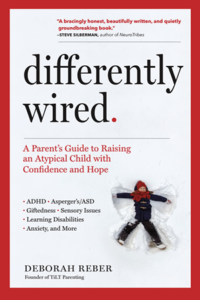
“Differently Wired” is Here! Special Book Release Episode
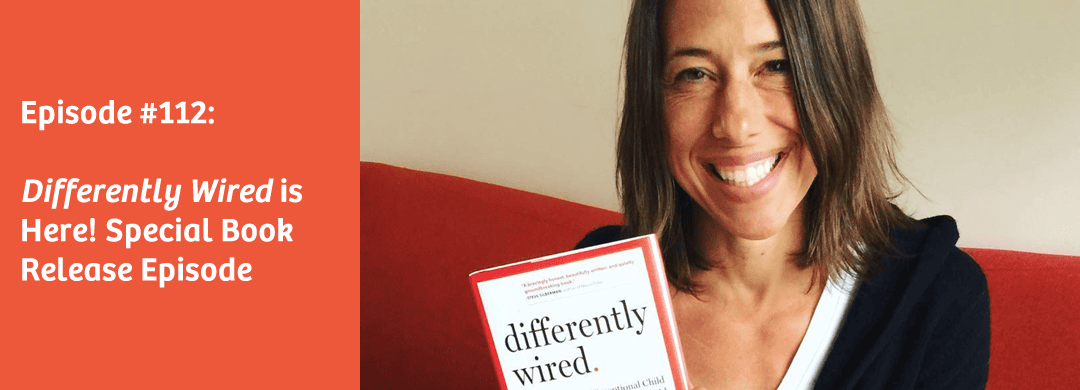
It’s a book! It’s a book! This week is a special BOOK RELEASE EPISODE where I finally get to say DIFFERENTLY WIRED IS HERE!
I asked my dear friend, and TiLT Parenting Podcast editor, Donna Bardsley to interview me for this episode. Donna and I met in Amsterdam, where Donna created and hosted the Amsterdam Mamas Podcast (listen to this interview about homeschooling in the Netherlands here). She’s a fantastic interviewer, asks great questions, and is super insightful…I thought she’d be the perfect person to have a deep conversation with about my new book Differently Wired: Raising an Exceptional Child in a Conventional World.
We cover uncharted territory in this conversation, including how Asher really feels about all of this, what was the reception when I first pitched the book as a memoir, my thoughts surrounding the anticipated resistance that will stem from trying to shake up the current paradigm, and much more. I hope you enjoy the conversation! And to learn more about my book, Differently Wired, click here.
About Debbie Reber
 Debbie Reber, MA is a parenting activist, bestselling author, speaker, and the CEO and founder of TiLT Parenting, a resource, top-performing podcast, consultancy, and community with a focus on shifting the paradigm for parents raising and embracing neurodivergent children. A regular contributor to Psychology Today and ADDitude Magazine, and the author of more than a dozen books for children and teens, Debbie’s most recent book is Differently Wired: A Parent’s Guide to Raising an Atypical Child with Confidence and Hope.
About Donna Bardsley
 Donna Bardsley is a practicing insomniac, would-be writer, has-been podcaster, and a never-will-be foodie. As the mother of a few quirky and sensitive kids, she loves editing the TILT Parenting Podcast. She currently lives in the Pacific Northwest with her husband, three children, and one slightly neurotic dog.
Things you’ll learn from this episode
- How the process for writing this book differed from the other books Debbie’s written
- How Debbie went about getting endorsements from thought leaders for Differently Wired
- Who Debbie sees as the bigger audience for this book and her ideas for getting it on their radar
- How Differently Wired is different from other books in the neurodivergent parenting genre
- What Debbie’s vision and greatest hope is for the book
- How Asher feels about the book
Resources mentioned
- Differently Wired: Raising an Exceptional Child in a Conventional World by Debbie Reber (on Amazon)
- When Parenting Takes You Somewhere Different (Amsterdam Mamas podcast episode
Want to go deeper?

The Differently Wired Club is not your typical membership community.
There’s something here for everyone, whether you’re a sit back and absorb learner, a hands-on, connect and engage learner, and everything in between. Join the Differently Wired Club and get unstuck, ditch the overwhelm, and find confidence, connection, and JOY in parenting your differently wired child.
Learn more about the Differently Wired Club
Episode Transcript
Donna:
Hello Debbie, and welcome to your own podcast.
Debbie:
Hey Donna! How are you?
Donna:
Good. That the question is how are you?
Debbie:
I’m good. So things are a little tense around here right now, but in a mostly good way.
Donna:
Yes. For our listeners, we’re just a few days away from the big book tour and I will just say hello to our listeners. I, my name is Donna Bardsley and I’m Debbie’s editor and for the next 30 minutes I’m taking over and I get to interview Debbie. So I’m really excited about this. I hope it’s going to be really fun.
Debbie:
I like having you in charge of the podcast. It sounds really nice.
Donna:
Sometimes it’s nice to just let someone else take over for a bit.
Debbie:
Indeed, indeed.
Donna:
Well, I know that you always ask your guests to start off and tell a little bit about themselves and also their personal why. So first I want to get to know the behind the scenes Debbie a little bit better, the part of you that we might not know, even after listening to the podcast, because obviously your audience knows you as the parent of Asher and as an advocate, but why don’t you take this opportunity to tell us a little more about you, about your background and maybe what, besides Asher, got you to where you are now with TiLT and writing this book, Differently Wired.
Debbie:
Goodness. So many things I could talk about. I was talking with actually my Dutch teacher, Hester, about this because she was, I showed her the finished book last week and we were discussing my work as an advocate and you know, this role that I have untilled and one of the things that we had this very fragmented conversation because I was doing it in Dutch and that’s always a challenge. But I was trying to explain that I’m just someone who has always felt like I need to be helping people in some way. You know, I was definitely that kid who said “I’m going to change the world.” You know, since I was a very young girl and have always felt this pull to positively impact other people, people who were marginalized groups or you know, I used to volunteer at a retirement community when I was at probably in fourth or fifth grade and the summer, every day I’d walk a mile in the heat down to this retirement home because I just wanted it to be of service and I don’t know where that came from. It’s just who I am. I guess it’s part of my own wiring, but always when I had a job, you know, either my jobs, my quote unquote real world jobs, you know, I worked for UNICEF for a number of years. I worked for CARE, which is a, another relief and development organization. I worked on a human rights television show and then I moved into kid’s television, but I was working in educational TV, most of that time. So I always wanted to contribute in a way that would improve people’s lives. And I also volunteered with homeless teens in New York City for a couple of years and I helped work with mentoring teen girls at risk in Los Angeles for years. So I think I’ve just always felt the need to be doing something, you know, contributing and using my gifts as a writer. My, you know, I’m kind of a uber organized, productive person.
Donna:
Oh, I know.
Debbie:
So I dunno, I’ve, that’s just in my writing for teen girls for so many years too, I just was always trying to take lessons that I’ve learned and I’m a research junkie so I’ve just found this kind of sweet spot of being able to, to take all this research and, and the inspiration that I find in other places and then share it with people in a way that’s accessible to them. And so when I pivoted and decided to focus on supporting parents, raising atypical kids, I was able to take all of that, you know, all of those skills and that experience and pour it all into TiLT and the book, Differently Wired. So it’s a great combination for me in many ways of who I am in the world.
Donna:
Yes. Kind of the perfect storm.
Debbie:
Yeah, it is.
Donna:
So tackling your personal why I. I sort of witnessed it. I remember you talking about the shift that was happening and how you knew something big was on the horizon. You didn’t know exactly what it was going to be but something was brewing. And you also know is going to surround Asher and you know also with neuro atypical kids. What was interesting to me was that it wasn’t a fully formulated idea, but you were already really active and getting organized and doing what you needed to do the background work because you were were that motivated. Take us back to that moment in time or even a little further back if you need to. So why were you compelled at that time to start creating what now turned into TiLT and your book, Differently Wired? What had brought you to that point? Where were you at at that moment of time?
Debbie:
I think I knew from a very, when Asher was maybe five or six that I eventually would be doing something in this space because I was in so much pain, personally as a parent, and I’ve always turned my pain and challenges into something positive on the other end. I know that’s how I operate. So I think I knew for a long time and I do remember having lunch with my agent then I was always working on teen books. But one lunch we were discussing and she’s like, Oh, you’re going to be writing about this, you know, and Asher was probably again, like five or six, and she said, but not yet. You need to live at first. And I was like, yeah, okay. I’m just going to keep living it because I, I didn’t have any other choice. I mean I was so in it and, and, and really just in a challenging space. And actually two months before we came to Amsterdam, so summer of 2013, I attended the World Domination Summit, which is this fantastic weekend event that Chris Guillebeau puts on in Portland, and it’s just pulls really cool change makers from all over the world to come together for a weekend and just get inspired and talk about mission driven social change work. And I was there with my girlfriends and I was finishing a manuscript for a book for teen girls called Doable: The Girl’s Guide to Accomplishing Just About Anything, a book that I loved and was super passionate about. But we went to dinner after that first night and I just distinctly remember telling her, this is my last book for teens. Like I, you know, I still love teenagers. I love teen girls. I think they’re amazing and I want to support them. But I didn’t — the passion had shifted and I just knew that I was moving on.
And that was a really scary thing because I spent so much so many years, you know, speaking at conferences and advocating for teen girls. And that was kind of my identity. But I just knew it was time and I knew that this move to Amsterdam was going to be highly disruptive and was going to change our life. I knew me becoming a homeschool parent was going to change my life. I just knew we were at this real big pivot in our lives and in my life as a parent and it just seemed like the time was right. Yes, you did see the very beginning and I’m just someone who once that switch happens in my mind, that just becomes the new thing that’s happening and so that that’s what I did for the first couple of years after moving here was just give it time to to grow and to marinate and let it start to show me what it was going to become.
Donna:
Well, even when you first moved here, you knew that, like you said, this was going to be a big pivot for you, but you didn’t know how it was going to turn out and I got to watch a little bit of that transformation. So was that also a big part of it? Once you saw how things changed for you and and for Asher and, and the impact that it had on your life, can you tell us a little more about that? About the effect that, that had?
Debbie:
Yeah, sure. I mean, my listeners will be very familiar with, you know, what I’m about to say, what does that, that first year was really difficult. There was so much adjusting that had to happen in terms of my own expectations for myself, for our family, for education, you know, for what it was all gonna look like. And then having to acknowledge that while I thought I was all zen and in full acceptance, I actually wasn’t. And so I had to really go through a pretty difficult year where, yeah, I didn’t know what it was going to become and I probably, I’m sure I couldn’t have created TiLT at that time because I was still so much in it and in learning mode. Just to say I am 100 percent still in it. That has not ended at the learning continues daily over here. So I’m right there with everybody else. But, what we experienced as a family, what I experienced being with Asher every day, and then just my own personal journey really helped me start to understand what was possible in a whole new way and think about the ways and the shifts that I had made with a lot of, you know, again, guidance on incredible coaches and experts and me really experimenting with all of that and getting curious about what would happen if we did this and then seeing such incredible response from Asher and watching things just develop in a way I never imagined possible. And I think that’s when I started feeling like, I want other parents to experience this. I want other parents to know that you can feel genuine joy and happiness even in the midst of stuff that feels overwhelming and incredibly painful.
Donna:
When you were, when you knew you were going to start working on it, you started to go through, what I think is just a really fascinating and amazing process of preparing for that, can you tell us a little bit about what you did and just quickly, because I know it’s not the crux of what we want to talk about, but I think that really is a great insight into Debbie as a person.
Debbie:
Yeah. I, you know, as you’re asking that question, I’m picturing my purple binder. I have this ginormous binder because I am such a research junkie and I don’t just start. I can’t sit down and start something. I gather. So I went into serious like gather materials mode and I went back through years and years worth of emails, you know, that I sent to my mom in the wee hours of the morning when Asher was three and you know, all the notes I had gotten from teachers over the years, the good and the bad, and just started on this giant collection of memories, and notes that Derin and I wrote back and forth to each other where we were really, you know, talking about our biggest fears and concerns. And you know, I just started to amass all of it and I didn’t know what the book was going to be. I thought it might be an inspirational memoir, so I started kind of laying out the entire journey, you know, and where all these different pieces would come in. And for me, you know, when I write books, there is a really messy phase in the beginning where the book really can be anything because it’s not formed yet and that’s a really exciting place to be. And it’s also super overwhelming because the book can be anything and it’s your job to figure out what are the most important pieces of this story. But yeah, so for me, I probably spent months creating this ginormous binder and going down memory lane and it was painful in many ways to revisit a lot of these things too. But it was also exciting to see, wow, I can’t believe how far we’ve come. Like I can’t believe three or four years ago this is the place that our family was in, and it was not a good place. And so it was a, it was just interesting to, to process all of that.
Donna:
Yeah. That was what I was interested in next was what was that like to review that whole experience, to look back, to read all those things, to re-feel it maybe. And then also to be thinking about it in a way of sharing it with other people. What was that like?
Debbie:
Yeah, there was honestly part of me that was like, oh my God, I can’t even believe that this was how hard things were. Like at the time when you’re in this, and for listeners who are still in this place, I know this feeling, it feels like this is it. Like you can’t imagine a reality, a daily life, where you’re not going to feel this way, where you’re not going to feel this stuck, or that there are no options, or that the future is bleak. You know? So it was, it was almost like I just decided to pocket, you know, to file that part of my life away because it seems so far removed from what I was experiencing then by the time I started doing this work. But it was really important for me to make sure to share pieces of that because I think it is in those years and when we’re in that place that we feel our most isolated, our most… were just alone. We’re so alone, you know, when our mind is racing at one in the morning and we had a horrible day and we know that next day has the potential to be even worse and we feel like no one else gets how dark things can be for us. And so it was really important to me to share enough of my journey that people could know that I’ve been there, that I am in, I am, they’re still, sometimes, and that it’s okay. Like it’s, you’re not alone in what you’re going through and there is another way to experience this.
Donna:
Yeah. Is there, I’m going to put you on the spot here in a minute. Is there anything from that process, maybe something you found or you know, an emotion that you relived that was most surprising to you? Does anything stand out as really noteworthy or meaningful or intense?
Debbie:
Yeah, I would say I still, I still have anger surrounding the way one particular school handled our exit and, it’s still there and that caught me off guard. It’s still something I’m still processing and that bums me out because, you know, in many ways, I mean, first of all, it was a gift. You know, just like when some loser boyfriend or girlfriend dumps you, it always ends up to be a gift because you get to discover who you are. Your life gets better, you know. So I know it was meant to happen and I still am hurt and have upset about the way it was handled. And I think that definitely that was painful to even go back and reread how exactly that unfolded and to know that I still, I still am upset about that and that I didn’t realize that I still had that in me.
Donna:
I wonder if that also was really formative in what you’re doing with TiLT because I imagine that the pain from that, it wasn’t just, oh, they’re tone wasn’t, I didn’t appreciate their tone, but it involves your child and how your child is being treated and perceived in the world, and so you needed that anger.
Debbie:
Yeah, absolutely. I mean, I think at the time I needed it in order to be able to realize that this wasn’t okay. What was happening. I also, you know, I think in doing this work, one of the best gifts that I didn’t realize when I started creating it was how much I would get back from the community and I hear from parents every day who share their stories with me and you know, I created this because I wanted other parents to know they’re not alone, but I also get to reap the benefits of that and I know that what I went through and what our family went through and those couple of years of school hopping, it’s kind of a pretty typical experience for parents with atypical kids and that’s comforting. I wish that other parents didn’t have to go through the same thing, but it was, I took note of like, wow, there’s a lot of parents just in deep pain about this stuff. It is really painful to go through that with a young child and it’s traumatic for a family, I think to have to go through a painful exit from a school that you trusted.
Donna:
Yes, absolutely. Well, as I’m not a licensed therapist….
Debbie:
Yeah… (laughing) thanks for bringing up…
Donna:
So important to talk about, but yeah, sorry for the impromptu therapy session from somebody totally unqualified, but let’s — well first of all, tell us about Differently Wired. Tell us about the book and how you structured it and why?
Debbie:
As you’re asking me the question, I’m remembering that you and I went away for a weekend and I wrote the introduction to the book that weekend. That was the big one I finished. That’s so funny. Okay. Yes. The structure is a little different because I want this to be more than… I want, I want a lot for this book. I have some really big hopes for this book, so we will talk about those too. Yeah, so I had read, you know, a few years before starting this, I had read Susan Cain’s book Quiet about the power of introversion and what I loved about that book was it really was a manifesto in that it brought to light or you know drew attention to this reality, this situation, and it really caught people’s eye like, oh wait a minute, we’ve been thinking about this completely differently. I need to pay attention to what’s really going on here. And so that really stuck with me. And so when I started writing Differently Wired, I wanted the same thing and that I absolutely want to support parents raising differently wired kids and give them all the strategies that I can to show them how they can make these little shifts in their daily life to more fully lean into what’s happening in their family so their whole family can thrive. So there’s that piece. But I wanted that bigger conversation to be started as well. I want people talking about this over the water cooler at work too. I want people to be thinking, you know, I don’t want them to be able to engage with a neurodiverse person in the same way ever again. I want them to really have to question assumptions they have and stereotypes that they may be reinforcing whether they even are aware of it. I want this to be a conversation starter. So I structured it — It’s kind of in two parts. So the first part is more of the manifesto piece. That’s the piece where I really just wanted to look at neurodiversity, where we are, where our kids are, why we’re in this situation, what is keeping this paradigm in place, like what are the contributing factors to keeping our kids stuck and our family stuck and just get people energized around, you know, what it is time for things to change. So I really wrote it as kind of a rally cry in that way. And then the second part, which is probably two thirds of the book is you know, I call it ‘How Everything Can Change’ and that’s the very practical part. So I include 18 tilts. I had to use the word ’tilt’ in the book, so it’s so these are 18 kind of smaller chapters and each chapter presents a big idea about some aspect of your life that you can examine, explore, and make some changes in your thinking and behavior in order to keep pushing this shift of the paradigm forward because I really do believe, and I write this in the book, that the change has to start with us as parents of atypical kids where we have the best motivation, we have the most at stake, and we’re just in the perfect position to do it. So the more that we can lean into who our kids are, to be confident about it, to use our voices and to advocate for what’s happening in our lives and for our children. I don’t believe there’s any way that the current paradigm can stay in place. It has to change.
Donna:
Yeah. Do you want to talk specifically about how you see this differing from other books out there that are about parenting atypical kids?
Debbie:
Yeah. It’s interesting that when we. When Susan and I, Susan’s my agent, when we originally pitched the original concept for this book, which we pitched probably a year before I developed TiLT, the feedback that we got was, oh, there’s already, there’s an app special needs parenting books out there or you know, we don’t need another autism mom book or you know, there’s this very, like that box is checked moving on, you know. And so that was really frustrating for me because I saw this book as so much more and, and first of all, I have all of those other books on my bookshelves. So it’s not that I, I am all for all of the books that tell you what to do and how to, you know, The Smart But Scattered, you know, the parenting books and the Explosive Child. And, you know, I’ve got my whole list of my go-to resources. And I think those are all great. But one of the things that those books for me also did was reinforce, or constantly remind me, that there’s a problem here. This is something different and not in a great way. We need to quote unquote fix it, we need to address it. And I wanted this book to feel exciting and optimistic and hopeful. So this isn’t a ‘here’s something wrong, we need to fix it’. It’s like, ‘Whoa, you’re kids are part of this incredible generation of brilliant, creative change makers who have some serious work to do in the world. And how cool is that?’ So I, you know, just from a high level, I want it. I want this book and I don’t know, of course there are inspirational memoirs about the brilliant kid who is a physicist at age 14 and you know, those are optimistic in a whole other way, but that’s not most of us. Most of us don’t have the kids graduating from Harvard at 14. So, I wanted this to just instantly help people feel like they’re a part of something. You know, we’re a part of something. There’s power in numbers. This is not a sentence, you know, or this isn’t like a, an indicator that our life’s going to be hard. This is an incredible opportunity to do something pretty amazing in the world and by letting and helping our kids thrive. I think the limits of what that can do for the world or there aren’t any. I think there’s so much good that can come out of our kids stepping into their incredible selves and really bringing all of their gifts into the world.
Donna:
So it sounds like this is more than just a parenting book or even a book aimed at parents. Do you have a bigger audience than mine?
Debbie:
Yeah, and actually gave an early copy of the book to my friend here, Jessica, who is kind of a speaking coach and we’re working together and I shared with her the book and she came back to me and she was like, ‘Oh my gosh, this like every workplace needs to read your book.’ Like this is so many… because everyone works with differently wired people. Differently wired people are everywhere. And I — When she said that, I’m like, yeah, you’re right. Like this isn’t just for parents. This is to raise awareness of the fact that there are so many people moving through the world differently and we may not know it, but we need them like we want their gifts. We want them to really thrive because we all thrive. We all do better as a society when they can be who they are and feel supported and welcomed and embraced.
But I would say, you know, when I was writing the book, I was thinking obviously parents like me, but then all parents really, I want all parents to read this book. So you know, I think parents of typical kids are big piece of this puzzle. They have a lot of power. They’re kind of like the, they’re the cool clique in school. Like we need them as allies. But it’s also for educators because educators are overwhelmed and having, you know, an average of five differently wired kids in their classroom. And a lot of them just don’t have the, you know, they may be have one class on how to deal with a learning difference and so they don’t necessarily understand our experience. And I think for them to have a better sense of who these kids are, what these kids need and how to lift them up as well will help. So I wanted to kind of trickle out and spread far and wide to, you know, all the different kinds of readers who are interacting with our kids, which is really everybody.
Donna:
Yeah. I can attest that it just really have an upbeat and optimistic feel to it. Also with a lot of heft, there’s solid takeaways in there and solid action items and I, I like that it does help you imagine a world where other parents down the road have something different in place. Yeah. And so it does really feel big that way. So good job to you.
Debbie:
Good. Yay. Thank you.
Donna:
Okay. The title, Differently Wired, this is the driving force, this shifting or are thinking and doing that with just the words that we use to describe these kids. Tell us about, you mention in the book, going back and finding the term differently wired over and over in your notes in your brainstorming sessions. I’m just curious, do you remember the first time that you came in contact with that phrase? Was it something you heard or wasn’t an a-ha moment or just more of a gradual thing? Tell us a little bit more about the birth of that phrase.
Debbie:
I wish I had a great story about it. I honestly, I feel like it materialized. I’m quite certain that my friend Allison Bower, who I mentioned in the book and she was my educational curriculum advisor during that first year of homeschooling. She’s a dear friend of mine and she’s also an educator who was the head of school at one of the schools Asher had gone to and I feel like at one point when we were having one of our many, many conversations over tea about what was going on in my world and with Asher that she talked about. I can hear her voice saying someone, you know, he’s, he’s wired differently and for some reason that stuck with me and I, I remember liking it and thinking, yeah, that sounds kinda cool actually. Like that’s just different, you know, it’s not, it doesn’t have any negative connotation to it. And so it just, yeah, I think those words, I became really just tuned into the power of language and repeated situations where with Asher, where I would talk about something and he’s, you know, he’s always thinking about things at such a highly intellectual and critical level, which I love about him and he challenges me on everything, you know, I can’t just say something and not expect him to question it or try to poke holes at it. And he kept reminding me or he’d catch me using a phrase or mentioning something and, and he would say, hey, that sounds like this, you know, and that’s not a good thing. And I’m like, you’re totally right. You know. So I started becoming really aware of the language I was using. And so in developing TiLT Parenting, differently wired emerged as a way to talk about who our kids are without dividing us into these diagnostic buckets and without even having to have a diagnosis at all. But just acknowledging that there is, there are, differences, there are variances in the neurology of humans and that’s all good. You know, it’s a good thing. It’s interesting. It’s part of evolution I believe, and so it just felt it just emerged as this kind of natural language. And then once, once I started using it on TiLT, I got just so much feedback. I still get a lot of feedback from people who just say I love that term. Like if it changes things for people, the minute you adopt it, it just actually shifts the emotions around what you’re experiencing.
Donna:
Yes, I agree. It has such a different feel, a different energy than other terms like ‘disorder’, which I know that in the medical field and in the scientific realm, those have their places. But when we’re talking about our children, who are people, it just makes such a difference. So I love that. I’m also curious after now having read the book, you, you talked about that section, the 18 Tilts. Was there a particular one of those that has maybe more significance or meaning or impact for you than the others? And that might be one of those questions that’s impossible to answer, but maybe it’s multiple or you know, you just can’t say. But I’m wondering if there’s a particular one that’s really the game changer for you or for much more meaningful.
Debbie:
That’s such a good question. I’m looking. I actually have them posted on my wall so I’m looking at them like they are all a huge part. I would say the two that are jumping out at me are, and I, you know, again, my people who have been listening for awhile, this won’t surprise them, but Tilt Three, which is ‘Letting Go of What Others Think.’ That has been huge for me. And personally that has been something that I have struggled with for so long and you know, caused so much unnecessary pain in my own life. Being concerned about perceptions and judgements and just what our life looked like in the outside world and in preschool and school, you know, to other people. Because as someone who likes to do really well at things, I felt like I was failing. And so that was a really biggie for me. And the other one that is big for me and that’s still something I continue to work on pretty much daily is a Tilt Six and that is ‘Letting Your Child Be On Their Own Timeline.’ And you know, you and I have talked about this a lot and I write about this in the book that you guys lived on the other side of Vondelpark and it was a big deal for Asher to be able to walk over to your house alone. And you know, that was something that for me, I knew we were on a different timeline than other kids his age. And so just having to navigate my own issues and in some ways it’s still connected with letting go of what other think. Cause I, you know, timelines are very much about there, this is the norm. And so, and the timeline when still comes up for me a lot just because we are choosing such an unconventional path in so many ways. And, but they all do. I mean all of these things are things that I still grapple with.
Donna:
I’m looking at the time and realizing we haven’t even gotten to the question that I think probably a lot of people are very curious about, which is, how did Asher feel about you writing this book? I know you guys are very open with him and always get his permission and talk to him. What’s his response been? Has he been able to read it and how did that go?
Debbie:
Yeah, so I did, you know, he knew from the beginning that I was working on it and he is also, in many ways my biggest fan, Derin would say he is. But you know, they, they’re, they’re both close. But, you know, I have to just say initially there was a lot of jockeying going around for who was going to get the dedication and the front of the book. There’s a lot of, you know, I should, but it’s really about me. And so anyway, I did dedicate it to Asher. He, he likes his dedication. When I was writing the book I did, I read it to him. I wanted him to understand what I was sharing. Why I was sharing it. I wanted him to know that it’s not about him, because it’s not. And as I explained to him that I did share some of the harder times from when he was a little guy because that was really important to, it was important to show our journey because that was what was going to help readers really connect with it and kind of see themselves in our story. And that is so important when you’re writing a book like this. And so he understood that and I, and I know it’s hard for him because he had in reflecting, well, you know, he was a little guy and, and I think it’s hard for him to know that his behavior was so tough and I, of course, remind, you know, your needs were not being met. Like anyone would react the way you reacted if their needs were being met. You know, and your needs were not being met because we didn’t know what the hell we were doing. Like we didn’t know how to help you. And that’s really hard for a little person who’s new to the world and experiencing it the way that you’re experiencing it. So, you know, we’ve had those conversations, I would say now, I think it’s interesting because he is, as I’ve mentioned on a couple podcasts and as he’s getting older, he’s totally appropriately becoming more private about his feelings and thoughts and his experiences and I fully support that and honor that.
And so I think it’s, it’s a little strange knowing that he’s, he’s out there and in the book and you know, we’ve talked about that and I was like, there’s really nothing that’s in there that we haven’t discussed openly on the podcast in the past. And I also just kind of have let him off the hook. I said, you know, this, the book, and what happens from the book and the book toward stops that I’m doing and the talks, they’re not going to be about you. This isn’t, you know, you are, you’re kind of a gift in how you’ve started this conversation. But this is really about the parent’s journey and how we as parents can, can help our kids be happier and just get to be who they are. So I did want him to just feel a sense of I’m not going to be going on tour and showing slide shows about Ash, you know, it’s not about him. And in fact, even in the book, you know, I, I interviewed so many other parents because I didn’t want this book to be our story. It’s my own vantage point, but I include conversations with many, many other families that I interviewed because it was important to me, you know, to have a lot of voices in there.
Donna:
Yes, yes. I do think that at some point you might interview him about it. Would that be a upcoming podcast possibility?
Debbie:
Maybe? I mean, I thought maybe we would have a do a podcast interview about it and I don’t think we’re going to right now. We talked about it but he actually is less interested in doing podcasts in general. So actually we just released one and that may be the last one for awhile. So I would say he’s still super supportive of, of the work and the mission. I think he just wants to play a smaller role. He doesn’t want to be as visible moving forward and that’s totally fine and I think that’s great actually for, for both of us.
Donna:
You have a lot of hopes for this book going out into the world. What do you most want readers to know before they pick it up? Maybe what the book is or what it’s not.
Debbie:
I would say that this isn’t your typical parenting book. You know, that this is a book that’s going to change you on some level. It’s going to shift your thinking whether you want it to or not. You know, I wrote it to shake things up and I wrote it to challenge people to question everything that they think they know about raising kids, whether you’re raising an atypical kid or not. And if I did my job right, you’re not going to be able to read the book and emerge from the experience, the same parent you were before. You’re going to be more introspective. You’re going to be maybe a little more forgiving with yourself. You’re gonna feel motivated to get to know your child better. You know, I really want and expect, and maybe this is too lofty a goal, but again, if I did my job right, you’re going to feel different and more empowered and competent about who you are as a parent and more excited about what’s possible no matter who your child is.
Donna:
In this lofty goal you have, you know, every revolution, every big movement has its critics or gets pushed back. So one, are you ready for any resistance to your message? And two, is there anything you want to say to people who might not understand what you’re trying to do with this or is there anything, you know, you want to address this already come up?
Debbie:
There’s not going to be any critics. I don’t know what you’re talking about. Yeah. I will say, I know putting something like this out there, of course there’s going to be critics of all kinds and I am just trying to toughen up a little bit for, you know, prepare myself for those less than flattering Amazon reviews that might show up or feedback that I get. I would say that I do think there’s going to be resistance because of what I just said, that this is intended to be provocative in that especially if you are raising a neurotypical child and so you’re part of a different, you know, experience in parenting and, and I call you out in the book as being a contributing factor to this current paradigm, which is definitely not working for most kids and certainly not for atypical kids. You know, it’s, I’m fully expecting it’s gonna trigger some people’s annoyance or defensiveness, you know, no one likes to be told that they’re doing something wrong when they’re going through life, trying to make really good choices for their families and doing the best they can.
Debbie:
What I hope happens is that people don’t get defensive, but rather see, you know, the potential, what can happen when everyone is really embraced. Because when that happens, again, I’ve said this many times, but everyone benefits including kids who are neurotypical, who are in classrooms with these kids and can learn so much from them as well and can also grow up being their best allies. You know, I think we can all play a role in this and I believe we have to, I believe we need allies across the board in order for this shift to really happen, so I would just say if it triggers something in somebody and by that you know, that word trigger is kind of a strange word, but if it, if it just gets under your skin, you know, bothers somebody, to me that’s a sign that it’s doing its job, that the book has brought something up for that person and if the person is willing to examine what’s underneath that, then there might be some thinking there, some belief system there that’s not serving them, that’s not serving their family and that’s certainly not serving families with neurodiverse kids. So be willing to explore what comes up for you. That would be my hope for people who have that knee jerk reaction to something they read.
Donna:
Yeah. That’s great. I really like that and I’ll just say for me, reading the book, what I really loved is that even though the title of the book is Differently Wired, which I have already said I love, I actually really loved the reminders throughout the book that ultimately these kids who are atypical in many ways and go against the grain and can make, you know, parenting experiences like you said in the book more in lots of ways, you know, maybe more intense or things like that. I love the reminders that really ultimately they’re human. They have the same needs for acceptance and love and security and they have the right for a good education and to have the right to be heard. And that’s what we all need. And I loved that actually. And it’s not to downplay the differences, but I just love the reminders of we’re all humans.
Debbie:
We’re all just moving through the world, man. Like I like to believe that every being here is creative, resourceful and whole, and we’re exactly who we’re supposed to be. And so it’s not anyone’s job to decide who gets to participate in this way and who doesn’t, you know, it just doesn’t work that way.
Donna:
Right. Lovely. Okay. Tell us about your book tour and how people can connect with you on that. It’s starting soon…
Debbie:
It is starting soon and in fact I’m going to see you in a few days because my first stop after the airing of this episode is in Seattle on the 15th.
Donna:
Yes, I will be there. So yay!
Debbie:
And a lot of people are coming. I’m so excited. It’s good. Yeah, it’s going to be pretty full, which is great. And yeah, so I’m going to be going from Seattle and then onto Portland and then San Jose and then I’m flying back to Washington D.C. and I’m hopping back to Chicago because that’s what you do, then I’m going back to east coast and I’ll be doing a stop and Maplewood, New Jersey and then New York City, so those are my last two on the tour and so some of them are ‘in conversations with’. So I have Scott Barry Kaufman is joining me in New York City, which I’m super excited about. My friend Nancy Alton Shots is interviewing me in Seattle and Dr. Robin Silverman’s interviewing me in Maplewood, New Jersey. My friend Randy Maillard is interviewing me in DC, so there’ll be different formats but they’re really, they’re not just going to be me standing in front reading and then you know, taking questions. I want them to feel very community oriented and I want people to feel really inspired when they leave, if people are interested about that. If you’re in or near those cities, the best place to go is tiltparenting.com/tour and you can get links to all the, the events and find out all the details about it.
Donna:
Okay. I’ve already signed up for the one in Seattle. I know that you can register and you and they’re free, but you can print out tickets. Is that necessary?
Debbie:
You don’t need the tickets. I have little Eventbrite pages set up for them just just so I can have a sense of who’s coming really. But it’s not necessary. And if you don’t register ahead of time, come on over anyway.
Donna:
Okay. How can people help spread the word? What are you hoping for? Debbie: Well, I will say that today is launch day, so June 12th and the pre-order bonuses are open until midnight, so just letting people know that if they buy a copy still today, you get these extras that I made and you can find out all the details on \tiltparenting.com/book, but if you get those then share them with other people and also, yeah, just help me spread the word. If you’re in Facebook groups that support parents with atypical kids, share the book. If you’re have a book club, I will do. I will show up even if it’s three in the morning and I’m in my pajamas. I will Skype with your book club if you guys want to read my book.
Debbie:
So you know, just sharing the word. This is very much a word of mouth kind of movement. TiLT Parenting has been that way and I think this book is going to be that kind of book where you share it with a friends. You read it, you like it, you buy one for your kid’s teacher, you buy one for your grandparents, you know, just like the more people we can get conversing and you know, talking about these issues the better. So use your social media and anything you need from me, like if anyone wants to interview me for their blog or you know, I’m making myself fully available because I want to amplify this message as much as possible.
Donna:
Great. And it sounds like you have got a lot going on in just a few weeks, which is really exciting and I hope everything goes really well with the tour. I hope you’re able to connect with a lot of people in the community. I know that that’s going to be just a really great opportunity for you, especially being across the pond.
Debbie:
want to hug people. That’s what I keep saying. I’m like, I just want to, you know, I want to be in the same room is as incredible parents in this community because yeah, I don’t really get that so much over here.
Donna:
Well I want to be the one I’m on behalf of the community and your listeners because I’m not just your friend and your editor, but also a TiLT listener. I just want to say thank you so much for what you’ve done. It’s such a great thing to be out there. It really is going to be a game changer and I know from behind the scenes a small portion of what you put into it and I know you’re so dedicated and super kick—. Oh crap. I’m going to have to edit that out. (both laughing) Dang it. Well, thank you, Debbie, for joining me today.
Debbie:
Thanks for having me. It was my pleasure.
Donna:
Best wishes for Differently Wired from the depths of my heart.
Debbie:
Oh Donna, thank you so much. There’s no one I would rather have this conversation with and you’re a brilliant interviewer and yeah, thank you for course, for all your support throughout this process and for going away with me on that weekend retreat and sitting in the hot tub with me so that I could unlock the introduction to the book.
Do you have an idea for an upcoming episode? Please share your idea in my Suggestion Box.