Founder Debbie Reber Talks About Her Vision and Plans for Tilt Parenting
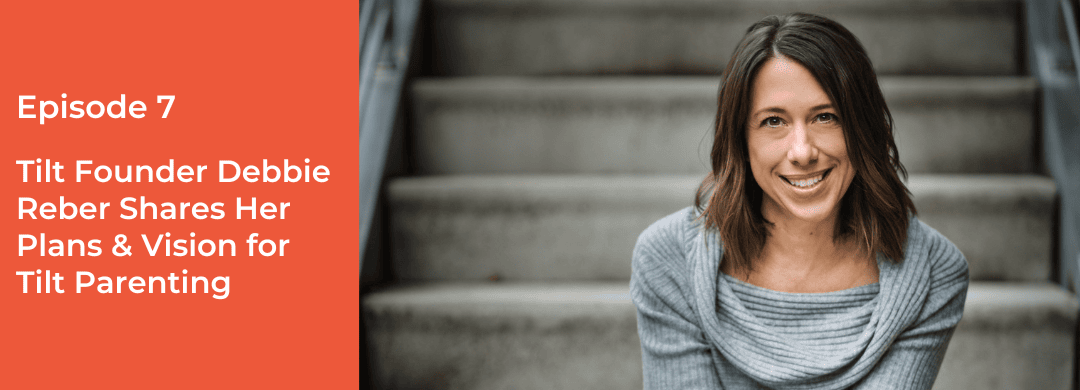
I’ve been getting requests from people coming to Tilt Parenting and joining the community who want to learn more about me and my story behind creating Tilt — why I developed it, what my vision is, and what I hope it will do in the world. I’m also getting lots of questions about things like why we use the language we use (ie: “difference” rather than “disorder”), how Asher feels about what I’m creating and being a participant in the podcast, and what the plans are for Tilt in the future. It was suggested to me that it might make sense to do a podcast with me as the guest so I can answer these questions and others like them in more detail. So rather than have me go on for a half-hour all by my lonesome, I enlisted the help of my dear friend, Gia Duke, to be my interviewer. Gia is one of the most inspirational, positive, and lovely people I know, so I’m happy to be able to introduce you to her in this interview as well!
About guest host Gia Duke
 Gia Duke is a Heart-ist, life coach, cheerleader, night owl, entrepreneur, super love girl. Gia works with big-hearted men and women with a go get ‘em attitude who want to get clear on what matters most and shows them how to generate the guts to go straight after it. Think: No Regrets meets Daring Action.
Things you’ll learn from this episode
- What I did in my career and life before creating Tilt
- What my big WHY is for creating Tilt and how I went about developing its philosophy
- What Asher thinks about Tilt and his role as a regular podcast guest / technical consultant / partner
- What I envision for Tilt the future
Resources mentioned
- Gia Guke (my fabulous interviewer!)
- My author website with more information on my books for women and girls
- WriteGirl—mentoring organization for teen girls in Los Angeles
- World Domination Summit—annual summit in Portland for changemakers
- Chris Guillebeau—author, noncomformist, and founder of the World Domination Summit
- Good Life Project—Jonathan Fields’ awesome podcast
- Revolution U—Jonathan Fields’ program Debbie participated in while developing Tilt
Want to go deeper?

The Differently Wired Club is not your typical membership community.
There’s something here for everyone, whether you’re a sit back and absorb learner, a hands-on, connect and engage learner, and everything in between. Join the Differently Wired Club and get unstuck, ditch the overwhelm, and find confidence, connection, and JOY in parenting your differently wired child.
Learn more about the Differently Wired Club
Episode Transcript
Debbie:
Since the launch of tilt and the crazy viral response of the little launch video Astra and I made to announce it. Like seriously, the video has been viewed over 25,000 times, which is so cool, and kind of crazy. But since that launch day, a few weeks ago, I’ve been getting a lot of emails from people curious to know more about me and Asher as well as the impetus for creating tilt. So today, my dear friend, Gia Duke, an entrepreneur, change maker and coach who’s been supporting my development of Tilt since day one, has also been an incredible support for me as a friend. While I’ve been figuring out my way parenting Asher is going to interview me as a way to share a bit of my story. My hope is that our conversation will give you more of a sense of where I’m coming from as I interview other guests on the show, and also shed some light onto why I felt so driven to create tilt in the first place. I hope you enjoy the show. Hello, Gina, thank you so much for being at my interview today.
Gia:
Oh, I’m so excited.
Debbie:
I can’t wait. Let’s let’s just dive in. Then how should we get started here?
Gia:
All right. Well, I’m just going to start off with my first question for you. So I know that you’ve had lots of different kinds of jobs and been involved in many different kinds of projects over the years. So maybe you could start off with telling us a little bit about your background where you’ve worked, what you’ve created before starting Tilt.
Debbie:
Sure. So my background is kind of all over the place. So I will summarize it. So I don’t bore people listening here. But my background started in video production and working in children’s media. So I spent many years of my 20s living in New York and I was working for some nonprofit organizations and relief organizations like UNICEF, I worked with UNICEF headquarters for four years with care, which is a relief and development organization. And then I moved on to working for Nickelodeon and worked on the show Blue’s Clues. So I was always kind of in the, I guess I call it the pro social media space kind of doing work that felt important to me from a social perspective, but also creative and production oriented. And after Blue’s Clues. I took a job with Cartoon Network. My I had just gotten married and my husband and I wanted to try a new city and try LA and I got this job with Cartoon Network studios that brought us to LA and I developed cartoons for them for a couple years. It was a little bit of a different job and different role for me. But it was super fun to be in that creative atmosphere I can imagine. Yeah, it was fun. It was definitely fun to do the LA thing for a couple years. And while I was working at Cartoon Network, it was when I really started developing my writing career on the side and doing a lot of volunteer work with teen girls. And so I was kind of a founding staff member for a nonprofit in Los Angeles called right girl and I was super involved with that organization. It paired women writers with teen girls to kind of learn positive life skills and things through writing as a medium. And I really started becoming passionate about supporting teenagers, specifically girls. And so when I loved Cartoon Network, and I had already written my first book, which was a book on running for women was published, which I somehow decided to write at night burning the midnight oil while I was working a very full time job. I don’t know … I’m one of those people who has to have a lot going on apparently at all times. Yes, you are.
Gia:
We love that about you.
Debbie:
Yeah. So yeah, so when I left Cartoon Network, I decided to kind of put all my energy into creating books and other content to empower and inspire teen girls into developing into their best selves. And so that’s what I did really from the time I left the corporate world in 2003. Until Well, my last book for teen girls came out in 2015. So it was a long run that I was doing work and girl advocacy space.
Gia:
Yet what inspired you to create that work? Why did you get so? Why were you so passionately in love Helping teen girls.
Debbie:
I think that I mean, when I get asked that question, my response is usually that I’m still very much a recovering teenager. You know, like many women, my, you know, my teen years, specifically my middle school years, were pretty hellish. And I struggled a lot with kind of figuring out who I am, I had super low self esteem, I had big dreams and things that I wanted to do with my life. And I felt like I didn’t have the, I didn’t have the confidence, I didn’t have the tools I didn’t have, in my mind what it took two to enable me to really fulfill those dreams. And that was really frustrating for me. And so my 20s, you know, I had these really interesting jobs, and I got to work with some incredible people and mentors. And it wasn’t until kind of my late 20s, that I really started to realize, Oh, I actually can create what I want here. I am empowered. I don’t need anyone to empower me, I can make this happen. But it took a lot of kind of reprogramming of my brain to realize that I was capable. So I think it was when I was in New York. I did. I did some volunteer work with homeless teenagers for a couple years. And then moving on to LA and working with WriteGirll. I just really wanted to do what I could to empower and support other teens and making those discoveries at a much younger age than I did so that they didn’t have to kind of wait to reach their dreams.
Gia:
Yeah, you created something you wish you’d had. It sounds like.
Debbie:
Exactly. I think that’s kind of the story of my life. It’s a lot of I don’t see what I need. Now. I guess I have to make it kind of thing.
Gia:
Yeah. Well, you’ve done an amazing job with that, through all your projects that you’ve done. Thank you so much for giving us a bit about your amazing background. Love Blue’s Clues, by the way. Yeah,
Debbie:
So do I Oh, my gosh, that was such a fun show to work on it still. Some of my dearest friends are from that time in my life. I will always have such great memories of working on that show.
Gia:
I’ll spare everyone not seeing the theme. Yeah. Yeah. Do it after the interview after the interview. Perfect. So when did you then get the first idea? When did the idea come to create tilt? What was your initial spark?
Debbie:
Yeah, I’m trying to think of when it first happened. I think you know, I knew from a pretty young age, you know, in terms of Asher’s age that we were dealing with the child who was differently wired, this was not your kind of typical kid, and we weren’t going to have a typical parenting experience. And I should just say, I don’t really believe there is a typical parenting experience. So just so we’re clear about that. But yeah, in terms of what I saw, you know, my peers and my good friends, and how they were moving through their journey, and preschool, and all those rites of passage, our experience looked different. And I am, I’m a researcher, I’m super productive. I’m someone who, you know, likes to problem solve, and Okay, this is what’s going on, then I need to kind of figure out what I have to do and XYZ, boom, boom, boom, let’s do it. Let’s address this. And, and I found even with all of those skills, I was really struggling to just figure things out. I felt like there was no roadmap I didn’t know how to, I didn’t know how to move forward, I didn’t know where I was supposed to be looking for help. I didn’t know how I was supposed to figure out where you know, my child should be going to school, what my rights were, how I should advocate for him, what kind of support he needed, where to get a diagnosis, where does insurance cover? Like, I didn’t know anything. And I found myself in this kind of space of being genuinely genuinely confused, and frustrated. And you know, what I was finding online, you know, we all turn to the internet for our answers these days. And I just wasn’t finding things. I wasn’t finding the information I needed in a way that I could absorb it in a way that felt good to me in a way that felt positive and hopeful. I think a lot of what I was finding felt super daunting and overwhelming and not easy to navigate. And nothing was speaking to me. And that was, I don’t know, I’m trying to think it must have been when Asher was maybe six or seven. So he’s, he’s 11 now, so five years ago, okay, and I just had this little idea of someday, someday I want to create something that can provide the online experience so that people in my boat and I know there’s a lot of us that they can feel connected and that they’ve found kind of where they belong in that world and, and something that doesn’t have to feel, you know, overwhelming or daunting or icky or any of those things.
Gia:
Yeah, that’s huge. That’s huge. But then when did you realize you wanted to switch directions and shift your focus from creating for teen girls and focus instead on supporting parents raising differently wired kids?
Debbie:
Yeah, it didn’t happen overnight. I mean, I, as someone who is self employed, and most of my work was surrounding my work as a team grow advocate, and I was writing, you know, I was writing books, there was a time where I was writing and publishing almost a book a year for teens, I was doing a lot of speaking at conferences, I was writing for I was writing articles about teen girls and self esteem and all of those things. And so I had spent so many years immersing myself and really building up my brand, if you will, to use the B word but building up my, my place in that world of the girl confidence community that I didn’t want to let that go. I had, and I was passionate about it for so many years. And I, you know, was hard. As Asher got older in school in a traditional school became more challenging. And my time became less my time to work on my stuff and my work on my books and my projects and more about intervening with the teachers at school or driving Asher to this or that therapy appointment. So I started feeling this kind of, you know, was the sense of frustration initially, you know, you know, Hey, man, I’ve got this career thing going on, you know, and now I have the all these other things going on and, and I felt really conflicted about that, and frustrated and my dear friend, Alice Wilder, she’s and we met up Blue’s Clues, and she’s a huge part of my life and of Asher’s life. And she used to always say to me, I think that being Asher’s mom, and what you’re going through with him is more a part of your work, then you realize, I’m like, Yeah, Yeah, I know, whatever, you know. But it wasn’t until years later was the summer of 2013, Alice and I went to this amazing event in Portland, it happens every summer. It’s called the world domination summit that Chris Guillebeau puts on. And so we went to that event. And it’s all about, you know, you’re kind of surrounded by these really inspirational changemakers. And people who are, who are there, because they are really fired up about what they want to create in the world and add, you know, kind of their positive imprint on the world. And I went to that event, thinking, you know, I knew I had this new book, I was writing for teen girls, thinking that that event was going to help me kind of, I don’t know, kind of frame my thinking for that with the next phase of my work as a teen girl advocate. And after one day, Alison, I went to dinner. And I just looked at her and I said, I think my work with teen girls is kind of done after this book. I’ve got bigger fish to fry. And it was kind of this surprise, even for myself. But I felt this very strong sense that it’s time to do something else. I don’t have a teen daughter, I have a son who has a lot of things going on and needs a lot of my attention. And I’m so passionate about supporting him and other kids like him. It just was the natural thing. So yeah, so that was 2013. And that’s really where the seed started to, to grow to use that euphemism.
Gia:
Yeah, way. It’s a process, right? I mean, I remember you going through it, that transition and juggling it and trying to make that decision. And then like you said, something just clicked. I remember when you just felt right to you. You’re like, this is my next step in my journey.
Debbie:
Yeah. And it was scary. You know, when you spend so long working on one thing, I was like, okay, I’ve spent all these years. Let’s just put that all aside and start from scratch again. Exactly. Yeah. So but yeah, you’re right. I, it wasn’t something I could say no to I felt such a strong kind of feeling in my gut that this was supposed to be where my energy was. So I just decided that this time,
Gia:
Yeah. And I’m so glad you did. Everyone’s gonna be people that find you. But I know it’s not easy. You know, that’s good. Thank you for sharing that story. Because there will be other people that relate to you. So you’ve written and published lots of books over the last, what, 13 years or so. I imagine your first instinct was to write a book about what you’re experiencing as Asher’s mom. Was that what happened?
Debbie:
Yes. The short answer is yes. That is kind of how my brain works. After writing books for so many years. That’s, I really love the research process of writing a book and kind of doing that really deep dive and becoming an expert in something. So I did decide, you know, I’m gonna write this as a book and I wasn’t sure exactly what the book would be. And I worked. I did work on a book for, I’m not sure maybe 10 months or so it corresponded with me moving to Amsterdam. So right after I had that kind of aha moment at the World Domination summit. a month and a half later, our family sold our house in Seattle and moved to Amsterdam. That was kind of a kind of our putting our stake in the ground like, okay, we’re trying something new. And I guess we needed to do it in a very big and dramatic way. I don’t know. But we ended up here. And we’re still here. And it’s been great. But I knew I kind of needed a project that was my own to kind of help me make sense of what we were experiencing. As a family, I was newly homeschooling, I was having to re-define my relationship with Asher, as both his parents and his teacher and kind of figuring out what that was going to look like. And also really trying to come to a place of peace with things that were so so, so challenging at that time, you know, when we moved to Asher had just turned nine. And we had had kind of three years of really challenging school situations, actually in three different schools in Seattle. So there was a lot I needed to process. So I did spend, yeah, I would say probably close to a year working on a book to help me kind of process everything I had gone through and make sense of it for myself. Yeah. So I did assume, okay, this is going to start as a book. And that was initially the plan.
Gia:
So why then did you decide to create a podcast and like a website?
Debbie:
Well, I think I also, though, I was working on a book, I always knew that ultimately, I wanted to create something much bigger than a book, you know, eventually, I knew I wanted to make a podcast, I’m a big consumer podcast, I love that medium. And so I knew that that was something I wanted to create, because I think it’s a great way to connect and, and share content. And I also, you know, had this idea of creating this kind of online home that feels comforting, and cool, and optimistic and hopeful and useful, and all of those things. So that was always the plan. And I think I kind of assumed the book would come out and then these other pieces would support the book. And as it turns out, this is supposed to come first, you know, I have my I have a book that I’ve been working on for a while, and my agent has it right now. And we’re gonna see what happens with that. And then in the meantime, I didn’t want to sit around and wait, I felt no, I need to create this now. So I started probably end up last summer, putting my full time attention into developing Tilt into what it is today.
Gia:
Fantastic. And your website’s amazing. I mean, really, a website is a place for people to go, right. So it’s like, you really want to build this community. And so you’ve got to have somewhere to send people. And that’s what your website is correct?
Debbie:
It is. And it’s, you know, I kind of think of it as a beta version, I have such big plans. And I wait, we’ll get to that later. But I’m just saying yes. So it is a starting place, it’s a starting place. It definitely is something that for me captures the vibe, and hopefully speaks to the people who are, who are my people, you know, I know we are everywhere. And it’s uh, we’re kind of like a lot of us are hiding out. Like, I get a lot of emails from people who connect me with friends or who say, you know, I’m not really talking about this openly, I don’t have other people to talk to. And you know, so there’s a lot of people out there who are disconnected and feeling isolated in their experience. And that’s kind of my main goal right now is to kind of bring those people together in a way that feels good and positive to them. So it’s not something that they want to hide or feel is just a reminder that they have these challenges. So yeah, so hopefully, that’s what I’ve, that’s what we’re doing through this kind of initial launch of the website and through the podcast.
Gia:
By the way, I love your podcast. I think they are if you guys haven’t heard the podcast for tilt, they are so professional and they’re so personal at the same time. Because I’m an I love to get information the same way through podcasts. But you do a really amazing job of not over editing them. So they’re not to quote unquote perfect, right, you know, people don’t want perfect, we want real and relatable. And I think you do such a great job, through your interviews with other parents and offering insight and tips. And I especially love the ones with Asher. Thank you. He’s amazing. Oh my gosh, you guys, you’ve got to check him out. He’s got the best sense of humor. I love his honesty and his personality just like totally shines through the podcast. I think it’s so cool that we get to hear mother and child’s, you know, interacting. It’s you that does such a great job. So the podcast is awesome. It’s just gonna take off and then you give great like you model really what American amazing parenting looks like. And then you offer tips and then sometimes you have like downloadables right like PDFs and yeah things like that. Especially with the Asher …
Debbie:
…which he calls the Asher special interviews. That’s not what I call them. I call them the kids pod specials. But anyway, yeah. For those, there are downloadables sometimes to support you to give examples like our screen time planner, we’re doing an episode coming up on vacation planning and we will be sharing our strategy that we use to plan for vacations we have. There’s a lot of paperwork in our house. There’s a lot of contracts that are signed. And yes, we were sharing all of that
stuff with listeners.
Gia:
Yeah, it’s great. I mean, families will love this. I love it. I didn’t gain insight from Asher’s tips. I love it. So, speaking of Asher, obviously, he’s aware of what you’ve been working on both in your book and the creation of tilt. How have you handled that like creating something for parents raising differently wired kids while raising one yourself?
Debbie:
First of all, I’ve been very transparent with them from the beginning. He’s known that I’ve been working on the book, he knows what the book is about who it’s for. He has known about tilt, he has helped me develop tilt, I run things by him. Not only is he my tech advisor, which he is, because he helped me with when I got stuck on the website, but he’s actually really excited about what we’re creating. You know, he’s always known about his diagnosis, we told him when we found out and so he’s, it’s not something that we ever as a family, having just been super transparent and open about. And also, with the other people in our lives. It’s not something we kind of Whisper or, you know, kind of mentioned and low voices of ashes around like, this is who our child is, this is what’s going on. This is how we’re supporting him. This is what he’s working on. And it’s all good. And so, Asher feels really great about himself. He’s a super, super confident person, which you can probably hear from the podcast. And he feels very, he feels excited about this role that he has. And, you know, he helped me with a lot of aspects of developing Tilton actually, we’ve had a couple of the Asher, quote unquote Asher special episodes air. And I’ve been getting feedback from a lot of parents who are saying, we listen to this with our 11 year old child, we listened to this with our nine year old son, you know, and the kids are getting a lot out of it, too, which I just love. I love that they’re co listening to these episodes. And I asked her and I were out for a run tonight. And I mentioned that when we were running, I told him what, you know, one of these emails said and he was He’s like, God, that makes me so happy. I feel like we’re making a difference. And like you, we are you you are people are really inspired by your story and, and by who you are. And so he’s really embracing that. And it’s been really, it’s been really cool. It’s really fun that we have this project to do together. And that he feels he does, he feels like an advocate. Like he has something important to say he feels very, he feels like protective of other kids like him. He wants other kids to feel as good about themselves as he feels about himself. And so he kind of like wears this badge, like it’s part of my job is to help other parents realize how awesome their kids are. Like, he really believes that. Yeah,
Gia:
I love that. That’s amazing. And he’s not only comfortable with the story being out there, he’s inspired by it being out there and hopes with the goal of inspiring other kids to just be stoked and who they are.
Debbie:
Exactly. Yeah, it’s really, it’s really awesome. It’s been so fun.
Gia:
That’s great. So I know, you put a lot of thought into the language and the philosophy that you’ve used behind tilt. Can you share with us how you approached that development process?
Debbie:
Sure. I spent many months again, I mentioned earlier, I’m a research junkie. So I spent a lot of time reflecting on what I wanted the philosophy of tilta be and the vibe and the energy behind it. And I actually participated in this program with Jonathan Fields, who is someone when I call him one of my gurus but to someone that I really respect he’s a writer, and he has a great podcast called The Good Life Project, which if you’re into podcasts, definitely check it out. He interviews really inspiring. changemakers fantastic, yeah, he’s, he’s great. And I participated in a program with him called revolution you, which was a program that I went through to help me wrap my head around what I was trying to do, and I really committed to that process. And through that, I also did a lot of, you know, research with my people, you know, I talked to a ton of parents who are raising differently wired kids, and talk with them about what their challenges were, what they are needing, what they would change if they could and and really kind of got inside of their heads to make sure that you know, this can just be my experience. I want to if this is gonna work, it has to, you know, really resonate with a lot of people. So I just spent months doing that kind of work and thinking about the language and doing a lot of gut checks. And and you know, I did consult with Asher on the language quite a bit, especially when it came to naming the website. And the tagline. And actually, someone very special helped me with the tagline God. I get great feedback on that tagline from GE, everybody GE is the genius behind my tagline the revolution. But yeah, for the name of Tilton, and for a lot of the language, including the language of differently wired, which is something, you know, I’ve gotten a couple emails, like why are you using that language instead of disorder or deficit? You know, these things are a deficit? And are the labels the labels people kids get in school? Like,
Gia:
Why aren’t you calling it? You know, whatever? Yeah, sure.
Debbie:
Yeah. Yeah. And it’s a very sensitive issue for people. And I really wanted to create tilt. It’s not like we’re ignoring that there are real challenges associated with these different ways of moving through the world. But really, we want Tilt to feel inspiring, and again, kind of optimistic and forward thinking and, and not something that is a reminder of, you know, this is hard. And there’s something wrong here. But rather, this is a different way of being and how can we embrace that, accept it and support it. And, you know, I get I had a ton of different names I was playing with, and I’d run them by Asher and know that that could be this has a negative connotation, oh, this could be interpreted that, like, he just slashed so many of my ideas, which I’m so grateful for, because he really helped me kind of, I mean, he had such a strong gut reaction to things. And one thing I did not want to do is create something that made Asher feel as if there was something wrong with him. And so it was just the best kind of partner in naming this project. And, and we talk about it a lot. We talk about language and the connotations that language has. And so it’s really important to us that the language of tilt captures our philosophy of hopefulness, positivity, embracing, accepting and
supporting.
Gia:
Yeah, I think you did an amazing job. And I know how much time and energy you put into, again, like you said, checking with people, and especially Asher, like, isn’t that the most important person is let’s talk to the kids.
Debbie:
Yep. Yeah. Right. Absolutely.
Gia:
Yeah. Well, thanks for sharing that with everybody. I’m sure I know. You’ve been getting emails about that. And people have different responses. So great to hear your perspective and philosophy and how much time and energy you did put into making the decisions that you made? Yeah,
Debbie:
Yeah. Thank you.
Gia:
So before we wrap up, I want to hear I know, you’ve been getting lots of feedback from people. We just mentioned that a little bit, but what has the response been? Like? What’s give us some scoop since the launch? What’s happening?
Debbie:
It has been so awesome. It really has really…
Gia:
Been just a couple of weeks. Yeah.
Debbie:
Yeah. At the time that we’re recording this I, we’ve, it’s been maybe two and a half weeks. Yeah. And it is, it’s been fantastic. It’s been, I’m getting emails from, you know, people other than my aunt and my, my sister, you know? No, I’m getting emails from strangers saying, you know, simply Thank you, thank you for creating this I’m in. And that, to me, just fills me with so much joy. And when I get that I’m like, I really want people to feel connected. I want people to feel like they found their home. And you know, again, this isn’t going to speak to everybody. And that’s totally fine. But if it can speak to some people and kind of help them reframe their experience, then that’s what I want to do. And the feedback has been so generous and kind and people are, you know, what can I do to support you and people are wanting to introduce me to people and make connections with other like minded people doing work in this space. And so it has been super, just super exciting. It’s been fun. I love checking my email every morning now.
Gia:
It’s a little reward. Well, and you know, what you’ve created is not like a Debbie. I mean, yes, you’re the heart behind the project. But you really want to build a community for other people. And so I imagine getting all this feedback saying, This is so helpful, or I’m going to forward this to my friend and or I listen to your podcast with my son, and they know, he loves Asher. And, you know, that’s got to be the big reward.
Debbie:
Yeah, absolutely. And you’re right, this isn’t about me. And that’s something I wanted to make clear from the very beginning. It’s not about me, it’s not about Asher, it’s about everyone kind of owning their own experience and finding their own way in a way that feels good and that supports their whole family and also can inspire other people. It is kind of Yeah, it’s a community. Ultimately, that We want to create,
Gia:
Yeah, where it’s a great start. So I’m not surprised that you have the feedback that you do with the heart that you have behind the project. And it’s only going to go increase because you’re just getting the word out two and a half weeks in. Yeah, it seems it’s so funny to think about it. Yeah. Whoo. So now, here’s the question I made you pause on. But can you share with us a little bit about your bigger vision for tilt? Like, what do you see it developing into? What are some of your big plans? Is there anything you can share with us?
Debbie:
I want to do everything. So I probably shouldn’t say that are going to too much detail. But let’s just say I mean, I would love for tilt to be a destination where any parent who is getting feedback from school or from from a teacher or other people in their lives that starting to get the feedback like, Oh, you know, or maybe they just intuitively know, there’s something going on here. That tilt can kind of be the first responder, you know, you know, tilt will be that place that people can instantly go to and feel like, Okay, I have a partner here. I’m not I’m not alone in this, there are other people in my space. And you know, there’s no, there’s no one way to move through this, let’s just to be clear, no matter what diagnosis your child has, or if they have no diagnosis, but if they’re, they’re differently wired. There’s no one way to move through this. But I want to, you know, I hope that we can provide some possible frameworks
for how to kind of navigate all the things that are important to consider, depending on on
what you’re seeing going on with your child. So I really want it to be again, like that first responder, a place to instantly feel at home connected and get resources, opportunities for learning, ICS, offering, you know, online courses with experts down the road, and just kind of an ultimately I’d love to have, you know, some sort of a interactive community where people can support each other and share experiences and a really positive, uplifting mentoring way. So the are some of the things I have in mind, but for now, I’m going to focus on creating great podcasts and just kind of continuing to connect with our tribe.
Gia:
Yeah, I’m getting the word out.
Debbie:
Yeah, absolutely. Yeah.
Gia:
It’s always fun to hear the vision, though.
Debbie:
Yeah, it’s exciting. But I need to slow down and just focus on what I’m doing. Yeah.
Gia:
A lot going on. Well, it’s amazing. This is so exciting, Debbie, as you know, I’m one of your biggest fans, and how much I believe in people creating something from the heart to help others. It’s exactly what you’re doing. And I just know, I mean, since you share this with me, way back when I just really believe it’s going to impact so many people and their families and build an incredible community. It’s already doing that. And even though we talk all the time, it’s been so much fun to interview you. Thank you for inviting me.
Debbie:
Thank you for interviewing me. This has been fun. totally fun for me.
Gia:
Of course. And then I always am reminded again of how amazing you are and how big your heart is. And what an awesome mama you are. And what an awesome kiddo you have. And we didn’t even mention your husband, what an awesome husband you have. And we got to throw Derin in the mix.
Debbie:
Yeah, Derin’s getting the shaft. Sorry, Derin.
Gia:
So but it’s true. It’s the whole family. Right. It’s not just you know, we’ve heard your perspective. But there’s also the dads.
Debbie:
Yeah, absolutely. We’ll get him on the podcast one of these days. I’ve been getting requests for the father perspective. So I’m sure that is coming down the road.
Gia:
Perfect. Perfect. Thanks again. Yeah, I’m excited just to see what comes and to keep listening and following your journey.
Debbie:
Thank you. And thank you so much for interviewing me. I could not have had a I could not have been in more capable hands. I really appreciate it.
Do you have an idea for an upcoming episode? Please share your idea in my Suggestion Box.